Skip to content
Sunday 13 September 2026London --:--Frankfurt --:--Zurich --:--
NewslettersSearchEN · DE · FR
MorningWire

European business, markets and politics

FTSE 100
10,650.44
+0.39%
DAX
25,568.56
+0.82%
CAC 40
8,179.77
+0.78%
STOXX 50
6,325.13
+0.90%
  • Europe
  • Markets
  • Business
  • Economy
  • Regulation
  • Politics
  • Opinion
More
GermanyFranceEU InstitutionsCompetitionPublic AffairsBankingTechnologyEnergy
  • Germany
  • France
  • Europe
  • Markets
  • Business
  • Economy
  • Regulation
  • Politics
  • Opinion
  • DE
Wednesday 04 March 2020 4:06 am  |  Updated:  Wednesday 04 March 2020 7:32 am

Priti Patel vs. Philip Rutnam: It’s in Britain’s interest that bureaucracy does not win

By: Paul Ormerod

Add as a preferred source on Google
BRITAIN-EU-POLITICS-BREXIT
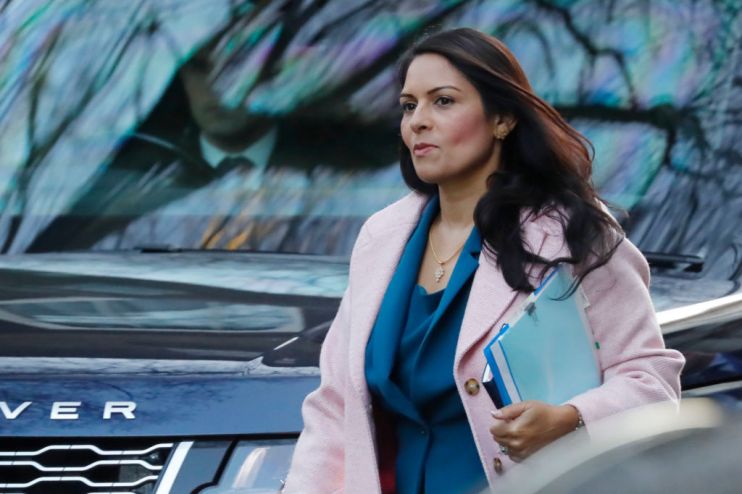
Priti Patel is receiving a barrage of criticism over the resignation of Sir Philip Rutnam

The reverberations around the resignation of Sir Philip Rutnam, the top civil servant at the Home Office, continue.

Priti Patel, the home secretary, is receiving a barrage of abuse.

Labour’s John McDonnell has pronounced that he cannot see how Patel could carry on. He raised the possibility that she might be in some way “suspended”.

It seems to have slipped the shadow chancellor’s mind that he himself was keen to carry out a purge of economists in the Treasury and Bank of England if Labour had won the election. The officials which remained would have required “re-educating”. 

But right now it doesn’t really matter what Labour thinks. The salient point about the criticism of Patel is that it is coming from the serried ranks of the metropolitan liberal elite. The Guardian newspaper has been in a total lather. The BBC’s coverage has hardly been impartial.

This group see Rutnam as one of their own: a professional expert, conscientiously going about his business. Naturally, they regard his actions as sound, carried out in the interests of the nation as a whole.

An important part of economic theory takes a completely different view of the motivations of bureaucrats. James Buchanan was awarded the Nobel Prize in 1986 for his work in developing what is called “public choice theory”.  

Public choice economics rejects the idea that bureaucrats act in a disinterested, objective way. They are no less selfish than the rest of us. Their primary motivation is not to serve the public, it is to further the interests both of themselves as individuals and of the bureaucracy as a whole.

Read more

Kemi Badenoch’s reshuffle has refreshed the Conservative Party

Kemi Badenoch and Andrew Griffith walking together on a city street, smiling.

The Home Office itself provides many examples which support this view. When tasked by ministers with deporting those without correct documentation, the bureaucrats did not try to track down, say, Albanian drug dealers. Instead, they minimised effort to themselves, identifying people who had lived here for decades but whose paperwork was not quite in order. The result was the Windrush scandal.

Some 20 years ago, I was involved in a project on crime for Charles Clarke when he was home secretary under Tony Blair. I discovered an influential group in the Home Office who believed that the number of criminal offences actually carried out was more or less constant from year to year.  

It may have appeared from the data that there had been a huge increase in crime since the Second World War. On the contrary (according to these officials), this merely reflected changes in the propensity to report crimes. The actual level of crime, they purported, was the same in 2000 as it had been in 1950.

I was impressed by the brilliance of this hypothesis. It meant that no bureaucrat could ever be criticised for failing to control crime. 

Of course, the view that people always act purely in their own self-interest is rarely completely true. There will be a mix of motivations at play. But in clashes between politicians and the bureaucracy, it is essential for democracy that the former win.

Main image credit: Getty

Read more

Badenoch bets on experience as Griffith and Tugendhat claim shadow cabinet top spots

Shadow business secretary Andrew Griffith has said he would make it easier for small businesses to open bank accounts. (Photo by Dan Kitwood/Getty Images)

Share this article

  • Facebook
  • X
  • LinkedIn
  • WhatsApp
  • Email

Similarly tagged content:

Sections

  • Markets & Economics
  • News
  • Opinion

Categories

  • Economics
  • Opinion
  • Politics

Trending Articles

  • Wetherspoon boss: ‘Not up to Burnham’ to choose who is on the high street 

  • Badger Beer maker Hall & Woodhouse doubles profit ahead of tie-up with James May

  • Four interest rate hikes loom despite surprise economic growth

  • Primark sales slip as owner dresses up retailer for demerger

  • As it happened: FTSE 100 rallies as economy beats forecasts; oil falls back

More from Morning Wire

  • Kemi Badenoch’s reshuffle has refreshed the Conservative Party

    Opinion
    Kemi Badenoch and Andrew Griffith walking together on a city street, smiling.
  • Badenoch bets on experience as Griffith and Tugendhat claim shadow cabinet top spots

    Politics
    Shadow business secretary Andrew Griffith has said he would make it easier for small businesses to open bank accounts. (Photo by Dan Kitwood/Getty Images)
  • Emergency government meeting held over high temperature amid ‘strain on public finances’

    Economics
    Aerial view of dry, brown farm fields affected by high temperatures, with a road and farm buildings.
  • The Capitalist: Tugendhat does the triple lock hop

    Opinion
    Kemi Badenoch, Tom Tugendhat, James Cleverly, and a Conservative MP on stage during a reshuffle event.
  • How patient can the Bank of England be?

    AD
    Historic Royal Exchange building in London with modern skyscrapers behind, clear blue sky.
  • ISG Event to Spotlight Strategies for the AI-Driven Autonomous Enterprise

    Business Wire
  • Labour calls for Mayor to explore London Stadium sale to West Ham

    Sport Business
    Wide view of an empty London Stadium, home of West Ham United, with a bright blue sky visible through its open roof.
  • Labour’s ‘chaotic’ zero-hour crackdown could cost firms £3bn per year

    Economics
    Andy Burnham, Mayor of Greater Manchester, in a suit and glasses, looking serious against a bright sky.
MorningWire

Independent European business, markets and political news for decision-makers.

Morning Briefing

Europe

  • Germany
  • France
  • EU Institutions
  • Europe

Business

  • Markets
  • Business
  • Economy
  • Regulation
  • Competition
  • Public Affairs

Editorial

  • Opinion
  • Editorial Policy
  • Corrections
  • Contact

Company

  • About Morning Wire
  • Privacy Policy
  • Terms of Use
  • Cookie Policy
© 2026 Morning Wire Ltd · Published by Morning Wire Media, Bahnhofstrasse 65, 8001 Zürich, Switzerland
Privacy · Terms · Cookies · Facebook