Skip to content
Friday 7 August 2026London --:--Frankfurt --:--Zurich --:--
NewslettersSearchEN · DE
MorningWire

European business, markets and politics

FTSE 100
10,867.89
-0.19%
DAX
26,140.13
0.00%
CAC 40
8,699.71
0.00%
STOXX 50
6,502.56
0.00%
  • Europe
  • Markets
  • Business
  • Economy
  • Technology
  • Politics
  • Opinion
More
GermanyFranceBankingAIEnergyFintechPropertyCapital Markets
  • Germany
  • France
  • Europe
  • Markets
  • Business
  • Economy
  • Technology
  • Politics
  • Opinion
  • DE
Saturday 20 December 2025 8:00 am  |  Updated:  Thursday 18 December 2025 2:34 pm

Private capital is reshaping sport’s financial future, and it’s structural

By: Jamal Saleh

Corporate Partner - Edwin Coe LLP

Add as a preferred source on Google
Getty Images logo displayed on a digital screen in a business news context, representing media and visual content industry
Sport is no longer solely passion projects for the super-wealthy.

Sport is no longer solely passion projects for the super-wealthy. Today, it is becoming a mature asset class supported by institutional and long-term private capital and the shift is visible in the deals transforming clubs, competitions and infrastructure across Europe and beyond.

Private capital is stepping in where banks can’t or won’t. Stadium developments, transfer receivables and media rights futures sit outside the traditional banking comfort zone, but private capital benefits from its ability to structure flexible, asset-backed facilities, particularly where there is also an equity or sponsorship play.

Consider the Premier League

Apollo’s estimated £70m–£80m financing package for Nottingham Forest – reportedly secured against future broadcast and commercial revenues – is a clear example of private capital underpinning liquidity at pace, in a context where banks have been reluctant to lend against football income streams previously deemed volatile.

Similar revenue-backed structures have appeared at Bournemouth, Burnley and Southampton in recent seasons; this is now an established financing market rather than an opportunistic niche.

Across Europe, the same sport pattern holds

Oaktree’s €385m investment to Inter Milan – lent after years of financial turbulence – have given the club stability, with the lender ultimately taking ownership when the repayment deadline passed.

Elliott’s earlier stewardship of AC Milan produced one of the most successful recoveries in European football. In Spain, Sixth Street’s landmark deal with FC Barcelona – providing capital against future LaLiga broadcast income and the club’s commercial assets – were among the first to show how private funds could monetise intangible sports rights at scale.

Sport trend that goes beyond football

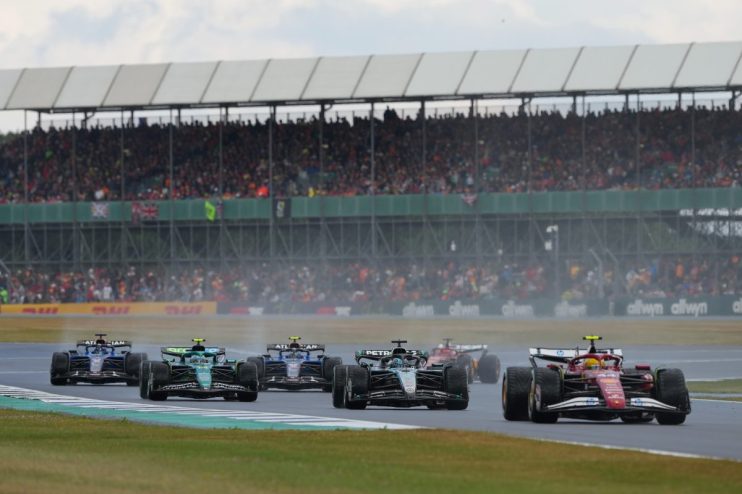
Formula 1 has become a template for how regulatory certainty attracts capital. The financial ‘cost cap’ regulations introduced within F1 has made team finances more predictable, turning financially-fragile outfits into investable assets with clear revenue lines from prize money and sponsorship.

Read more

Swiss Pension Funds Increase Commitments to Record Infrastructure Equity Fund to EUR 1.23 Billion

The sport’s transformation under Liberty Media – from Drive to Survive’s global reach to upgraded hospitality and digital products – has further increased valuations. The financial barrier to entry to buy into an F1 team is higher than ever because the asset class has become more stable, transparent and profitable.

These examples illustrate a deeper point: sport is becoming more institutional. Revenue transparency – whether from centralised media rights, performance-based prize funds or commercial licensing – and greater regulatory certainty makes it possible to price risk sensibly.

London and the UK sit at a central hub of this shift. It is home to the Premier League, the majority of Formula 1 teams, world-leading and commercially-minded restructuring and insolvency processes and the legal certainty global lenders rely on. That combination makes the UK a natural hub for structuring cross-border sports financing.

Private capital investment encourages long-term planning: investors are repaid through sustainable performance and ascertainable revenues, not forced sales or short-term cost cutting. For clubs balancing sporting ambition with financial reality, that shift can prove transformative.

Private capital isn’t replacing passion – but it is providing the discipline, flexibility and long-term horizon that modern sport increasingly depends on. As the market matures, these financing structures are likely to become as integral to sport as the competitions themselves.

Jamal Saleh is a corporate partner at law firm Edwin Coe LLP

Read more

Manchester United’s new stadium is a test of sports finance – but markets have a solution

Architectural model of a city development featuring a large stadium, buildings, and waterways by Allies and Morrison

Share this article

  • Facebook
  • X
  • LinkedIn
  • WhatsApp
  • Email

Similarly tagged content:

Sections

  • Sport
  • News

Categories

  • Sport Business
  • Business
  • Sport

People & Organisations

  • Apollo Global Management
  • asset class
  • Formula 1
  • Inter Milan
  • Nottingham Forest
  • Oaktree
  • private capital
  • private equity

Related Topics

  • investment
  • Private equity

Trending Articles

  • Rupert Lowe axes pensions triple lock and pledges tax cuts in economic plan

  • Revolut founder’s wealth set to balloon amid talks of share award at $500bn valuation

  • As it happened: Stocks rise as oil fluctuates after Red Sea attack; US-Iran deal ‘being circulated’

  • Liverpool owners tipped to sell – but not to Amazon boss Bezos – by former CEO

  • WPP slashes jobs as revenue continues to fall

More from Morning Wire

  • Swiss Pension Funds Increase Commitments to Record Infrastructure Equity Fund to EUR 1.23 Billion

    Business Wire
  • Manchester United’s new stadium is a test of sports finance – but markets have a solution

    Sport Business
    Architectural model of a city development featuring a large stadium, buildings, and waterways by Allies and Morrison
  • Bumper IPL takeovers boost T20 cricket franchise league’s value to over $20bn

    Sport Business
    Blue and red banners featuring Playbold and House of RCB with cheering fans, blurred figures passing by.
  • State-backed pension scheme plans to pump £1bn into start-ups

    Investing
    City economists have warned that the triple lock pension is unsustainable and unaffordable given the state of the UK's public finances.
  • Exclusive: EQT to announce Emirates GBR SailGP deal

    Sport Business
    Red foiling sailboat racing on blue water with a bridge and city in the background, spectators watching
  • L&G cheers push into private credit as profit jumps

    Markets
    Legal & General is reported to be eying Natwest's pension provider.
  • Carta Rearchitects Private Capital Operations with Plugins for Claude

    Business Wire
  • Clearlake Capital Announces Partnership with Databricks to Advance AI-Enabled Investing and Portfolio Value Creation

    Business Wire
MorningWire

Independent European business, markets and political news for decision-makers.

Morning Briefing

Europe

  • Germany
  • France
  • Europe
  • UK & Ireland

Business

  • Markets
  • Banking
  • Technology
  • Energy
  • Property
  • Fintech

Editorial

  • Opinion
  • Editorial Policy
  • Corrections
  • Contact

Company

  • About Morning Wire
  • Privacy Policy
  • Terms of Use
  • Cookie Policy
© 2026 Morning Wire Ltd · Published by Morning Wire Media, Bahnhofstrasse 65, 8001 Zürich, Switzerland
Privacy · Terms · Cookies · Facebook