
Profit from Theresa May’s war on plastic

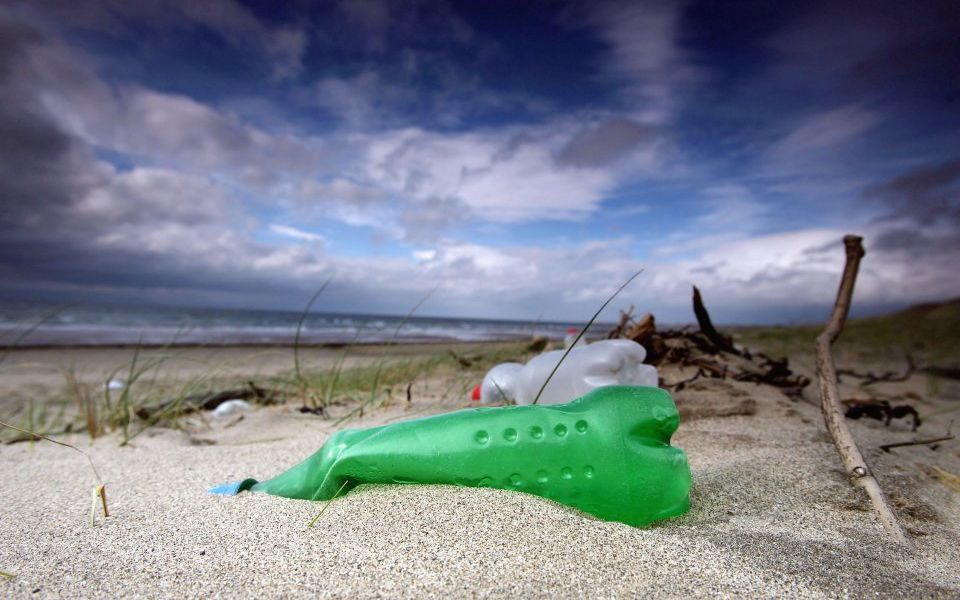
Theresa May recently declared a “war on plastic” and businesses such as Costa Coffee, Wagamama, Pizza Express and Leon have said they will phase out the use of plastic straws. California is considering banning them completely. Frozen food retailer Iceland has also pledged to be free of plastic packaging in its own-brand products within five years and the government wants to encourage plastic-free aisles in supermarkets. Kenya has introduced the world’s toughest plastic bags ban, under which the production, sale or even use of plastic bags risk imprisonment of up to four years or a fine of $40,000 (£28,000).
Single-use plastics are an environmental scourge, with claims that our oceans are being turned into a “plastic soup”. Environmental activists Greenpeace estimates that 12.7 million tonnes of plastic – everything from plastic bottles and bags to microbeads – end up in our oceans every single year. The Ellen MacArthur Foundation reckons there will be more plastic in the sea than fish by 2050.
Luckily, there are alternatives being developed worldwide, with the use of bioplastics on the rise. Currently, bioplastics represent about 1% of the about 320 million tonnes of plastic produced each year, according to Berlin-based European Bioplastics, an association of producers. Its use is expected to continue to rise.
Bioplastics are made from natural products such as sugar cane, wood and corn. These are natural compounds that biodegrade naturally. US group NatureWorks makes lactic acid from food such as corn, cassava, sugar cane or beets and turns it into a polylactic acid product called Ingeo. Italian group Novamont has also developed a bioplastic called MATER-BI and Brazilian group Braskem has developed a process that that makes bioplastics from ethanol sugarcane. European Bioplastics represents the interests of around 70 member companies along the entire value chain of bioplastics, this includes major companies such as BASF, Cargill and DuPont. It is both consumer demand and regulation driving this industry – and investment theme.
In the UK, companies such as James Cropper are involved in the recycling of coffee cups. Only relatively few coffee cups are recycled because the paper cups are lined by a thin layer of plastic to waterproof them. This is hard to separate, so they cannot enter traditional recycling systems and are either burnt or buried in landfill. James Cropper has the technology to deal with this and has signed deals with only McDonald’s, Costa Coffee and Selfridges since it plant started operation in September last year. It expects to sign many more deals.
What is an opportunity for one set of businesses, however, is also a threat to another. The main feedstock chemicals used in the manufacture of plastics come from oil. The energy industry is currently planning for a reduction in oil demand due to the rise of electric vehicles – and the backlash against plastic is going to be another challenge with which the industry needs to grapple. According to current projections, the International Energy Agency (IEA) expects the petrochemical industry will represent the largest source of additional oil consumption between now and 2040. The Paris-based body believes petrochemicals alone will more than offset the oil demand loss in passenger vehicles from electric vehicles.
These industry projections have led some in the market to speculate that growth plans at oil companies may be derailed by the war on plastics. Many oil majors have been investing in this side of their business as part of their long-term strategic plans. According to the American Chemistry Council, oil majors have invested in the region of $180bn in the plastic market since 2010. Saudi Aramco has made big bets on plastic as part of its strategic plan to diversify its economy. In November, Aramco signed a preliminary deal with Saudi Basic Industries Corp (SABIC) to build a chemicals complex to convert 45pc of crude oil to chemicals directly.
Detractors therefore argue that there has been significant investment in increasing the output of plastic feedstocks all over the world at a time when people are finally waking up to the fact that we should be using less of it. If plastics are heading in the same direction as the internal combustion engine – to an inevitable demise in the hunt for a cleaner world – then it is a major threat to the oil industries. However, the truth is that the transition is likely to be very slow and take many decades for the simple reason of cost. Plastics made from oil products are cheaper and generally more reliable than the new emerging technologies. Companies have developed relatively low tech, high volume methods of producing petrochemicals, which keeps the price down.
There are also some concerns that large-scale production of bioplastics could take land away from food production at a time when the global population is rising. Indeed, this debate is reminiscent of the arguments around biofuels a decade or so ago when there were hopes that fuel produced from plants would help reduce the need for oil. Currently about a third of the US corn crop is used to make ethanol to be blended with fuel but this has hardly impacted the demand for oil. It is unlikely oil majors will need to worry about a major threat from bioplastics just yet.
However, there is a definite long-term investment theme emerging, with bioplastic use almost certain to increase over the longer term. If governments start to raise taxes on oil-based plastics, some of the current cost issues may diminish. For bioplastic producers, the war on un-degradable plastic could be very profitable.
Nothing on this website should be construed as personal advice based on your circumstances. No news or research item is a personal recommendation to deal.