Protecting the green belt is not about the environment, it’s blinkered self-interest

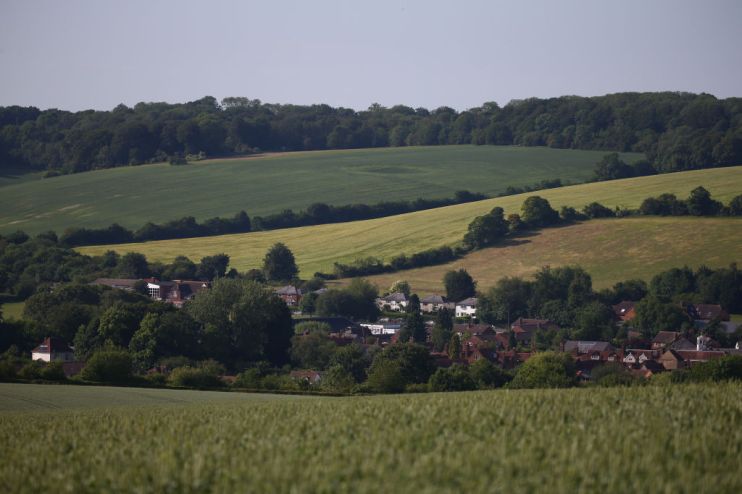
The UK needs approximately 345,000 new homes per year if we are to tackle our housing crisis. It is also estimated that by developing just 5.2 per cent of the existing Green Belt, we could build 1.4 million homes. Everybody knows the UK is in the throes of a housing crisis, yet we refuse to tackle it in the most obvious way: building affordable housing on the land we have.
If you make it easy to build new homes, house prices fall. If you make it hard to build new homes, house prices will rise. The former is preferred by renters trying to get on the housing ladder, whilst the latter is preferred by homeowners. Homeowners who have benefitted from the UK’s land policies, which are some of the most restrictive in the world with our fervent ideological commitment to the “green belt”.
We have built fewer new homes than any other country for over three decades; our housing stock is now the smallest in Western Europe. Artificially limiting supply leads to artificially inflated prices: British property costs are amongst the highest in the world.
This comes at a huge social cost. Almost 40 per cent of private tenants live in relative poverty when housing costs are taken into account and children who grow up in cramped or insufficient housing are 25 per cent more likely to suffer from severe health. Those living in cramped houses are also twice as likely to leave school without GCSEs.
The housing pyramid scheme has created significant demographic imbalances, with 13 per cent of couples under the age of 45 delaying starting a family due to their financial situation. Many of those will also be amongst the 13 per cent of adults whose mental health has been affected by the housing crisis.
Anyone who has driven on a motorway or taken an intercity train can see we have plenty of space to build new homes, so why don’t we? Part of the problem lies in Nimbyism, the principle of Not In My Back Yard. Nimbyism is created by people who live in rural areas who consistently stand in the way of new housing developments. They are vocal, articulate and well-organised, and do not like the sight of any houses other than their own. Inevitably their voices drown out those of young renters and those on social housing waiting lists.
Our politicians must not pander to the Nimbys who put their own blinkered self-interest above that of the country. That starts with confronting the sacrosanct status of Green Belt. The 1947 Town and Country Planning Act was designed to control urban sprawl by ensuring that towns and cities had a ring of countryside where agriculture, forestry and wildlife could flourish. But we now have 15 million more people than we did in the 40’s, and our population density has increased by more than a quarter.
The argument to protect the UK countryside is, of course, persuasive. Most of the Green Belt, however, isn’t green: 18 per cent of it is classified as “neglected” with derelict buildings, rubbish and electricity pylons blotting the landscape. Most of it is harsh, monoculture farmland which can’t support healthy biodiversity. Paul Cheshire, of the London School of Economics, has pointed out the Green Belt in fact has a negative net environmental effect.
The idea that our Great British countryside is under threat from sprawling urbanisation is simply not supported by the facts; urbanised zones make up only 9.9 per cent of England, and only 4.2 per cent is classified as “built up”.
The Green Belt isn’t about the environment, or farming, or limiting urbanisation, or anything else noble. It is an outdated law kept alive by those who rely on the artificially limited supply of property to maintain and increase their wealth, and the Nimbys who put a picturesque view above the wellbeing of millions of their fellow citizens.
The idea that without safeguards British towns would sprawl endlessly until not even a blade of grass can exist is nonsense. No other European country has Green Belt legislation yet we continue to go on European holidays (when permitted) to enjoy their stunning scenery.
It’s time we had an honest and logical conversation about the housing crisis and the Green Belt straight jacket. As long as the Green Belt development restrictions exist, so too will the housing crisis. The cost comes in the form of mental health problems, delayed child development, overcrowding and a looming demographic crisis.