Public debt: Who has lent a staggering £2.1 trillion to Rishi Sunak?

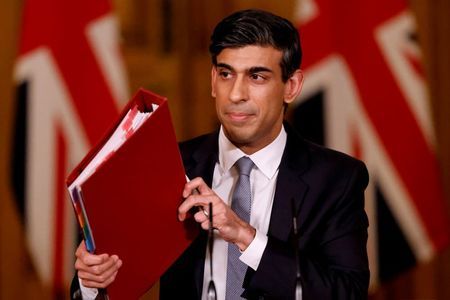
Government debt has hit its highest point as a portion of gross domestic product since the early 1960s when the country was still paying off what it had borrowed to fund the fight against Nazi Germany, new figures showed this morning.
Last year spending skyrocketed to pay for dozens of programmes to prop up the economy, while the amount of tax paid dropped, opening a gaping hole between the government’s spending and its income.
But who can hand over £2.1 trillion to the Chancellor, and when do they expect to be repaid? Morning Wire finds out.
Where does the government borrow money?
Perhaps from you. Anyone with £25 to spare can lend money to the Government through Premium Bonds which are issued by National Savings and Investments (NS&I).
In fact around 25m Brits save money through NS&I, which means their savings are being used to fund the Government.
But this is only a part of the overall debt. Before Covid-19 just under 10 per cent of the Government’s debt came from NS&I. The lion’s share, 85 per cent, came from selling gilts and bills, mainly to financial institutions.
When buying gilts, financial institutions give money to the Government. The government then pays them interest once every six months until the gilt matures, which can take months or decades. On maturity the government pays back the original sum.
The single biggest buyer of UK Government gilts is the Bank of England, which before the crisis held more than a fifth of UK gilts.
Insurance companies and pension funds own nearly a third of gilts, while more than a quarter are held overseas.
When will we have paid this debt off?
In some ways we will probably not pay it back. In the last 100 years the UK has never not been in debt. Debt hit its lowest as a proportion of GDP in the year ending March 1991, Thatcher’s final year. Even then it was 21.7 per cent of GDP.
Technically, each bill or gilt has a date when it has to be paid back. Around 40 per cent of bills and gilts mature after more than 15 years, but some mature much quicker.
Often though, when it comes time to pay back old debt, the Government does it by borrowing more.
Before Covid-19, the Government planned to borrow more than £160 bn in the last financial year, nearly £100bn of which was to pay back old debt.
Government borrowing cannot be compared to a credit card where you want to pay down your debt as soon as possible, experts say.
Will debt payments cripple the economy?
The money will need to be paid back at some point.
But borrowing is very cheap at the moment, so interest payments are very low.
In May last year borrowing became so cheap for the Government that it issued negative-yielding bonds. This meant that buyers of the bonds had to pay to lend money. Or with other words, the government was paid to borrow.
Government bonds are considered very safe investments, so institutions are often happy to pay a small amount for the Government to look after their money.
Will inflation and growth magically reduce debt?
Yes, they will. But not by much and likely not in the same way as after the Second World War.
The UK’s debt pile decreased as a proportion of GDP every single year between 1947 and 1974 even though we only paid back more than we borrowed during seven of those years.
But the UK is not likely to see sustained growth at the same levels over the next few decades as it did in the post-war period. Inflation is also currently rather low.
Have we not been paying down debt for the last 10 years, why is it still so high?
In 2010 David Cameron became prime minister in part by promising to slash the deficit in the wake of the financial crisis.
By cutting billions from some public services, the Government succeeded in reducing the deficit from 10.1 per cent of GDP in 2010 to 1.8 per cent in 2019, before the pandemic hit.
However the Government never actually started paying back the debt itself, merely cutting the amount of new borrowing.
During the same period debt grew from 62.6 per cent of GDP in 2010 to 80.4 per cent of GDP in 2019.