Skip to content
Saturday 29 August 2026London --:--Frankfurt --:--Zurich --:--
NewslettersSearchEN · DE · FR
MorningWire

European business, markets and politics

FTSE 100
10,824.26
+0.29%
DAX
26,569.99
+0.77%
CAC 40
8,401.18
+0.98%
STOXX 50
6,485.67
+0.95%
  • Europe
  • Markets
  • Business
  • Economy
  • Regulation
  • Politics
  • Opinion
More
GermanyFranceEU InstitutionsCompetitionPublic AffairsBankingTechnologyEnergy
  • Germany
  • France
  • Europe
  • Markets
  • Business
  • Economy
  • Regulation
  • Politics
  • Opinion
  • DE
Thursday 18 June 2015 9:12 pm

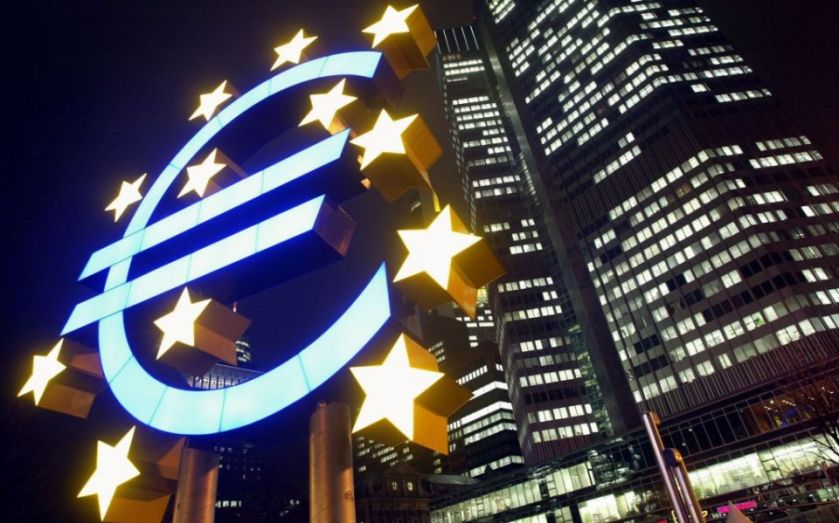
Q&A: Why has the euro suddenly ended its expected decline?

By: Express KCS

Add as a preferred source on Google

Q How far has the euro fallen? 
A If you were to buy a euro using dollars, you would only need about $1.14. In September last year you would have needed to pay $1.30. It marks a loss in value against the dollar of around 12 per cent. Yet for the last few months, the euro appears to have bottomed out and has been hovering above $1.10.
 
Q Why did the euro start losing value against the dollar? 
A In September the Eurozone was at risk of entering a third recession since the financial crisis and a collapse in oil prices threatened to pull inflation into negative territory. This led to expectations that the European Central Bank, which controls the Eurozone’s monetary policy, was going to launch new stimulus measures. One of those was quantitative easing (QE), a policy where the central bank makes new euros and uses them to buy things, pumping money into the system. Currencies are like any other commodity – increasing the supply can weigh on the price. 
 
Q How far did economists expect the euro to fall? 
A Because new euros were, and still are, being pumped into the financial system, it was expected to continue becoming cheaper, with some suggesting it would fall below parity. That is, the euro’s price in terms of dollars was expected by many to fall below one dollar.
 
Q Why did this not happen? 
A Suppose it was expected that the price of petrol was going to climb rapidly next week. People would bring forward their purchases to today to avoid tomorrow’s expensive rate. But this extra demand is in itself enough to raise today’s price. So market prices are affected not just by supply and demand today, but by what we expect supply and demand to be in future. The same thing appears to have happened with the euro. QE has stopped pulling the euro down because it is already priced in. Markets saw QE coming and started to price euros differently. Even when QE was announced in March, it was widely expected by markets. 
 
Q What next for the euro? 
A If the price of the euro is being dominated by what monetary policy is expected to do, then it is reasonable to assume it will fail to fall below one dollar, says Dr James Nixon from Oxford Economics. Markets currently expect the first European rate hike in 2018, but Nixon thinks it will come earlier, based on the Eurozone’s current recovery. So long as policy stays its current course, there’s every reason to think the euro has as much chance of going up, rather than down. One shock could be Greece. If Greece suffers a messy exit from the Eurozone this could have wider economic consequences, and could tempt the ECB to up its QE.
 

Share this article

  • Facebook
  • X
  • LinkedIn
  • WhatsApp
  • Email

Similarly tagged content:

Sections

  • Markets & Economics
  • News

Categories

  • Business
  • Economics

Trending Articles

  • Pensioners to hand over bank statements in government benefits crackdown

  • Jamie Carragher: HMRC petitions for Sky Sports star to be declared bankrupt

  • Brewdog founder James Watt hits out at ‘total silence’ over new venture

  • Lloyds Bank and Halifax users unable to use app in latest outage

  • Economists urge Bank of England to halt bond sales as borrowing costs climb

More from Morning Wire

  • Euro 2028 hospitality: Money-back tickets if England flop and no dynamic pricing

    Sport Business
    Couple in a luxury stadium suite enjoying a soccer match, with food, drinks, and a UEFA poster.
  • Trading Central Launches a UCITS ETF

    Business Wire
  • How patient can the Bank of England be?

    AD
    Historic Royal Exchange building in London with modern skyscrapers behind, clear blue sky.
  • Economists urge Bank of England to halt bond sales as borrowing costs climb

    Economics
    Bank of England headquarters with financial charts overlay, illustrating private credit stress test analysis
  • Want to be as rich as retirees? Buy shares in them

    Analysis
    Two joyful senior women holding Euro banknotes, celebrating financial freedom and successful retirement planning
  • Ex-UK minister Robertson rubbishes Ukrainian claims he aided Russia’s Olympic return

    Sport Business
    Sir Hugh Robertson, British Olympic Association, wearing a poppy and name tag, at an event
  • Government pushes Bank of England to innovate on payments and digital currencies

    Regulation
    Bank of England building on Threadneedle Street, London, showcasing its historic architecture and financial significance
  • ‘Social value’ procurement rules are an absurd waste of time and money

    Economics
    Tunnelling for the Euston link finally kicks off this week.
MorningWire

Independent European business, markets and political news for decision-makers.

Morning Briefing

Europe

  • Germany
  • France
  • EU Institutions
  • Europe

Business

  • Markets
  • Business
  • Economy
  • Regulation
  • Competition
  • Public Affairs

Editorial

  • Opinion
  • Editorial Policy
  • Corrections
  • Contact

Company

  • About Morning Wire
  • Privacy Policy
  • Terms of Use
  • Cookie Policy
© 2026 Morning Wire Ltd · Published by Morning Wire Media, Bahnhofstrasse 65, 8001 Zürich, Switzerland
Privacy · Terms · Cookies · Facebook