Skip to content
Wednesday 12 August 2026London --:--Frankfurt --:--Zurich --:--
NewslettersSearchEN · DE
MorningWire

European business, markets and politics

FTSE 100
10,822.94
-0.20%
DAX
26,476.60
+0.32%
CAC 40
8,682.61
-0.37%
STOXX 50
6,554.47
+0.05%
  • Europe
  • Markets
  • Business
  • Economy
  • Technology
  • Politics
  • Opinion
More
GermanyFranceBankingAIEnergyFintechPropertyCapital Markets
  • Germany
  • France
  • Europe
  • Markets
  • Business
  • Economy
  • Technology
  • Politics
  • Opinion
  • DE
Friday 10 January 2025 3:22 pm  |  Updated:  Friday 10 January 2025 4:27 pm

Rachel Reeves or Liz Truss: Who really ‘crashed the economy’?

By: Julian Jessop

Add as a preferred source on Google
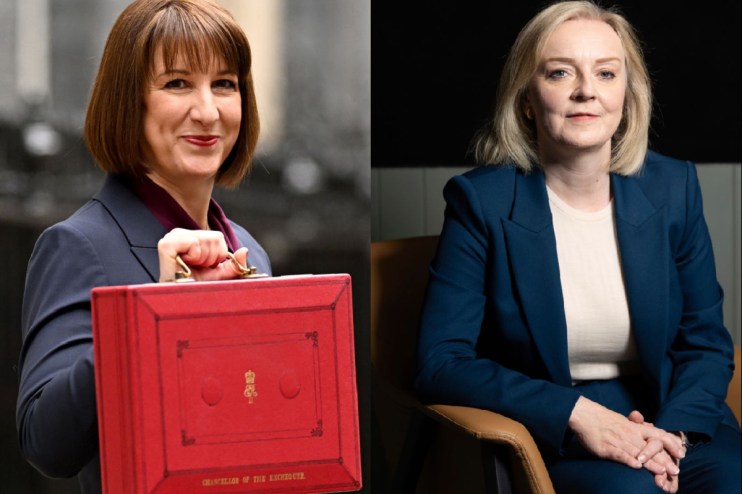
Chancellor of the Exchequer, Rachel Reeves (Photo by Leon Neal/Getty Images); portrait of former UK Prime Minister Liz Truss (Photo by Alex Ellinghausen / Australian Financial Review via Getty Images)

Amid UK bond market turmoil, it’s tempting to compare current events with the fallout of the 2022 mini-Budget. But do the events really compare, and who out of Liz Truss and Rachel Reeves is really responsible for ‘crashing the economy’, asks Julian Jessop

The recent surge in the cost of UK government borrowing has undoubtedly added to the pressure on Rachel Reeves. But has it also helped to vindicate Liz Truss?

To be fair to the current Chancellor, bond yields are also rising sharply in many other countries, reflecting renewed fears about global inflation and excessive government borrowing worldwide. Indeed, long-term interest rates in the UK are now closely tracking those in the US, which have also hit multi-year highs.

The fall in the pound to a 14-month low against the dollar is also still primarily a reflection of the broad-based strength of the US currency. The pound has actually appreciated over the last few months against the euro, so this is not a ‘sterling crisis’.

Nonetheless, the UK is still an outlier. Yields have risen further here than in the euro area, especially Germany. And they should not be as high as those in the US, where the economy is much stronger.

In a nutshell, investors in the UK are worried that the additional spending in Rachel Reeves’ first Budget will boost inflation and slow the pace of rate cuts from the Bank of England, that the additional taxes will hammer growth and not raise as much money as expected, and that the additional borrowing will mean that yields have to rise even further to attract enough buyers for all the additional bonds.

Moreover, regardless of the exact reasons for the rise in UK bond yields, it is more bad news both for the public finances and for the wider economy.

The question, then, is how this crisis compares to the fallout from the Truss/Kwarteng mini-Budget in 2022.

There are three key points.

Read more

‘Moron premium’ – Westminster turmoil has ‘cost taxpayers £35bn’ since 2022

Westminster Houses of Parliament under clear sky, iconic London landmark representing UK government and politics

1. The economy did not actually crash

First, it is important to distinguish between volatility in the financial markets and what is happening in the real economy, which most people would understand to mean things like consumer spending, business investment and employment.

On this basis, it is unfair to accuse Liz Truss of ‘crashing the economy’ in 2022 for the simple reason that the economy did not crash. The main exception was the disruption to the housing sector as lenders withdrew mortgage offers, but this was short-lived.

Others might say that the economy as a whole was only unscathed because some key measures in the mini-Budget were swiftly reversed. That would be pure speculation, but also an admission that there was indeed no crash.

2. Things were worse in 2022

Second, though, the market turmoil in the wake of the 2022 mini-Budget was more severe and disorderly than we are seeing now. Gilt yields have risen recently to higher levels, but the UK was more of an international outlier in 2022 and the moves were more abrupt. Yields rose by a full percentage point in just four days, and the pound fell more sharply across the board.

Nonetheless, the adverse reaction in 2022 was compounded by factors that cannot be blamed on Liz Truss. The most important was the forced sales of gilts by liability-driven investment (LDI) funds. The Bank of England’s decision to start selling the bonds it had bought under the policy of Quantitative Easing (QE) also added to the upward pressures on yields.

3. Businesses welcomed the mini-Budget

Third, the other big difference between the two fiscal events is how businesses responded. Critically the mini-Budget was actually welcomed by businesses and, at least initially, seen as positive for growth. In contrast, confidence has slumped since last summer, exacerbated by the large increases in tax and other business costs announced in the October Budget. Consumer spending, business investment and hiring have all stalled.

It is therefore tempting to conclude that if anyone has ‘crashed the economy’, it is surely Rachel Reeves. 

Julian Jessop is an independent economist and fellow at the Institute of Economic Affairs

Read more

Tax rises ‘guaranteed’ as Healey faces £22bn black hole from Burnham spending plans

Chancellor John Healey smiling, wearing a navy suit, white shirt, and red tie.

Share this article

  • Facebook
  • X
  • LinkedIn
  • WhatsApp
  • Email

Similarly tagged content:

Sections

  • Opinion

Categories

  • Business

People & Organisations

  • Budget
  • Budget 2024
  • Liz Truss
  • mini budget
  • Rachel Reeves

Trending Articles

  • Five-star Mayfair hotel hit with HMRC winding-up petition

  • Nottingham Forest owner Marinakis sues Crystal Palace for defamation

  • Back to basics: Sainsbury’s gradual retreat from the British high street

  • Hargreaves Lansdown orders staff back to office

  • As it happened: Intel, Arm shares slide; Oil climbs higher

More from Morning Wire

  • ‘Moron premium’ – Westminster turmoil has ‘cost taxpayers £35bn’ since 2022

    Politics
    Westminster Houses of Parliament under clear sky, iconic London landmark representing UK government and politics
  • Tax rises ‘guaranteed’ as Healey faces £22bn black hole from Burnham spending plans

    Economics
    Chancellor John Healey smiling, wearing a navy suit, white shirt, and red tie.
  • The City will bid good riddance to Rachel Reeves

    Opinion
    Reeves Bank exterior with modern architecture, showcasing its sleek design and prominent logo on a sunny day.
  • Healey revives ‘price-gouging’ threat as cost of living options narrow

    Politics
    Chancellor John Healey smiling, wearing a navy suit, white shirt, and red tie.
  • IHT receipts hit record high as Rachel Reeves’ frozen bands raid plague Brits

    Personal Finance
    Inheritance tax receipts are on track for a record breaking year
  • Rachel Reeves’ sister takes top legal role in Burnham’s Cabinet overhaul

    Politics
    Close-up of a business professionals hands typing on a laptop keyboard with financial charts on screen
  • Borrowing costs jump after Burnham ‘fiscal flexibility’ remarks

    Economics
    Andy Burnham smiling at a public event, wearing a suit and tie, representing positive leadership and community engagement.
  • Reeves: Burnham will face ‘shocks and challenges’ as Prime Minister

    Politics
    Rachel Reeves delivering a speech at a press event, wearing a navy blazer and standing in front of a backdrop with logos.
MorningWire

Independent European business, markets and political news for decision-makers.

Morning Briefing

Europe

  • Germany
  • France
  • Europe
  • UK & Ireland

Business

  • Markets
  • Banking
  • Technology
  • Energy
  • Property
  • Fintech

Editorial

  • Opinion
  • Editorial Policy
  • Corrections
  • Contact

Company

  • About Morning Wire
  • Privacy Policy
  • Terms of Use
  • Cookie Policy
© 2026 Morning Wire Ltd · Published by Morning Wire Media, Bahnhofstrasse 65, 8001 Zürich, Switzerland
Privacy · Terms · Cookies · Facebook