RBS’s mad rise and catastrophic fall can’t all be blamed on Fred Goodwin

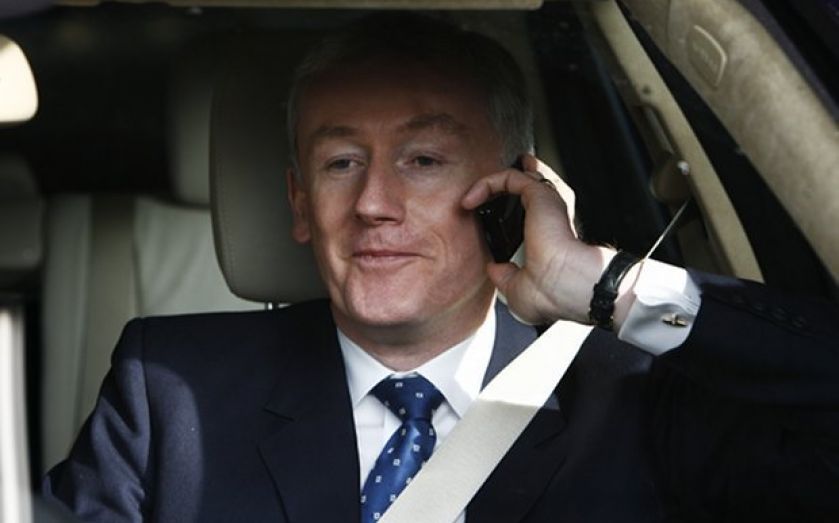
IN THE boom years at the start of the twenty-first century, the Royal Bank of Scotland management came up with a marketing slogan. They would – it promised customers and rivals – “Make It Happen”. In giant type, the words were emblazoned on airport billboards and printed on tons of promotional material.
A four minute film was even commissioned by chief executive Fred Goodwin and shown to investors and journalists. It told the story of a day in the life of RBS and the planet, from sunrise to sunset, with staff waking up in every corner of the globe, ready to do business, ready to make it happen. As the film and the busy day ended, the action moved into space, from where the camera focussed on Scotland far below, as the sun slipped slowly behind the earth. The message seemed to be that RBS was not only at the centre of the world. It was at the centre of the universe.
The music Goodwin and his PR people chose to accompany this dotty propaganda only makes it look worse in light of what eventually happened. It was the theme from Gladiator, the pugilistic Russell Crowe epic about generals and emperors battling for control of the Roman empire.
This marketing madness under Goodwin is an example of just how far gone, in terms of grand corporate delusion, those running RBS were in the years before the crash. Of course companies must project an attitude of confidence and optimism if they want to win customers, and in the age of globalisation firms are keener than ever to demonstrate that they have true global reach. But at RBS it got crazily out of hand.
For a decade at least, those at the very top of the Royal Bank lost themselves in a boastful blur, as the institution they ran grew larger and larger until it became, at precisely the wrong moment, the biggest bank in the world. Then it blew up in the crisis of the autumn of 2008 and had to be rescued. Buying the shares in the recapitalisation cost taxpayers £45.2bn. RBS had certainly made it happen, although not quite in the way Goodwin and his colleagues had intended.
I became fascinated by this subject and decided to interview as many of those involved as possible, which meant more than 100 senior bankers, officials, politicians and regulators. The result – published on the fifth anniversary of the crisis – is my new book, which is called Making It Happen.
I wanted to establish what those at the heart of the disaster thought they were doing. And while Goodwin and RBS are at the centre of the tragic tale – as the biggest bank that needed the biggest British rescue – I also wanted to tell the story of regulatory failure and gross negligence by politicians who boasted that they had ended “boom and bust.”
It certainly wasn’t all Goodwin’s fault. He made catastrophic mistakes, but he was continuing the work of the man who recruited and groomed him as chief executive. Sir George Mathewson, a Scottish nationalist, began overhauling RBS in the late 1980s as he became convinced that it could not survive without radical surgery and aggressive expansion. Goodwin joined in 1998 and took over as he and his mentor completed the acquisition of the much larger English bank NatWest. The board members, and for a while investors, loved the RBS story.
Simultaneously, UK banking more broadly was going through an extraordinary period of growth. It became established wisdom that banks had to get bigger, and there should be fewer of them.
That particular blend – the fusion of the patriotic Scottish desire to create a world-beating bank and the received wisdom beyond Scotland about the need for consolidation – to a large extent explains why RBS became so big, so quickly, and in such a risky way. Monument-building blinded those involved to the dangers. RBS embodied the expansive spirit of the age, on steroids.
Of course, the mad rise of RBS reached a peak when Goodwin and his colleagues pushed ahead with the ABN Amro takeover in the autumn of 2007. Incredibly, the credit crisis had already started, and yet Goodwin pressed the button on a deal that ran capital exceptionally low and doubled the size of the bank he ran, giving it a balance sheet, total assets, of around £2 trillion – a sum bigger than UK annual economic output. When credit evaporated and markets froze, RBS was done for.
There are many lessons about complex financial products and innovation. But the biggest lesson from the rise of RBS is a very simple one about hype and the human tendency to manias. If it looks to good to be true, it usually is too good to be true.
Iain Martin is author of Making It Happen: Fred Goodwin, RBS and the men who blew up the British economy, published by Simon & Schuster (£20).