Realignment with the EU is a £15bn betrayal

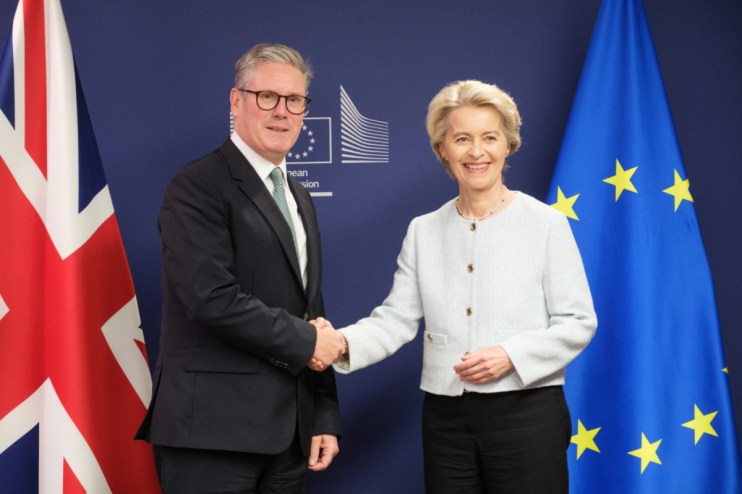
Dynamic alignment is an extreme anomaly in global trade and will inflict a net opportunity cost on the UK of £15bn, equivalent to a 0.5 per cent loss of GDP, says Shanker Singham
Under the guise of reducing border friction, the government is quietly steering the United Kingdom towards a profound constitutional and economic blunder: dynamic regulatory alignment with the European Union’s Sanitary and Phytosanitary (SPS) rules.
To the layperson, this might sound like bureaucratic housekeeping. In reality, it is a sweeping treaty arrangement that will bind the UK to automatically adopting EU regulatory changes into domestic law as they occur, permanently surrendering our rule-making independence.
Dynamic alignment is an extreme anomaly in global trade, reserved primarily for nations the EU treats as regulatory dependents, not sovereign equals.
The economic toll of this capitulation will be staggering. Competere Foundation modelling, about which I recently testified to the House of Lords European Affairs Committee, suggests that this alignment will inflict a net opportunity cost on the UK of £15bn, equivalent to a 0.5 per cent loss of GDP.
This is not a flat, instantaneous annual fee. Rather, it represents the cumulative damage felt over a five-year period as the benefits of pro-competitive regulation gradually disappear.
The government claims dynamic alignment in agri-food regulations will save £5bn. But this assumes the agreement removes all barriers in this area between the EU and the UK. The problem here is that customs processes still remain in place, and so traders will still have to engage in a process of some kind.
Trade restrictions for Great Britain to EU trade will decline, to be sure, and we have factored this into our calculation. The gains from improving our regulatory system are simply much bigger, because the economic impact of business compliance costs is dwarfed by the costs of anti-competitive regulation on the nation’s GDP per capita.
National prosperity relies on three pillars
National prosperity relies heavily on three pillars: robust domestic competition, secure property rights and open trade regimes. The EU’s regulatory architecture inherently degrades all three: it operates on a hazard-based, precautionary approach that restricts innovation and protects incumbent monopolies.
By dynamically aligning, we are voluntarily importing these anti-competitive market distortions — state-created barriers that already cost the EU’s 27 member states €39bn annually. We will be legally required to codify rules that crowd out wealth-creating voluntary exchange and permanently destroy our post-Brexit regulatory headroom.
Proponents argue that this concession is necessary to ease trade with Europe – but they are ignoring the lost opportunity for our own economy and the global backlash we will invite.
The EU’s SPS regime is heavily criticised worldwide; the United States, Australia and New Zealand frequently challenge its unscientific methods at the World Trade Organisation. If we align our rulebook with Brussels, we inherit their trade disputes. If we want other countries to open their markets more to us, dynamic alignment with the EU will take that opportunity off the table.
This path also structurally breaches our binding commitments under the Comprehensive and Progressive Agreement for Trans-Pacific Partnership (CPTPP). Article 7.9 of the CPTPP explicitly demands that SPS measures be based on objective scientific evidence, a standard the EU’s precautionary approach frequently fails to meet.
Damaging relations with the US
Furthermore, it severely jeopardises our relationship with the United States. We’ve estimated that the damage done to the US could be as high as $72.6bn in foregone GDP (including $58.7bn in foregone exports).
The US, with its powerful farm lobby, is unlikely to take this lying down. This risks putting what the UK has currently agreed in jeopardy, and so places £11bn of UK pharmaceutical exports at immediate risk of tariff retaliation. We are sacrificing massive global growth to appease a stagnant continental bloc when, crucially, there are other solutions to the perceived problem.
Then there is the sheer democratic deficit. Defenders of alignment point to non-EU nations like Norway, claiming we will retain “decision-shaping” powers through early consultation. But this is an illusion. Norway has sat in EU technical committees for three decades and has never successfully prevented a single damaging agricultural rule from being imposed upon it. Once a draft reaches the European Parliament, aligned nations are ejected and stripped of any vote.
The regulatory velocity of the EU also means proper parliamentary scrutiny at Westminster will be impossible. The EU submitted 147 formal WTO SPS notifications in 2024 alone. Parliament will simply become a rubber stamp.
Worse still, this arrangement completely bypasses the Sewel Convention. Every future EU agrifood regulation will become automatically binding on Scotland, Wales and Northern Ireland without a single act or vote in their devolved legislatures. The fundamental constitutional problem for the UK is that it will be Brussels, not Westminster, to whom these nations will look, placing huge strain on the ties that bind the nations into one United Kingdom.
There is absolutely no need for this self-sabotage. We hold extraordinary leverage: the UK absorbs 23 per cent of all EU agrifood exports, making us their single largest customer. We should have been using this buyer’s leverage to secure a Mutual Recognition Agreement (MRA), mirroring the veterinary agreement the EU itself signed with New Zealand, or its agreement with Canada. This globally recognised standard removes routine border checks and friction while allowing both sides to retain full sovereign control over their respective rulebooks.
But even if you think the EU won’t give this, there is still an answer for the vast majority of trade which flows from the EU into Great Britain. Here we could, as per the recommendation of Lord Agnew’s Trade Facilitation Commission. simply unilaterally recognise EU standards for import controls – a pragmatic approach we already successfully apply to medicines.
And if we can do this for medicines, we can do it for anything. We could even time-limit such unilateral recognition, pending the satisfactory resolution of the Mutual Recognition Agreement.
The government must abandon the dynamic alignment proposal immediately. All institutional bandwidth should be redirected towards expanding global trade under more recognised Mutual Recognition and Equivalence frameworks. That is the only viable path for a sovereign, pro-growth economy — and the only way to avoid a £15bn mistake.
Shanker Singham is chairman of The Growth Commission; CEO of Competere Group; a former advisor to Secretary of State for International Trade, Liam Fox; and a former cleared advisor to the U.S. Trade Representative and Department of Commerce