Skip to content
Monday 31 August 2026London --:--Frankfurt --:--Zurich --:--
NewslettersSearchEN · DE · FR
MorningWire

European business, markets and politics

FTSE 100
10,824.26
+0.29%
DAX
26,445.00
-0.47%
CAC 40
8,419.94
+0.22%
STOXX 50
6,477.71
-0.12%
  • Europe
  • Markets
  • Business
  • Economy
  • Regulation
  • Politics
  • Opinion
More
GermanyFranceEU InstitutionsCompetitionPublic AffairsBankingTechnologyEnergy
  • Germany
  • France
  • Europe
  • Markets
  • Business
  • Economy
  • Regulation
  • Politics
  • Opinion
  • DE
Friday 04 September 2020 5:00 am  |  Updated:  Thursday 03 September 2020 5:46 pm

A three-step recovery plan for London’s West End

By: Erica Belcher

Add as a preferred source on Google
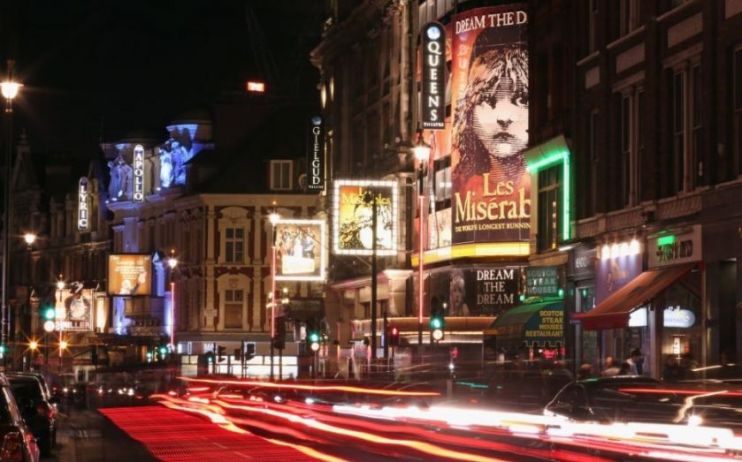
London's West End
GPE recently committed to the refurbishment of 141 Wardour Street.

Six months since the government first urged employees to work from home, they are now being asked to return. Given their track record of obedience, the government expected workers to be returning to the office in high numbers, but that is not what we have seen this week, with potentially disastrous and well-publicised consequences for central London’s economy.

No area misses the throng of commuters, visitors, and international tourists more than central London’s social core, the West End, where the population swelled each day as workers and tourists travelled in and out. The Cities of London and Westminster, and Kensington and Chelsea together usually account for 40 per cent of international tourist spend in the UK. 

Without workers and international tourists, the West End is experiencing a much deeper and more protracted crisis than other city and town centres. The mayor himself described a “perfect storm” brewing in his call for government support.

It makes sense for workers and visitors to return to the West End. London’s infrastructure and economy are geared around its centre. The West End is home to one in five hospitality jobs in London, one in six jobs in the arts, and one in eight jobs in retail. 60 per cent of the UK’s theatre revenue is generated in the West End. Data shows lockdown has shifted consumption to London’s smaller town centres but London and national leaders should ensure that this distribution doesn’t come at the expense of London’s historic heart.

Workers and visitors will not return to the West End as quickly as they left, but there are ways to mitigate the worst of the crisis and support its recovery. Our recovery plan for London’s West End sets out ideas to help its world-renowned theatres, live performance venues, and local businesses to survive and thrive. 

First, London’s central boroughs should continue to expand their social streets programme and help restaurants and bars to operate outdoors during colder months. 

Enabling people to reach the West End when public transport capacity is so constrained is also a huge challenge. The expansion of bikes, e-bikes and e-scooters beyond zone one could help ease this pressure, encourage those living in the suburbs to travel to the centre for a day out and ensure all Londoners have equal access to low carbon travel.

Second, London fringe festivals could create space for outdoor performances and culture vouchers, which could run similarly to the government’s Eat Out to Help Out scheme, would benefit those who are less able to pay and bring audiences back to the West End.

Last, the crisis will inevitably lead to some business’s closures turning permanent. Setting up shop in the West End is expensive and the government should offer “enterprise-zone” style tax breaks for startups who move into empty premises, ensuring the West End is open to all new businesses.

Any steps that are taken to revive the West End now will benefit London’s future. It has the best public transport connectivity in the country and it’s well placed to support more walking, cycling, and scooting, so focusing recovery efforts here will also support the decarbonisation agenda. 

Part-time remote working could paradoxically reinforce the West End’s role as a social centre, with businesses dedicating the office space they have to fostering connection between teams. And it will surely lead to a re-evaluation of the form and function of offices so that they remain relevant for generations to come.

Main image credit: Getty

Read more

The Highland tourist tax: Is Scotland pricing out whisky tourists?

Red deer stag on a heather-covered hillside overlooking a loch and mountains in the Scottish Highlands

Share this article

  • Facebook
  • X
  • LinkedIn
  • WhatsApp
  • Email

Similarly tagged content:

Sections

  • News
  • Opinion

Categories

  • Business
  • Opinion

Related Topics

  • Coronavirus
  • London business

Trending Articles

  • Pensioners to hand over bank statements in government benefits crackdown

  • City firms mandate phone and face-to-face comms bootcamps for Gen Z lawyers

  • Jamie Carragher: HMRC petitions for Sky Sports star to be declared bankrupt

  • Jamie Vardy bags Bundesliga rights as he steps up streaming war with Neville and Lineker

  • Wine to buy this week: The very best Pinot Noir on the shelves

More from Morning Wire

  • The Highland tourist tax: Is Scotland pricing out whisky tourists?

    Whisky
    Red deer stag on a heather-covered hillside overlooking a loch and mountains in the Scottish Highlands
  • London Sports Festival Extends Padel at Hay’s Galleria Following Continued Demand

    Sponsored
    Overhead view of a blue padel court and people playing inside Londons Hays Galleria, under a glass and steel roof.
  • Commonwealth Gold Medallists Return to the Court That Helped Inspire London

    Partner
    Team England athletes and dignitaries celebrate the Kings Baton Relay for Glasgow 2026 at a London sports festival.
  • Skilled tech visa applications fall again despite AI talent push

    Tech
    UK work and study visas have fallen as Labour faces pressure to reduce immigration.
  • Burnham’s devolution drive could ‘push 90,000 jobs out of London’

    Economics
    In 2022, rolling Tube strikes led to massive queues for crowded buses. (Photo by Chris J Ratcliffe/Getty Images)
  • Labour’s ‘chaotic’ zero-hour crackdown could cost firms £3bn per year

    Economics
    Andy Burnham, Mayor of Greater Manchester, in a suit and glasses, looking serious against a bright sky.
  • ‘Grinding it out’: Ibstock swings to loss and cuts dividend amid building slump

    Property
    Construction workers hands building a brick wall with mortar and a leveling tool, demonstrating masonry work
  • Burnham urged to axe tourist tax expansion in devolution drive

    Hospitality
    Andy Burnham, Mayor of Greater Manchester, speaking outdoors with a lapel microphone on his suit jacket.
MorningWire

Independent European business, markets and political news for decision-makers.

Morning Briefing

Europe

  • Germany
  • France
  • EU Institutions
  • Europe

Business

  • Markets
  • Business
  • Economy
  • Regulation
  • Competition
  • Public Affairs

Editorial

  • Opinion
  • Editorial Policy
  • Corrections
  • Contact

Company

  • About Morning Wire
  • Privacy Policy
  • Terms of Use
  • Cookie Policy
© 2026 Morning Wire Ltd · Published by Morning Wire Media, Bahnhofstrasse 65, 8001 Zürich, Switzerland
Privacy · Terms · Cookies · Facebook