Redefining what green belt means could solve the housing crisis in London

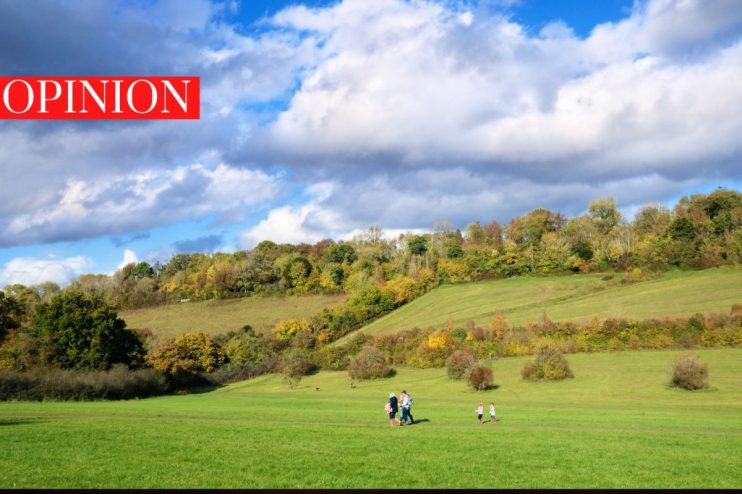
Everyone wants to build on brownfield land, and no one seems to be wanting to build on the green belt. But one can’t go without the other, writes Joshua Bond
The scandal of schools having to close because of the risk of dangerous, crumbling concrete is making the headlines this week, and for all the right reasons. However, primary schools were already closing across London’s boroughs over the past months, for different causes. Our capital is increasingly unable to house its young families, who get priced out and have to move out of London. As issues like these bubble under, housing is taking centre stage as one of the next general election’s defining battlegrounds.
Over the summer, housing secretary Michael Gove announced new funding to unlock 56,000 homes on small pockets of brownfield land, converting betting shops and takeaways into much-needed homes. It was an attempt to set the government’s housing policy apart from Labour’s plans to release land from the green belt. Yet this policy, however positive, falls hopelessly short of the estimated 300,000 homes a year needed to meet demand, dropped as a mandatory target by Rishi Sunak.
The poorly understood distinction between green belt and brownfield land lies at the heart of these decisions. The National Planning Policy Framework (NPPF) that guides England’s planning regime states that local authorities should prioritise brownfield development. This seems logical, as it allows the repurposing of already-existing sites and aligns with the public perception that the green belt must be preserved at all costs. Conversely, brownfield sites are popularly believed to occupy vast expanses of land that could be easily converted to housing.
However, a significant portion of what is often considered brownfield land is not so classified. In fact, a substantial amount of previously developed land falls within the green belt, subjecting it to strict planning restrictions. While preserving land with genuine ecological value is important, the idea that the green belt was created with environmental protection in mind is something of an urban legend. There is no requirement for this land to possess special aesthetic or ecological qualities; it doesn’t even need to be green.
Far from “concreting over the countryside”, to quote Gove, a fifth of this land could be more accurately described as a “grey” belt: it’s made up of car parks, rubbish dumps and inaccessible wasteland. When it was introduced in the 1930s, the green belt covered an eighth of its current size. Over time, it has sprawled to 12 per cent of England’s land area, dwarfing equivalent protections of our European neighbours.
Nowhere is this more pronounced than in London, with the Metropolitan Green Belt spanning half a million hectares, three times the size of the city itself. Paradoxically, this requirement pushes Londoners further out, leading to longer commute times and higher house prices. Releasing even a fraction of this land for development could make a huge difference for young people and families living in the capital.
These land designations are just one example of where our planning system relies on arbitrary distinctions that do not align with reality. Although well-intentioned, this decades-old thinking is inadequate for today’s pressured housing market. We need a sensible rethink to fast-track development on land that can accommodate not just homes, but the necessary infrastructure, while ensuring ecologically valuable land remains protected.
A few years ago, Centre for Cities proposed a practical solution in the form of releasing protected land around railway stations. This would create two million homes while providing fast access to the inner city for commuters.
Innovations like these could address the desperate need for housing for London’s families, while preserving green space without the need for blanket protection. By reimagining our planning system, we can ensure that housing meets the high-quality standards that Londoners deserve.