Reeves and Starmer are now at the mercy of the markets

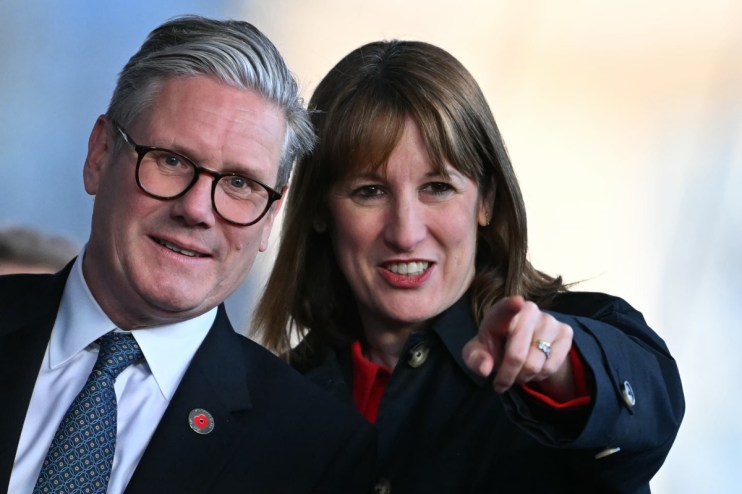
A government elected on competence and stability may now gamble both to stave off internal revolt. For investors, the message is that British politics has not regained the calm that markets briefly hoped for, says Helen Thomas
The markets once again have a starring role on the stage of political intrigue. Allies of the Prime Minister have invoked their mysterious power in an attempt to ward off the threat from wannabe challengers to Keir Starmer, intoning that an internal Labour coup could “destabilise the financial markets”. The threat was clear although the logic is backward. It is not that moving against Starmer risks another Truss-style meltdown; rather that the briefing itself will prove more destabilising than the threat it sought to head off. Markets must now price in an ever more beleaguered premier who will soon be replaced.
Downing Street’s fire was directed squarely at health secretary Wes Streeting, long regarded as Labour’s young pretender. Hearing his name in the frame as the next PM is no surprise, but hearing it from No10 smacks of panicked desperation rather than steady strength. Particularly when the leakers specifically briefed that he has the tacit support of “up to 50 frontbenchers”, lending an air of fearful credibility to the entire story.
Streeting’s spokesman was forced into a rapid rebuttal, insisting that any plotting was “categorically untrue”. Yet the damage was done. When a government starts naming its internal suspects, it reveals more about its own fragility than that of its enemies.
By tethering his survival to “market stability”, Starmer has invited precisely the scrutiny he fears. Britain has for some time been the high-beta play in global government bonds, selling off faster than peers whenever yields rise elsewhere. The country’s fiscal position remains precarious and decisions taken by this government to increase national insurance and the minimum wage have slowed the jobs market, opening up economic slack rather than delivering stronger growth.
The failure to pass even moderate welfare reform has chipped away at the credibility of its plans, with only Rachel Reeves’ tears stopping the rout in the wake of the parliamentary vote in July. This does not mean that only Reeves and Starmer can prevent further market instability. Gilt prices are not embodied in the persona of any one politician. Markets had been rationally discounting a government that, for all its missteps, commanded a large majority and would pursue an economically credible agenda. That assumption will now be tested.
The anticipated rise in income tax, the first in half a century, is being shaped as a political firewall. The revenue will be used to buy off restive MPs on the Labour benches. Indications from both Starmer and Reeves suggest that long-standing flashpoints, such as the two-child benefit cap, will be lifted in full, while compensation for the so-called WASPI women will be resurrected. Together, these measures could add billions to public spending.
Combined with the earlier U-turn on the Winter Fuel Payment and the failure to deliver welfare reform, the so-called “black hole” in the public finances has only widened. Reeves’s defenders would argue that this is a humane redirection of resources. The markets are fast realising that it is a return to the classic tax-and-spend Labour that her manifesto commitments were designed to avoid.
Reeves has never hidden her ideological bearings. In her 2024 Mais Lecture, she argued that New Labour’s economic model was “too narrow,” that “stability was a necessary but not sufficient condition to generate private sector investment,” and that “an under-regulated financial sector could generate immense wealth but posed profound structural risks too”.
A tax-and-spend Budget
This is a rejection of the Blair-Brown settlement and an admission of a more classic left-wing approach. With a tax-and-spend Budget ahead, the government is returning to its roots.
Having fallen in the polls without doing anything especially unpopular, Labour now appears poised to do something very unpopular indeed. Any rise in income tax would mark the first such move in 50 years, and polling suggests even many Labour voters oppose lifting the two-child benefit cap as evidenced by a recent YouGov survey.
A government elected on competence and stability may now gamble both to stave off internal revolt.
For investors, the message is that British politics has not regained the calm that markets briefly hoped for. The gilt market’s relative serenity rests on the belief that Reeves and Starmer offer predictable, centrist stewardship. Yet as Starmer’s position weakens and a leadership contest drags Labour further left, that assumption evaporates.
Markets will now have to price in either the possibility of a Labour government led by a more ideological figure or of a wounded Prime Minister compelled to spend and borrow more to survive. Either way, the risk premium on British assets can only rise.
Once investors begin to price in political instability, it becomes a self-fulfilling prophecy and Starmer and Reeves will be wiped out
The UK remains acutely vulnerable to global bond sell-offs. Its debt maturity profile is short, its borrowing costs high and its fiscal headroom minimal. A government perceived as losing control, whether politically or economically, would find little mercy from the markets.
For now, the City will cling to continuity. Reeves remains Chancellor, the Budget still promises a veneer of discipline, and the Bank of England’s credibility is intact. But the political backdrop has darkened.
No 10’s panicked briefing may have been intended as a deterrent. Instead, it has drawn the battle lines. The Prime Minister knows that his enemies have means, motive and – with the Budget just around the corner – an opportunity. Two thirds of the public, including one third of Labour voters, say that Reeves should resign for breaking the manifesto pledge on income tax.
Invoking markets is a dangerous game. They are not deployable political weapons but a wave that must be surfed. Once investors begin to price in political instability, it becomes a self-fulfilling prophecy and Starmer and Reeves will be wiped out.
Helen Thomas is founder and CEO of Blonde Money