Reeves’ ready source revenue: private wealth

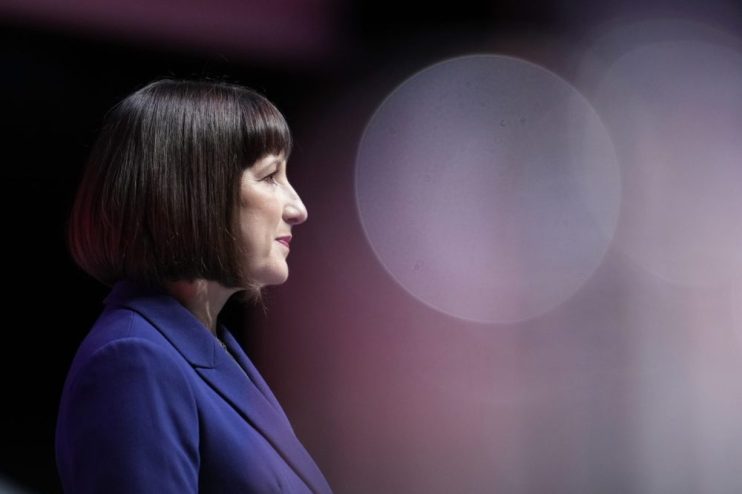
Rachel Reeves first Budget will reveal how the government really sees the economy – and those promises of growth are looking increasingly elusive, says Eliot Wilson
“I think we will have to increase taxes in the Budget,” Rachel Reeves told The News Agents podcast last week. This admission by the Chancellor followed her angry revelation in the House of Commons that the nation’s finances were “not sustainable” and that the previous government’s spending was “a risk to economic stability”. The accuracy of this is still being fiercely contested, but there is a broader underlying truth: no-one is really surprised that taxes are going up.
It was not only the Conservatives who repeated during the general election campaign that an incoming Labour government, despite pledging not to increase income tax, National Insurance contributions or VAT, would find ways to raise taxation. Financial and legal commentators predicted it, The Economist and The Guardian reported it, think tanks warned about it – as of course did Morning Wire.
Now that the Chancellor has conceded, we can think more honestly about the likely measures in her first Budget on 30 October. More than the electorally advantageous rhetoric, Reeves’ actual decisions will show us what the government’s stewardship of the economy will really be like.
The Chancellor says she faces a fiscal shortfall of £22bn. Let us take her at her word, but also remember that the largest single part of this figure, some £9.4bn, will be spent on above-inflation public sector pay awards. These are not inherited commitments. Reeves is making a choice to accept the recommendations of various pay review bodies to raise salaries for doctors, dentists, teachers, police officers and prison staff. She may be doing the right thing – she was right to say recently that there is a “cost to not settling” various ongoing pay disputes – but, to quote Pierre Mendes-France’s famous dictum, to govern is to choose.
So October’s Budget is expected to see the overall burden of taxation, already at its highest since Clement Attlee was in Downing Street, rise further, while at the same time government departments will have to make savings in expenditure. Essentially, Reeves will need to bring in more money and pay out less. How she does this will say a great deal about her attitude to economic management.
Capital gains tax and inheritance tax are two likely sources of additional revenue, the Resolution Foundation suggesting that raising these could deliver £10bn. They fall outside the narrow, Wolfie Smith-like scope of Labour’s manifesto commitment not to increase tax on “working people”, but because they apply to business assets, shares, second homes and wealth transfers they will fall disproportionately on investors, entrepreneurs and high-net-worth individuals. These are the people with whom Starmer and Reeves have been so conspicuously breaking bread over the past three years in the nation’s boardrooms and conference halls, and a surge in asset sell-offs, wealth transfers and gifting suggests that the wealthy are preparing for these duties to be hiked.
In order to reduce expenditure, Reeves has also cancelled a number of infrastructure projects which she deems beyond the government’s means, saying bluntly: “If we cannot afford it, we cannot do it”. She scrapped the Restoring Your Railway Fund, which aimed to improve connectivity by rebuilding axed links, the A27 Arundel bypass and the behind-schedule New Hospital Programme. Each of these decisions may be defensible, but they represent the cancelling of investment to achieve short-term savings and are sharply at odds with the government’s rhetoric on the importance of economic growth. As Sam Richards, CEO of infrastructure advocates Britain Remade, noted, “cutting capital spending isn’t risk free”.
Only Reeves herself truly knows if the nexus of decisions she will take – and has already taken – are the most sustainable way forward. But October’s Budget will frame Britain’s economic narrative for 2025 and beyond. After earnest, insistent promises of change and a “single defining mission” to pursue growth, the emerging picture looks more familiar than expected: short-term savings in expenditure, difficult decisions deferred and capital investment scaled back.
Naturally Reeves will blame her predecessors but that defence has a shelf life. There are worrying signs of a safety-first approach which regards private wealth as an easy source of additional revenue. Starmer and Reeves had talked frequently of the power of public money to “unlock” private-sector investment but that is hard to reconcile with what we anticipate from the Budget. Instead we are hearing the familiar salvos of a largely political, expectation-management blame game. Does the Chancellor know how she will move from that to her party’s ambition of 2.5 per cent economic growth? And does anyone else?
Eliot Wilson, co-founder of Pivot Point Group