Reeves’ straitjacket: Why Britain’s spending problem is political, not economic

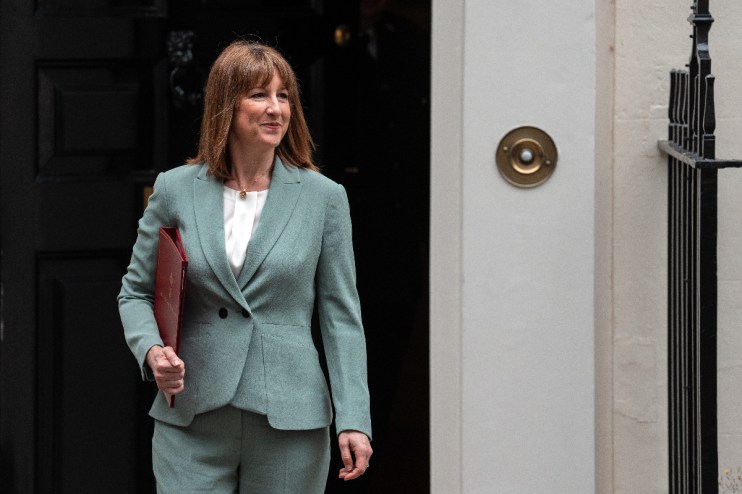
Public spending should not be held hostage to the OBR’s latest spreadsheet projections, as if the future of school funding hangs on whether GDP is revised up by 0.1 per cent. Our leaders should acknowledge that fiscal headroom is a political choice, says Dimitri Zenghelis
The UK government is right to focus on investment and growth as the route to higher living standards. But it’s been caught in a trap of its own making; it is hamstrung by tax pledges that no longer accord with current imperatives. The real barriers to revitalising Britain’s economy are not economic. They’re political.
Rachel Reeves need not ditch her fiscal rules – and nor should she. Designed sensibly, such rules constrain today’s politicians from loading up on debt to buy short-term popularity with unsustainable giveaways. But Reeves has wisely updated them, allowing for increased borrowing when it funds growth-enhancing public assets like infrastructure, skills or digital capacity – the kinds of investments that lift productivity.
Of course, the line between investment and day-to-day spending can be blurry. So safeguards to prevent current spending being reclassified as ‘investment’ are required, and here the OBR can play a lead role. But where spending clearly builds future capacity, it should be encouraged and enabled.
Beyond that, the balance of day-to-day spending and tax should be based on what generates the greatest social return. Taxes should be broad, fair and economically efficient. They should minimise distortion, unless distortion is the intended goal, as with discouraging smoking or pollution. And taxes can, and should, flex in the short term to help manage demand and keep inflation in check.
Yet the government has boxed itself in with tax pledges that were never designed for the world we now inhabit. Reneging on its own manifesto commitments would, understandably, trigger a loss of trust – especially for a Labour Party still reeling from old scars of “tax-and-spend” smears. Yet the alternative adopted in last October’s budget, stealth taxes on business and investment, sap confidence, stifle growth and erode the very revenues they aim to raise.
Stealth taxes on business and investment, sap confidence, stifle growth and erode the very revenues they aim to raise
Because the government has given itself no further room to manoeuvre on taxes, spending decisions end up being outsourced to the OBR responding daily to every piece of economic news. Policy ends up like a weathervane, shifting with each gust of data, rather than a compass steering the country toward a long-term goal, thereby dampening investor confidence.
A different world
The government could instead level with the public. The world today is not the one we voted on last year. As well as public finances being revealed to be in worse shape than previously recognised, the rise of Trump and the war in Ukraine mean that defence spending alone now demands a rethink of our financial priorities.
This is not a call for recklessness and does not mean abandoning prudence. Quite the opposite. It’s a call for realism. A temporary and targeted tax rise – clearly explained and fairly distributed – could support the spending we need on security, resilience and growth, while borrowing enables investment. Done right, this wouldn’t hurt credibility or upset the bond markets. The opposite; it would enhance risk-adjusted expected returns of UK government paper.
To achieve this, public spending should be targeted at the long-term good of the country. The decisions to fund such spending should not be held hostage to the OBR’s latest spreadsheet projections, as if the future of school funding hangs on whether GDP is revised up by 0.1 per cent. If social welfare, overseas aid, or pension spending need to be cut, an explicit case must be made on the merits of the action.
Ultimately, this is about leadership – setting a course, explaining it to the country, and sticking with it through the noise. It means acknowledging that “fiscal space” is not something dictated by an algorithm. It is a political construct, created by government, and it can be reshaped by bold, clear-eyed and openly communicated strategic choices, subject to fiscal discipline. A lack of fiscal space does not create the need for tough choices; the need for tough choices creates the lack of fiscal space. The time for leadership is now.
Dimitri Zenghelis, is a Senior Visiting Fellow at the Grantham Research Institute at the LSE, an Advisor to the Bennett Institute at the University of Cambridge and a Partner at Independent Economics. He was formerly Head of Economic Forecasting at HM Treasury.