Jenrick: Welfare cuts worth £50bn allows us to ‘sustainably pay’ triple lock pension
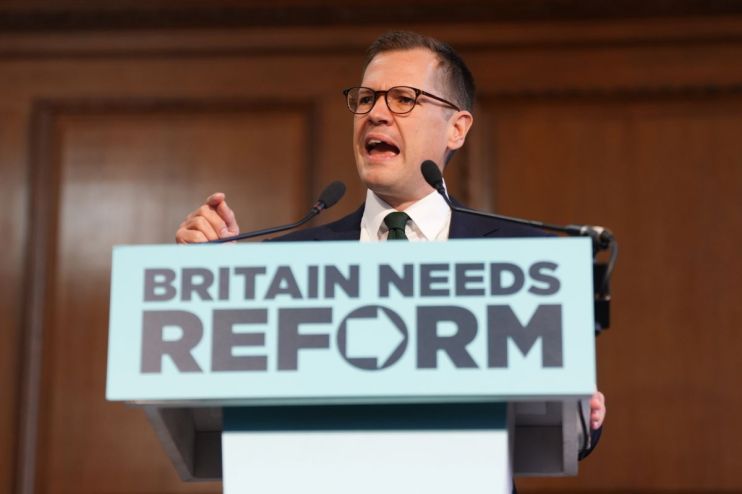
Reform UK’s Robert Jenrick has said a £50bn welfare cut plan allows the state to “sustainably pay” for the triple lock pension.
In a press conference on Monday, Jenrick said plans to strip welfare from around 3m people, including foreign nationals, would be the biggest overhaul of the benefits system in a generation.
Jenrick said the plan did not focus on pensioners and was “part of the motivation is to continue to provide the support that pensioners need”.
“It is by doing tough things like this that we can continue to sustainably pay for the triple lock,” he said.
After his defection from the Conservatives, one of his first policies was to announce Reform’s intention to keep the triple lock pension. It ensures that the state pension is increased each year by whichever is highest out of wage growth, inflation or 2.5 per cent. Several economists have said that the triple lock pension is unsustainable for public finances as it allows pensioners to benefit from inflationary shocks while workers suffer from higher costs.
Under the wider benefits plans, Reform would abolish several elements of Universal Credit for working-age adults.
Jenrick said nearly 7m people were receiving disability benefits, though the share of working-age people claiming for mental health and behavioural conditions has tripled since 2022. “This is not an epidemic of broken backs and lost limbs,” he said.
Under the planned reforms a new, regularly-reviewed, health security allowance would provide support for the “gravely ill and severely challenged,” Jenrick said.
Jenrick: Reforms won’t be ‘painless’
Cash payments for low-level conditions would end and be replaced with disability support accounts, run by local councils and mayors, to cover costs such as equipment, adaptations, transport and personal assistance.
Employers could be obliged to pay a “return to work cover” insurance to fund the cost of the first two years after an employee is signed off sick.
Jenrick said firms would then have a “strong economic incentive” to return the employee to work.
People who had not returned to work within two years would go through a single, rigorous assessment conducted in person to “screen out vexatious and fraudulent claims”.
“Existing claimants will be reassessed over three to four years: we estimate that 2.16, will keep their present cash entitlement in full, while 2.89m will see theirs modified or withdrawn, concentrated where recent growth has been most explosive.”
He said the state must be there to support people who need it but “dumping our young people onto welfare isn’t compassion; it’s neglect”.
“We are not lifting people out of misfortune. We are abandoning them to it, and calling it kindness.”
Jenrick said the Reform proposals would save “more than double” the £23 billion promised by the Conservatives, with £22bn of the savings coming from changes to disability benefits alone.
Tories: Reform ‘flip-flopping’ on welfare
Shadow work and pensions secretary Helen Whately accused Jenrick of attempting to distract from the parliamentary standards investigation into a £5 million donation to Nigel Farage, Reform’s leader.
On Saturday, Farage was returned as the MP for Clacton after winning a by-election which he triggered by resigning from his seat in July, in a bid to set up a “people versus the establishment” fight.
But all the major parties sidestepped the by-election, and Farage’s victory has caused the investigation into his links to crypto billionaire Christopher Harborne to be resumed.
Whately said: “Reform have been nowhere on the debate on welfare reform. They have flip-flopped on restoring the two child benefit cap and claimed they’ll only take benefits away from foreigners, which won’t do enough to bring down the overall bill.”
A Labour spokeswoman said: “Reform’s £50 billion claim is fantasy economics, built on stripping support from disabled people and shifting costs onto employers.”