Reforming fiscal regime is no taxing issue
Amid the surplus of analysis devoted to improving the UK tax system, debate over whether the government’s current and future level of spending sometimes slips by.
With interest rates expected to climb as the Bank of England leans even further into hawkish policy and inflation already hitting near 30-year highs, the cost of borrowing will swell.
Using debt to fund spending could result in further tax hikes down the line to foot a higher interest bill (which has already hit a record for a January).
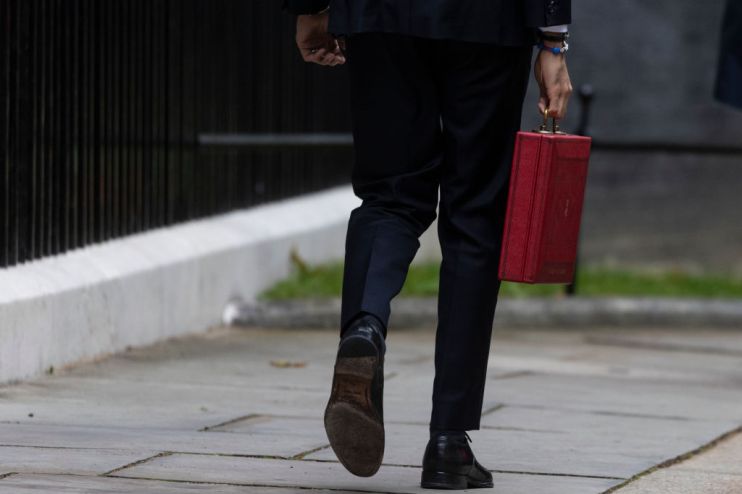
Chancellor Rishi Sunak last week set out his plans for establishing a “culture of enterprise” focused on utlising the forces of the private sector to drive economic growth, with the government’s role limited to laying the groundwork to allow businesses to maximize productivity.
Unwinding the web of taxes, making fiscal policy more responsive to changes to household and businesses’ behaviour and constantly examining whether government spending levels are appropriate will help the Chancellor achieve his lofty ambitions.
The high volume of taxes, reliefs and scaling thresholds has generated a heavy administrative burden for businesses and households that squeezes time that could otherwise be spent on productive activities.
“Our tax system lacks coherence: it has grown by adding taxes, reliefs and complex rules to prevent avoidance, to a system with its roots in the 19th century,” Paul Falvey, tax partner at BDO, told Morning Wire
“It is hardly surprising that this has resulted in a confused and confusing web of rules.”
Removing cliff edges in the tax regime could reduce the likelihood of distorting behaviour by preventing discentinves to certain activities.
For example, at the margin, some workers can be deterred from pushing to get a promotion if the increase in their pay is subjected to a higher marginal tax rate.
Increasing taxation on the working population “has a disproportionately negative impact on the economy,” Falvey argued.
Sudden charges to capital gains tax (CGT) rates and reliefs can “change investor behaviours, particularly if there is a date set for rule changes to come in,” Tim Sarson, head of tax policy at KPMG, told Morning Wire
CGT tweaks can make equity markets volatile by triggering “a mad rush from people looking to book their gains ahead of the cut off,” Sarson added.
A sudden market sell-off tends to put downward pressure on stock prices, which can generate feedback loops where investors who are still holding equities attempt to limit losses by dumping them, putting further downward pressure on prices.
Steeper marginal tax rates, or “points of no return,” as Sarson calls them, “often lead to counterintuitive decision-making – businesses becoming less acquisitive to stay under the global tax threshold, homes on the duty threshold becoming harder to sell,” he added.
The Treasury needs to make better use of information to ensure taxes accurately reflect economic conditions.
Much has been made of the poor quality of data used to underpin the council tax system.
Ensuring the regime is neutral is crucial to creating an efficient tax system minises determining economic decision making.
Creating a level playing field to prevent certain activities being favoured over others will minimize the risk of “distort[ing] investment decisions or decisions about whether to work, save, or invest,” Jon Richardson, tax policy and regulation leader at PwC, said.
The looming 1.25 percentage point national insurance hike risks disincentivising employment as it will increase the cost of retaining existing workers and recruiting an additional worker.
Using national insurance to raise money has been the fiscal lever of choice for successive governments.
“By 2024-25, NICs and the NICs-like health and social care levy will raise 41 per cent of taxes on income, up from 36 per cent before the financial crisis in 2007-08 and 33 per cent in 1966-67,” according to the OBR.
At a certain level, cutting taxes can actually increase government revenue by stimulating demand for goods and services, an argument formulated by American economist Arthur Laffer.
For example, stamp duty receipts have climbed despite the threshold at which the tax applies being raised to £500,000 temporarily.
However, this could be the result of ultra-low interest rates and Brits deploying pandemic-induced savings.
Protecting the UK’ “overall competitiveness and attractiveness… compared to our global peer group has to be a factor when considering the principles that should guide the future shape of the UK tax regime,” Sarson stressed.
For the Chancellor to jolt the UK’s historically dismal levels of innovation and innovation, Britain’s tax system needs a wholesale uprooting.