Skip to content
Monday 7 September 2026London --:--Frankfurt --:--Zurich --:--
NewslettersSearchEN · DE · FR
MorningWire

European business, markets and politics

FTSE 100
10,831.09
0.00%
DAX
26,046.40
0.00%
CAC 40
8,278.77
0.00%
STOXX 50
6,392.93
0.00%
  • Europe
  • Markets
  • Business
  • Economy
  • Regulation
  • Politics
  • Opinion
More
GermanyFranceEU InstitutionsCompetitionPublic AffairsBankingTechnologyEnergy
  • Germany
  • France
  • Europe
  • Markets
  • Business
  • Economy
  • Regulation
  • Politics
  • Opinion
  • DE
Tuesday 19 August 2014 3:38 pm  |  Updated:  Friday 07 June 2019 5:48 am

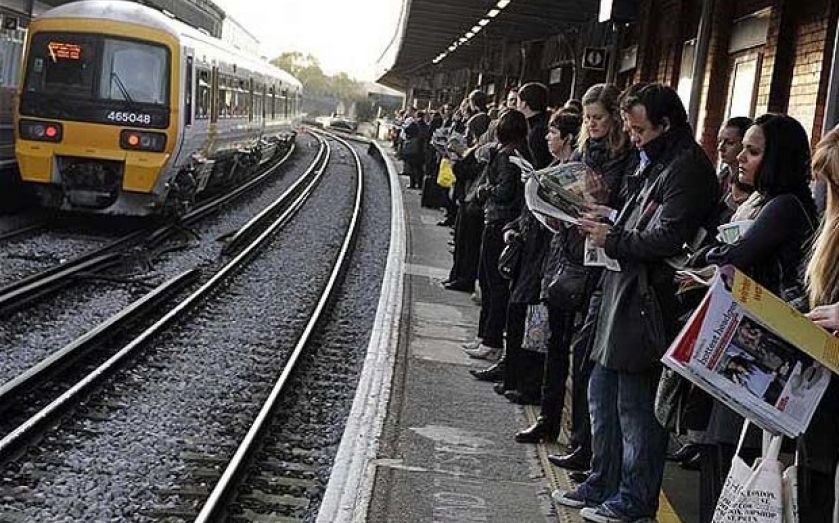
With regulated rail fares in England set to rise by 3.5 per cent in 2015, is it justifiable?

By: Colin Stanbridge

Add as a preferred source on Google

Colin Stanbridge, chief executive of the London Chamber of Commerce, says Yes.

A reliable and expansive transport system is vital for London’s reputation as a leading global city. It’s essential that we handle the demands of major population growth in order to secure the capital's future.

London’s success is dependent on the quality of its transport links, and on attracting sufficient numbers of skilled workers to keep the wheels of the economy turning.

With house prices having rocketed over the past 10 years due to a chronic undersupply of homes, one in five workers now lives outside the capital and commutes daily – largely by rail.

Improvements to modern railways don’t come cheap.

Without significant and sustained investment in the network, our ageing rail infrastructure will be plagued by worse overcrowding and delays, undermining London’s ability to compete and grow.

Of course, making commuting more affordable should be a priority – but not at the expense of a modern, world-class rail transport network.

Philip Booth, professor of insurance and risk management at Cass Business School, and editorial and programme director at the Institute of Economic Affairs, says No.

There is plenty of outrage about yesterday’s announcement.

But why should government regulate rail fares at all? Certainly, those who do not travel by train should not subsidise those who do.

The success of private operating companies has led to huge congestion on some lines, and the nationalised track owners have not responded by increasing capacity enough.

The need to ration space and the cost of increasing capacity in places like London points in the direction of higher fares.

Labour’s suggestion that any remaining flexibility should be removed when operating companies decide which fares to raise most is a recipe for a bigger crunch.

Private companies should be allowed to take ownership of the track from its nationalised owners. And, on some lines, there is scope for more competition.

Further, facilitating investment in the roads would relieve congestion on our over-crowded railways.

Share this article

  • Facebook
  • X
  • LinkedIn
  • WhatsApp
  • Email

Similarly tagged content:

Sections

  • Opinion

Categories

  • Opinion

Trending Articles

  • Iceland boss Richard Walker vows to set up shop on Falkland Islands

  • Britain ‘taxing itself to death,’ Burnham warned

  • £74m for branded condoms? UK must stop spaffing cash on foreign aid

  • Don’t underestimate the free trade agreement Britain just joined

  • Victoria Beckham owed £350,000 by Harvey Nichols

More from Morning Wire

  • Virgin Trains gets green light for channel tunnel route

    Transport & Infrastructure
    Red Virgin high-speed train on tracks at a station platform, under an arched glass roof, with blurred people.
  • The BBC shouldn’t push Londoners to accept antisocial phone behaviour 

    Opinion
    Passengers inside a graffiti-covered London Underground train car, some looking at phones, others observing the interior.
  • Ordnance Survey revenue jumps as map maker goes digital

    Markets
    Ordnance Survey has revealed that an increase in demand for its data from financial services firms has helped its revenue near the £200m mark.
  • Balfour Beatty ups profit forecasts as it defies construction gloom

    Transport & Infrastructure
    Balfour Beatty construction site showcasing cranes, workers, and building progress against a city skyline backdrop
  • Burnham’s devolution drive could ‘push 90,000 jobs out of London’

    Economics
    In 2022, rolling Tube strikes led to massive queues for crowded buses. (Photo by Chris J Ratcliffe/Getty Images)
  • London’s Square Mile needs its own major sports venue to keep up with rivals

    Sport Business
    Aerial view of Tower Bridge, Thames River, and London skyline with skyscrapers on a cloudy day
  • Tesco, B&Q and Whitbread scolded in minimum wage crackdown

    Retail
    A man with a beard and dark suit holding a notebook, standing in front of a building with windows.
  • Top court ‘opens the floodgates’ for part-time workers’ claims

    Lawsuit
    Supreme Court building under clear sky, symbolizing justice and authority, relevant to recent judicial news coverage
MorningWire

Independent European business, markets and political news for decision-makers.

Morning Briefing

Europe

  • Germany
  • France
  • EU Institutions
  • Europe

Business

  • Markets
  • Business
  • Economy
  • Regulation
  • Competition
  • Public Affairs

Editorial

  • Opinion
  • Editorial Policy
  • Corrections
  • Contact

Company

  • About Morning Wire
  • Privacy Policy
  • Terms of Use
  • Cookie Policy
© 2026 Morning Wire Ltd · Published by Morning Wire Media, Bahnhofstrasse 65, 8001 Zürich, Switzerland
Privacy · Terms · Cookies · Facebook