Regulation isn’t what’s holding business back – it’s tax

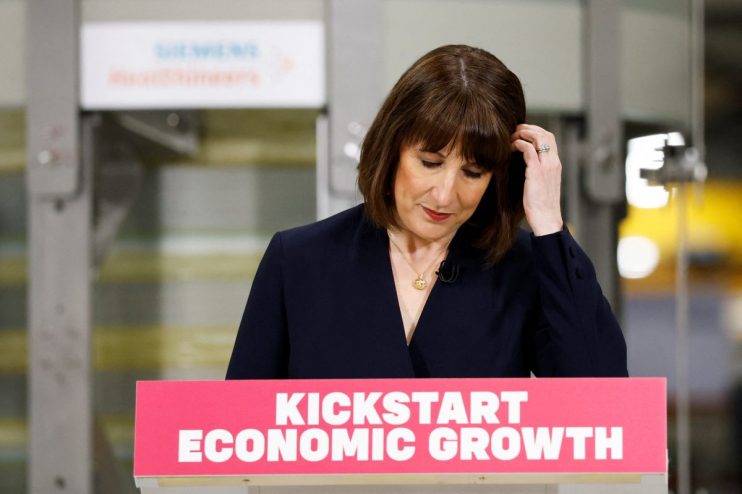
The Chancellor has promised to “boldly regulate for growth” but that’s easy to say and costs nothing. The UK’s problem isn’t paperwork, it’s the relentless pressure of ever higher prices and government constraints, says Helen Thomas
The Chancellor has given a Regional Investment Summit speech where she tapped into her inner Spock, promising to “go further to boldly regulate for growth”. It was pitched as a rallying cry for enterprise with a promise to sweep away red tape and unshackle growth, reiterating the call from her summertime Mansion House speech to “take the boot off the throat of businesses”. But for most British firms, regulation isn’t the problem keeping them awake at night – not when the relentless rise in their costs leaves them simply trying to survive. Deregulation might sound bold, but it’s yesterday’s battle. The new fight is affordability.
The language of deregulation carries a certain nostalgic appeal. It conjures memories of Thatcher-era liberation and unleashing business so that it can soar. Politically, it’s convenient as it costs nothing to promise and it sounds pro-business without requiring any spending commitments. The Chancellor claimed in her speech that removing “needless form filling” will save firms almost £6bn a year by the end of the parliament. Yet for most companies today, bureaucracy is not what throttles growth. In a world of cloud accounting, automated compliance and digital reporting, regulation is less the bottleneck it once was. The UK’s problem isn’t paperwork, it’s the relentless pressure of ever higher prices and government constraints.
Over the past year, the government has increased employer National Insurance contributions, raised the National Living Wage, and floated plans for a wide-ranging Workers’ Rights Bill. Even the government’s own impact assessment estimated the latter would cost businesses up to £5bn a year to implement with a “disproportionate impact” on smaller businesses. Each of these policies carries a clear moral or political logic. But combined, they leave businesses squeezed from every side.
Cash flow is the ultimate regulator
For large employers, the challenge is cumulative as labour costs rise, tax reliefs become uncertain, and the cost of capital remains high. For small and medium-sized firms, who make up 99 per cent of UK businesses, the picture is even harsher. The margin for error is thin, and cash flow is the ultimate regulator.
Meanwhile, investment incentives remain patchy. The full expensing regime is welcome but temporary, and the rules around capital allowances still feel labyrinthine. Businesses cannot plan three-year investments on one-year tax policies. And so they sit tight, hire cautiously, and wait for clarity that never seems to arrive.
If the Chancellor wants to make Britain genuinely pro-business, she’ll have to expand her definition. Cutting regulation is easy politics whereas cutting costs is serious economics.
That starts with acknowledging that the private sector doesn’t operate in a vacuum. When the state pushes up statutory costs, it can’t simply offset that with warm words about entrepreneurship.
Businesses don’t want handouts. They want predictability rather than lurching from fiscal event to fiscal event with the spectre of fresh taxes stalking the Chancellor’s every move. They want a planning system that doesn’t require months of silence from Whitehall and employment rules that are fair but not punitive. Real growth depends on confidence and every time the government has talked a good game about helping business, it has taken action that harms them.
The Chancellor could start by signalling a longer-term plan to ease the burden on employers. That could include gradually lowering National Insurance contributions for smaller firms, introducing smarter wage subsidies for apprenticeships and retraining, and simplifying the patchwork of tax credits that currently reward bureaucracy as much as innovation.
In the end, no amount of deregulation meaningfully changes the price of electricity, insurance or labour. Those are the costs defining the competitiveness of British business in 2025. And the government is increasing those at every turn.
Deregulation might have been the right answer in the 1980s. But four decades later, Britain’s firms are more sophisticated, more compliant, and yet more vulnerable to cost shocks than ever before. In that environment, a speech about cutting red tape feels like a solution to a problem that no longer exists.
Rhetoric on cutting bureaucracy is tidy and crowd-pleasing. It paints the Chancellor as the champion of business while costing the Treasury nothing. But to the business community, it increasingly sounds like a slogan in search of substance.
Britain’s entrepreneurs don’t want flattery. They want financial room to breathe, hire and invest. If the government truly wants to take the boot off the throat of business, it might start by examining where it is thrusting its own fiscally clunking feet.
Firms can handle regulation if they can afford to operate. They can comply, innovate, and compete, but not if the costs of doing business keep climbing faster than the profits of doing it. Deregulation won’t fix that. Only affordability will.
Helen Thomas is founder and CEO of Blonde Money