Relaxed subsidies rules are a free rein to pick winners without transparency

Not too long ago the thorniest issue in the United Kingdom’s relationship with Europe was about the “level playing field” and “state aid”. It may seem crazy in retrospect, but there was a serious prospect in late 2020 that the UK would sacrifice a trade deal with our closest neighbour to be freer to subsidise domestic business.
Ultimately, a compromise was reached on state aid. The EU-UK Trade and Cooperation Agreement included several joint principles for state aid, such as requirements that the subsidies benefit wider society, contribute to public policy objectives and are proportionate and necessary. Importantly, however, the Agreement does not require the UK to replicate the EU’s conduct procedures and pre-approval processes.
Under EU rules, subsidies are forbidden by default unless justified and approved by the European Commission (albeit 95 per cent are exempt from this process). The new UK rules currently making their way through Parliament in the Subsidies Control Bill will only require a public authority to declare that they believe a subsidy is consistent with the principles. It will then be possible for an affected business to contest the decision in the Competition Appeal Tribunal, if they believe an unfair subsidy has been provided to a competitor.
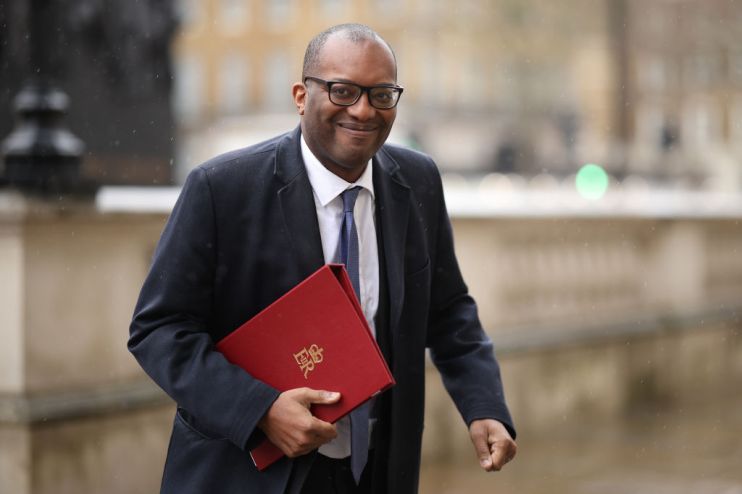
This is unashamedly designed to make it easier to provide handouts. Business Secretary Kwasi Kwarteng has declared that the Bill will “empower public authorities across the UK to deliver financial support – without facing burdensome red tape”. That does not mean “red tape” in the sense of burdens on businesses, but rather, making it easier for the British state to pick winners and losers. So, keeping alive more unproductive businesses, discouraging innovation, and wasting taxpayer money.
The ability to give out problematic subsidies is meant to be restrained by democratic accountability. But the new subsidy control regime will make it harder to identify, scrutinise and contest subsidies.
Under EU rules any subsidy of over €500,000 (£415,000) must be published online. The UK’s new rules will increase the disclosure threshold to £500,000 for subsidies paid out under a government scheme. It will even be possible to handout multiple subsidies under the threshold to the same business, without ever disclosing it.
Public authorities will only have to disclose individual subsidies if they hand out more than £315,000 over three years to a single business. These smaller one-off subsidies are in fact entirely exempt from having to follow the subsidy control principles (up from the EU de minimis rule of €200,000 or £165,000).
These are not small amounts. The Centre for Public Data estimates that over £4bn of subsidies will not be disclosed each year because of these thresholds – about half of all subsidies. The half a million pound threshold means that 97 per cent of recipients of Covid bounce back loans will not be disclosed – despite an estimated £4.9bn being lost to fraud. We will never know whether early disclosure of who was being given money could have spotted the huge scale of deceit under the scheme before so much taxpayer cash was lost.
It’s a no-brainer to require disclosure of all subsidies. In the first instance, the public are entitled to know how their money is being spent by public authorities. Transparency also encourages public authorities to follow subsidy rules, allow businesses to challenge distortive subsidies, and increase our ability to assess the efficiency of public spending. It also helps identify cases of rent seeking and corruption.
It’s not even a particular burden on public authorities to require them to publish this information. They already have to keep records of all the money which is handed out and publish some subsidies – the extra effort to publish all subsidies would be minuscule. Indeed, the government’s impact assessment found it would cost just £20,000 per year in total to publish all subsidies.
The government is making it administratively easier to hand out subsides while at the same time reducing accountability. This is a recipe for disaster. It’s not too late for the government to accept transparency amendments, such as those proposed by the anti-corruption tsar John Penrose MP. The UK has the opportunity to use Brexit to be world-leading on transparency.