Skip to content
Tuesday 18 August 2026London --:--Frankfurt --:--Zurich --:--
NewslettersSearchEN · DE · FR
MorningWire

European business, markets and politics

FTSE 100
10,728.04
+0.07%
DAX
26,128.36
-0.80%
CAC 40
8,509.36
-0.82%
STOXX 50
6,468.17
-0.95%
  • Europe
  • Markets
  • Business
  • Economy
  • Regulation
  • Politics
  • Opinion
More
GermanyFranceEU InstitutionsCompetitionPublic AffairsBankingTechnologyEnergy
  • Germany
  • France
  • Europe
  • Markets
  • Business
  • Economy
  • Regulation
  • Politics
  • Opinion
  • DE
Tuesday 19 November 2019 4:51 pm

Renewables set to make up half of the UK’s electricity production by 2025

By: Edward Thicknesse

Add as a preferred source on Google
Renewables set to make up half of the UK's electricity production by 2025

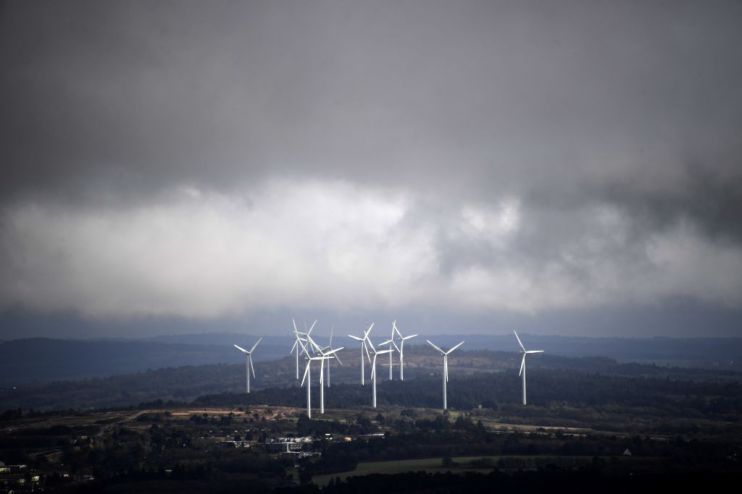
Renewables are expected to contribute 50 per cent to Britain’s electricity production by 2025, the highest share of any big European market excluding hydro, according to a new report from Moody’s.

The rapid decarbonisation has been led by a combination of falling wind power prices and the dramatic decline of coal-fired generation.

Read more: UK tops G20 for decarbonisation rate but it won’t be enough

In 2018, coal sources produced just 15 terawatt hours of electricity, down from 140 terawatt hours in 2012. 

By the end of 2019 Moody’s estimate that Britain will have 10 gigawatts of offshore wind in operation, the highest in the world, compared with seven gigawatts in Germany, the second-largest market.

Although growing renewables penetration has contributed to the displacement of coal, a much larger factor has been Britain’s high carbon price.

Since 2013, the UK has imposed a carbon tax, known as the Carbon Price Support (CPS), which has boosted the total price of carbon to levels where gas has generally had lower variable costs than coal. 

The substitution of gas for coal, as well as the growth of renewables, resulted in a decline in annual emissions from the UK power sector of 93m tonnes, or 60 per cent, between 2012 and 2018.

Barring a collapse in the price of coal compared to gas or the total price of carbon collapses, Moody’s expect that the coal phase-out will be complete by 2022, well ahead of the UK government’s 2025 target.

Read more

Quinbrook Closes Oversubscribed GBP 587 Million Renewables Impact Fund II

However, a report from PwC, also released today, found that the majority of the UK’s reduction in emissions have come from the phase-out coal, a process that can only be done once.

Although the UK has the fastest decarbonisation rate of all the G20 countries, its current annual level of 3.7 per cent is far below the 9.7 per cent required to meet its 2050 net zero emissions target.

Moody’s also said that it expects the ongoing turmoil in the UK’s retail energy market to continue as a result of competition and price capping of tariffs.

SSE has responded to difficult trading conditions in its retail business by selling it, while an increasing number of small suppliers have failed, imposing significant costs on those still operating.

Read more: SSE profit rises as it calls for political action on renewables

Despite winning its appeal over how Ofgem calculated part of its price cap, Moody’s said that Centrica remains significantly exposed to regulatory and political risk.

The UK has an intensely competitive energy retail market, with more active suppliers than any other country in Europe. In total, 64 suppliers were active in the household market as of June 2019.

Main image credit: Getty

Read more

ReNew Reports 25.6% Reduction in Scope 1 & 2 Emissions and 24.7 Billion Units of Clean Power Generated in FY 2025-26

Share this article

  • Facebook
  • X
  • LinkedIn
  • WhatsApp
  • Email

Similarly tagged content:

Sections

  • Markets & Economics

Categories

  • Markets

Related Topics

  • Green energy

Trending Articles

  • As it happened: FTSE 100 drops as oil prices rise after Trump makes Hormuz threat

  • US bond market jitters spark UK economy recession warning

  • Jobless Banquet: Youth unemployment surge ‘sends Neets to KFC’

  • Monzo chair makes early exit after boardroom rift

  • Aldi boss wades into supermarket ‘price-gouging’ row

More from Morning Wire

  • Quinbrook Closes Oversubscribed GBP 587 Million Renewables Impact Fund II

    Business Wire
  • ReNew Reports 25.6% Reduction in Scope 1 & 2 Emissions and 24.7 Billion Units of Clean Power Generated in FY 2025-26

    Business Wire
  • KKR to Acquire a 50% Stake in a Portfolio of Developed Renewable Assets from TotalEnergies Across Europe

    Business Wire
  • Grid operator issues fresh heatwave warning over power supplies

    Energy
    Air conditioning vents in a grid pattern, illustrating cooling solutions during a heatwave
  • Energy operator ‘flying blind’ as net zero push threatens hiked bills and blackouts

    Energy
    Energy prices are high due to a range of factors including volatile gas prices and high net zero levies.
  • Britain faces energy squeeze from solar eclipse

    Energy
    Rows of blue solar panels in a field, generating clean energy, with green trees in the background.
  • Octopus tells Burnham to ‘cut bills’ with £189 energy plan

    Politics
    Andy Burnham engaged in discussion with Goalhanger, highlighting key insights and perspectives in a dynamic news setting.
  • Europe has made a ‘major mistake’ on slow electrification, IEA chief warns 

    Energy
    UK industrial electricity prices are the highest in the G7 and 46 per cent above the average of the International Energy Agency.
MorningWire

Independent European business, markets and political news for decision-makers.

Morning Briefing

Europe

  • Germany
  • France
  • EU Institutions
  • Europe

Business

  • Markets
  • Business
  • Economy
  • Regulation
  • Competition
  • Public Affairs

Editorial

  • Opinion
  • Editorial Policy
  • Corrections
  • Contact

Company

  • About Morning Wire
  • Privacy Policy
  • Terms of Use
  • Cookie Policy
© 2026 Morning Wire Ltd · Published by Morning Wire Media, Bahnhofstrasse 65, 8001 Zürich, Switzerland
Privacy · Terms · Cookies · Facebook