
Retail sales figures reveal the depth of Britain’s economic uncertainty

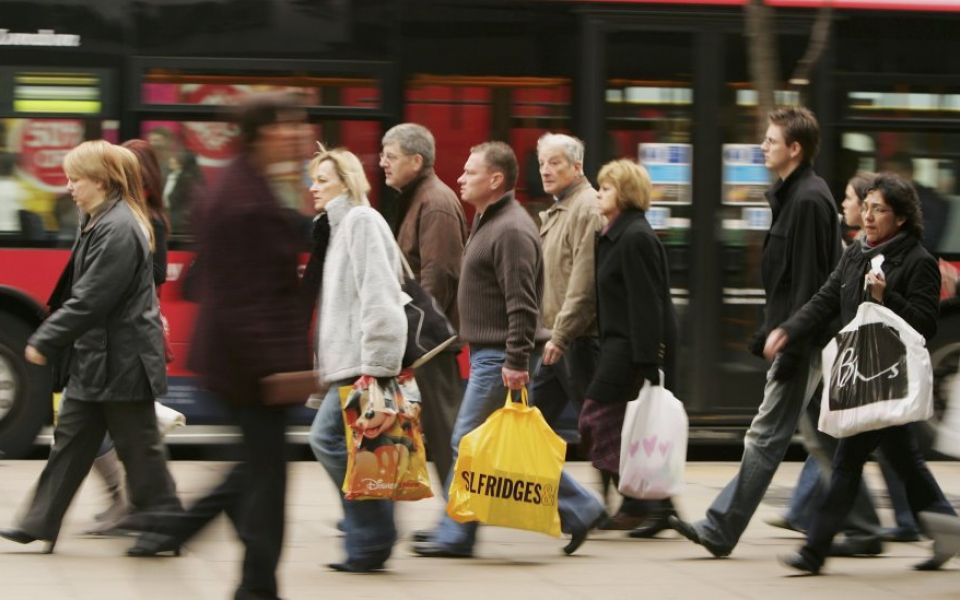
A debate which appeared all but settled at the tail end of 2017 is steadily reopening.
The question of whether Britain’s economy will expand more this year than it did last year is looking increasingly finely balanced.
Just a few months ago, the Office for Budget Responsibility (OBR) cut its annual economic growth forecasts for 2018 – and the following five years – by 0.5 per cent. Its downbeat predictions forecast growth of just 1.4 per cent this year.
But fast forward to mid February, and the Bank of England was raising its economic growth forecast for 2018 to 1.8 per cent – up from its previous forecast of 1.6 per cent.
Soon afterwards, the International Monetary Fund (IMF) warned the UK it desperately needs to boost productivity or risk suffering a slowing of economic growth.
Last Friday a leading economist, Howard Archer, predicted that growth in the first quarter of 2018 was likely to be lower than in the fourth quarter of 2017. All because retail sales in January were a paltry 0.1 per cent higher than in the previous month.
UK retailers endured their worst January for five years, and the retail sector has seen a spate of profit warnings and job cuts as a result.
Some perspective please
So, Mr Archer wasn’t being overly pessimistic with his first quarter GDP prediction. He was just going where the evidence led. Living standards are falling: inflation remains at 3 per cent, wage rises aren’t keeping pace with the cost of living and so people have less money to spend.
In a society highly reliant on consumer spending – it accounts for around 60 per cent of GDP – a fall in such spending is a worrying sign.
Moreover, retail sales volumes have been static at best for the past three months. They rose just 0.1 per cent in the three months to the end of January, compared with the previous quarter.
While this doesn’t mean the UK is entering a recession, it does indicate a slowdown. Mr Archer thinks UK GDP will grow by 0.4 per cent in the first quarter. That’s down from the previous quarter’s 0.5 per cent – barring a downward revision later this week – but only a touch. And it’s still double the growth seen in the first quarter of 2017.
Growth but a global also-ran
Britain’s continued growth story comes with a caveat – its economy is fragile at a time when the rest of the world seems to be enjoying an economic boom.
Regardless of the growth the UK sees this year, there are several threats to Britain’s continued prosperity. Not least of which, of course, is Brexit.
That said, there is no need to panic. Nor does it mean the Bank of England was wrong to raise its economic forecast for this year. But unless, as the Bank also forecast last week, wages also start to rise it’s hard to see where new consumer spending will come from.
Yet the uncertainty is clearly weighing on City analysts. In much of the Square Mile, the mood is oddly reminiscent of the years following the financial crisis.
Looking ahead, the main issue is how much uncertainty the UK economy can withstand.
Britons have lived with uncertainty since the Brexit referendum 18 months ago, and there’s still more than a year to go until the start of the formal process of cutting Britain’s ties with the EU.
With proposals for the ‘transition period’ that’s due to begin on 29th March 2019 embryonic at best, there’s still plenty of uncertainty ahead.
That’s an awfully long time to have to put up with not knowing how things are going to turn out.
To find out how INFINOX Capital can help you reach your financial goals, visit www.infinox.com.