Retailers unite to warn Treasury on ‘perfect storm’ of costs

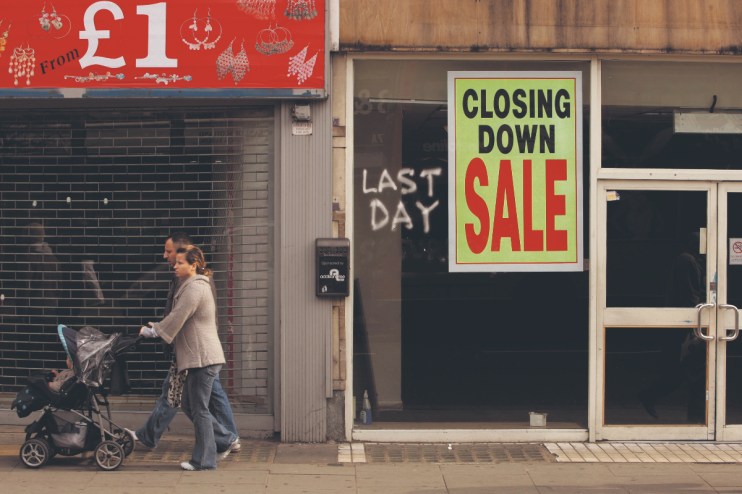
A heavyweight group of retailers has warned the Treasury that hundreds of thousands of jobs are at risk in the retail sector due to unsustainable cost hikes this year.
It’s the latest in a long string of warnings from the retail sector, which has been vocal about the coming damage to jobs and investment on the British high street.
The Retail Jobs Alliance (RJA), which includes Tesco, Marks & Spencer and B&Q-owner Kingfisher, warned that retailers are facing “a perfect storm” of additional costs from this April.
It said a higher national insurance bill, plus a new recycling tax and higher business rates, will see 300,000 jobs disappear by 2030.
Chief executive of M&S, Stuart Machin, said over the weekend that “retail is being raided like a piggy bank and it’s unacceptable”.
“The blunt truth is… the budget means UK retail will get smaller,” Machin wrote in The Times, adding that while Reeves’ long-term growth ambitions are welcome “action [needs to be] taken to encourage growth today”.
Andrew Griffith, Shadow Business Secretary, said: “Retailers are often the canary in the coalmine of the state of the economy. For major high street names to issue this stark warning shows that no one’s economic future is safe.
Although the Labour’s cabinet has no real experience of business, surely, they must heed the warnings and change course now.”
Retail’s ‘permacrisis’
Retail has had a rough ride since the financial crisis of 2008, with a combination of online shopping, a Covid-19 hangover and high taxes all compounding the issue, according to the Centre for Retail Research (CRR) with around 85,000 shops having closed since 2018.
With many out of the habit of high street shopping, shops have been struggling with a lack of in-store customers – even by early 2023, customer footfall was 10 per cent lower than in 2019, and in major cities the effect was more pronounced.
Brits have instead turned to experiences like meals out, city breaks, gym memberships and subscriptions to streaming services, leaving less to spend in shops.
Analysts and companies alike have argued that changes announced in the budget are only set to make the issue worse, with an already-high tax bill set to rise by £4.5bn, according to the British Retail Consortium (BRC).
The BRC attributed £2bn of this to the new packaging levy and £2.33 to higher national insurance contributions (NICs).
Retail businesses will be especially badly hit by the changes the government has made to employer NICs due a heavy reliance on part-time workers, many of whom were previously exempt from the tax as their pay didn’t reach the old threshold. The sector also has particularly low margins, of three to five per cent.
Peel Hunt has estimated that retail firms in their coverage will see pretax profit fall by an average of 7.5 per cent as a result of the Budget’s tax increase, although some will be hit much worse than others.
“Retail and hospitality are among the most exposed sectors to [budget] cost pressures,” associate director at Frontier Economics, Tim Black, said.
“In low-margin, highly competitive markets, there’s limited room to absorb higher costs – instead they’ll ultimately need to be passed on through higher prices, or cutbacks made to jobs – as a large group of retailers warned the Chancellor in November,” he added.
The high street’s antiquated tax system
High street firms have been railing against business rates, which are essentially council taxes for shops, for decades. Opponents describe them as “antiquated”, with only high street stores paying the tax and online stores paying a lower tax on warehouses.
In Labour’s inaugural Autumn budget, it announced changes to business rates: relief on the tax, which was 75 per cent, will fall to 40 per cent this April.
The tax will also increase in 2026. Business rates are based on a shop’s ‘rateable value’ which is the yearly rent the commercial property could have been let for on the open market. The next change to business rates, on 1 April 2026, will be based on rental values as of 1 April 2024.
The government will introduce two permanently lower tax rates for retail, hospitality, and leisure properties with rateable values under £500,000 – currently around 1,900 superstores – from 2026, but it has not yet published the details of this reform.
Changes to rateable values mean many more stores will reach the £500,000 threshold.
The RJA is calling on the UK government to “remove shops from the higher rate business rates multiplier,” a spokesperson said, with the group adding it would affect ‘anchor stores’ on the high street, which tend to pull visitors in.
“This change would provide much-needed relief for at-risk stores, enabling them to reinvest in their businesses, retain staff, and grow their footprint on the high street.”
A HM Treasury spokesperson said the Government delivered a “once-in-a-Parliament budget to wipe the slate clean”, and is now “focused on going further and faster to kickstart economic growth so working people have more money in their pockets”.
“We’re levelling the playing field for high street businesses by permanently cutting business rates and removing the £110,000 cap for over 280,000 retail, hospitality and leisure business properties, while also capping corporation tax for the duration of parliament.”
The RJA was originally launched in 2022 to protest high business rates, and has been revamped this year in light of the mounting pressures facing the sector.