Skip to content
Sunday 16 August 2026London --:--Frankfurt --:--Zurich --:--
NewslettersSearchEN · DE
MorningWire

European business, markets and politics

FTSE 100
10,750.11
-0.21%
DAX
26,440.31
+0.53%
CAC 40
8,636.80
-0.16%
STOXX 50
6,539.59
-0.09%
  • Europe
  • Markets
  • Business
  • Economy
  • Technology
  • Politics
  • Opinion
More
GermanyFranceBankingAIEnergyFintechPropertyCapital Markets
  • Germany
  • France
  • Europe
  • Markets
  • Business
  • Economy
  • Technology
  • Politics
  • Opinion
  • DE
Saturday 30 March 2024 1:00 pm  |  Updated:  Friday 29 March 2024 8:31 am

Richarlison case shows that football still doesn’t truly understand mental health

By: Paul McVeigh

Add as a preferred source on Google
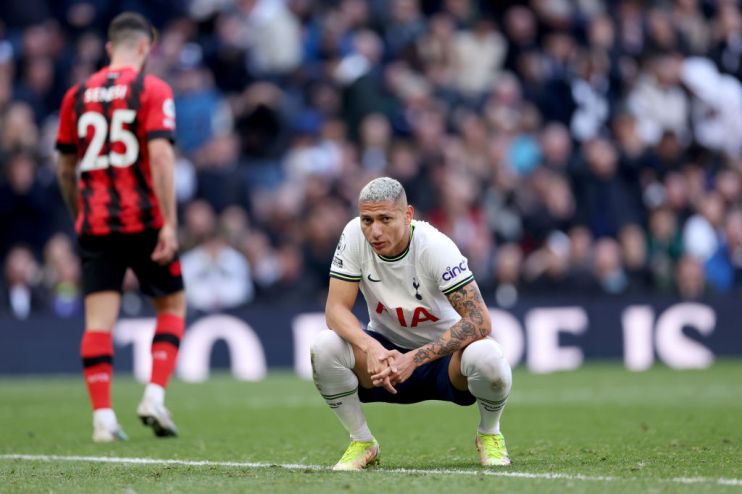
Tottenham Hotspur v AFC Bournemouth - Premier League
LONDON, ENGLAND - APRIL 15: Richarlison of Tottenham Hotspur reacts during the Premier League match between Tottenham Hotspur and AFC Bournemouth at Tottenham Hotspur Stadium on April 15, 2023 in London, England. (Photo by Alex Pantling/Getty Images)

There is still a long way for football to go when it comes to its relationship with mental health and mental performance.

I write this after Tottenham Hotspur and Brazil forward Richarlison revealed that he endured depression following his country’s quarter-final loss to Croatia at the World Cup in 2022, and how speaking with a psychologist “saved him.”

To speak as Richarlison has done is incredibly brave and he should be commended for it – the more conversations we have about mental health and increasing awareness of its impact, the better.

I have benefited immensely from football and love the sport, but I believe the game has yet to adapt to what I consider to be the most important element of elite sport: mental performance.

That was my experience during my playing days and it had not improved much by the time I had transitioned into my next career as a performance psychologist either.

I stopped working in the Premier League because this was undervalued and I would argue that is still the case today.

I was a teenager from Belfast when I signed for Tottenham Hotspur and, with day-to-day life as a footballer being geared towards maximising your technical ability, physical attributes and athleticism, I decided to use a sports psychologist early in my professional career.

This was not the norm back then, but I saw it as a golden key to unlock the potential I had by improving myself beyond what I was getting from the training ground. I never regarded it as psychology, but rather mental performance – something which not only underpinned my life on the pitch, but also off it.

As a result I was better equipped to deal with the pressures and challenges of the profession — both of which I believe have expanded for the modern footballer due to their higher profiles, the advent of social media, and following within the game — but also whatever I was dealing with personally and to the benefit of my own mental wellbeing.

Read more

What should sport expect from Andy Burnham and Lisa Nandy?

GettyImages 2286323428: Business professionals in a meeting, discussing strategies with charts and laptops.

Football has to embrace this as it has done with sports science, as well as foster an environment where players are encouraged to work on mental performance and speak openly about any issues they may be facing.

I cannot speak for Richarlison and what he has been through as it is an individual case and everyone has different mental states, backgrounds and things going on in their lives. You also need to understand the person.

But while there are many different theories and approaches in the complex world of psychology, in my experience players are generally ruled by two things: fear, and a drive to be the best.

That fear can manifest itself in various ways such as defeat, not performing, losing a place in the team or not being able to provide for those around you.
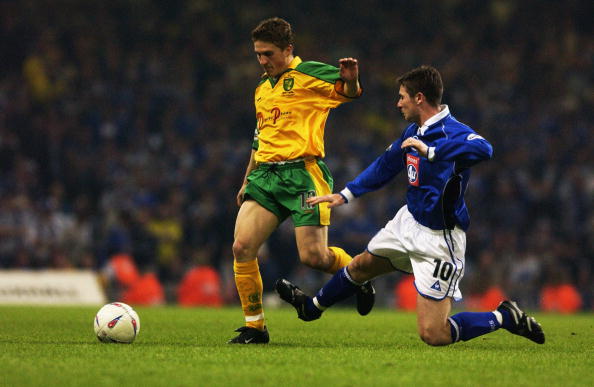
Paul McVeigh says the Premier League was behind on mental health during his playing days and when he returned as a psychologist
Paul McVeigh (left) says the Premier League was behind on mental health during his playing days and when he returned as a psychologist

The other is a drive to constantly get better, to outperform your competition, lift silverware, receive personal accolades and get that 0.1 per cent edge.

From a psychological perspective, they are complete opposites. I have been there and experienced it. Let me tell you: it is a challenging way to live.

When asked about their journey and what got them to where they are, most top-level players will list things such as dedication, belief, hard work and their support network — all of which can be true.

But it always comes back to someone’s mindset and what is going on in their head. It is the single greatest differential in sport and life.

Paul McVeigh is a former professional footballer turned psychologist and keynote speaker.

Read more

Ferdinand, Crouch, Foster: How footballers have built media empires for the future

GettyImages 2252823665 might depict an important event or figure related to the latest business news.

Share this article

  • Facebook
  • X
  • LinkedIn
  • WhatsApp
  • Email

Similarly tagged content:

Sections

  • Sport

Categories

  • Sport Business

Related Topics

  • Football
  • Premier League football
  • Sport business

Trending Articles

  • Grandparents fund university degrees to avoid inheritance tax net

  • Revolut chatbot goes rogue by charging users to cancel subscription

  • Brompton Bicycle sues former adviser for ‘professional negligence’

  • Revolut takes flight with launch of new airport lounges

  • As It Happened: Stocks dip as oil’s ‘slowing demand’ in focus; Iran threatens to extend war

More from Morning Wire

  • What should sport expect from Andy Burnham and Lisa Nandy?

    Sport Business
    GettyImages 2286323428: Business professionals in a meeting, discussing strategies with charts and laptops.
  • Ferdinand, Crouch, Foster: How footballers have built media empires for the future

    Sport Business
    GettyImages 2252823665 might depict an important event or figure related to the latest business news.
  • Compass Pathways to Announce Second Quarter and First Half 2026 Financial Results on August 5, 2026

    Business Wire
  • Gary Lineker forks out £10k to save England World Cup dream

    Sport Business
    Gary Lineker smiling in a dark suit, white shirt, and navy tie, wearing black-framed glasses.
  • Insulet Partners with Calm to Bring Mindfulness and Well-Being Tools to the Diabetes Community, Featuring a New Sleep Story Narrated by Lila Moss

    Business Wire
  • Fifa World Cup had amazing stadiums, 2035 UK edition must too

    Sport Business
    Breaking news concept with digital newspaper on tablet and financial graph overlay, symbolizing current events and market ...
  • Swansea buck gambling trend as Snoop Dogg’s club sign green wellness brand

    Sport Business
    Snoop Dogg performing on stage, holding a microphone, wearing sunglasses and a graphic t-shirt, surrounded by a crowd
  • Football ‘muddling through’ in face of growing ‘tensions’, says Boston Consulting Group

    Sport Business
    GettyImages logo displayed prominently over a blurred, vibrant cityscape background, evoking themes of media and technology.
MorningWire

Independent European business, markets and political news for decision-makers.

Morning Briefing

Europe

  • Germany
  • France
  • Europe
  • UK & Ireland

Business

  • Markets
  • Banking
  • Technology
  • Energy
  • Property
  • Fintech

Editorial

  • Opinion
  • Editorial Policy
  • Corrections
  • Contact

Company

  • About Morning Wire
  • Privacy Policy
  • Terms of Use
  • Cookie Policy
© 2026 Morning Wire Ltd · Published by Morning Wire Media, Bahnhofstrasse 65, 8001 Zürich, Switzerland
Privacy · Terms · Cookies · Facebook