Right to Buy has been a huge success, of course the left hates it

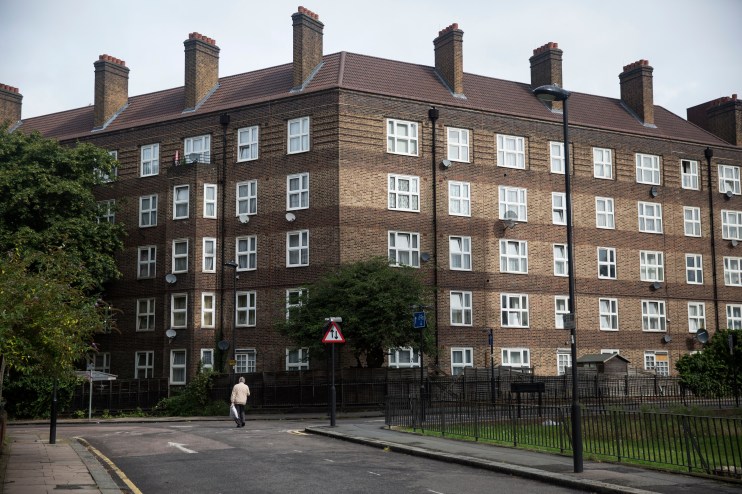
Labour leadership contenders’ claims that Right to Buy is to blame for the housing crisis are absurd, says Ben Hopkinson
Last week in a 5,000 word polemic, Tony Blair accused the Labour government of being parked firmly in the party’s ‘soft left’ comfort zone. Perhaps nothing reflects this more than the leadership contender’s short-sighted clamour for social housing at the expense of a functioning housing market.
Andy Burnham, in his response to Blair, went as far as claiming that the Right to Buy, under which council tenants can eventually purchase their home, is the root cause of today’s housing crisis. Keir Starmer too has announced more restrictions on the Right to Buy.
Under these changes, a combination of stopping any sales in the countryside, preventing tenants from using their Right to Buy for the first decade of their tenancy, and exempting any property built within the past 35 years will strip the rights of more social tenants to buy their own home.
The Right to Buy is a rare policy that has been an unmitigated success. Over 2m households have used it as a means to own their home. These families gained a stake in their local community, which previously had been out of reach. They were then free to do what they wanted with the property. They could customise their home to their taste, move easily if they wanted, and could pass the asset on to their children.
Right to Buy benefitted both the families who became owners, and the wider housing market by allowing more properties to be bought and sold, rather than being handed out by government bureaucrats.
Weakening the state drives the soft left mad
Of course it was the weakening of the role of the state and the empowerment of the individual that drove the soft left mad. They have always blamed the transfer of social homes to the free market for Britain’s housing crisis.
Simply put, this is nonsense. The UK does not have a shortage of social homes; it has a shortage of homes regardless of tenure type.The UK has the fourth highest percentage of social housing in the OECD, which is double the EU average. But compared to the typical Western European country’s total homes per capita, it is 6.5m homes short. And Right to Buy homes do not disappear once they’ve been bought by the tenants, despite what ministers say in press releases.
The failure to build, not the success of Right to Buy, is the true cause of the housing crisis. And the government’s obsession with requiring large amounts of subsidised housing to be funded by any development is actively making it harder to build the homes Britain needs.
One of the most common complaints about the Right to Buy is that it gives tenants a discount. But this ignores the far larger subsidy already built into every social home, long before any discount is offered.
In London, for example, it costs between £400,000 and £950,000 to develop a new social rent property (using the GLA’s 2021 development-cost figures, uprated for construction inflation). Yet once built, that asset generates very little for the taxpayer. The average social rent in the capital is around £7,900 a year, and after maintenance and management costs, the net present value of the rental income is on the order of £100,000.
The state spends up to £950,000 to create an asset whose value, as a social-rented home, is barely £100,000. The difference is a capital subsidy the taxpayer never recovers
In other words, the state spends up to £950,000 to create an asset whose value, as a social-rented home, is barely £100,000. The difference is a capital subsidy the taxpayer never recovers.
These are vast, permanent transfers which are made silently, every year, with no political controversy, precisely because they are buried in capital budgets and never scored as ongoing spending.
The discount on the value the tenant gets under the Right to Buy, by contrast, is visible, but is modest compared to the huge subsidy they have already received simply by living in the home. The current system is built on enormous implicit discounts that its defenders conveniently forget.
The government is also using this opportunity to protect expensive council houses. There is legislation on the books that could have been used to sell million-pound council mansions and use the proceeds to fund the construction of more affordable housing, a true win-win. Labour’s plan to repeal this will mean that the British taxpayer is subsidising people to live in properties that are far more valuable than any home the average Brit could ever afford.
The government’s reforms to the Right to Buy and protection of subsidised council mansions are steps in the wrong direction. They will not help encourage ownership, housing that is more affordable or a flourishing housing market. The hundreds of thousands of council tenants who will no longer be able to buy their own property are just a casualty of the government choosing to stay in its soft left comfort zone.
Ben Hopkinson is head of housing and infrastructure at the Centre for Policy Studies