Rio Tinto suffers from China’s sluggish revival despite inching closer to mega mine project in Guinea

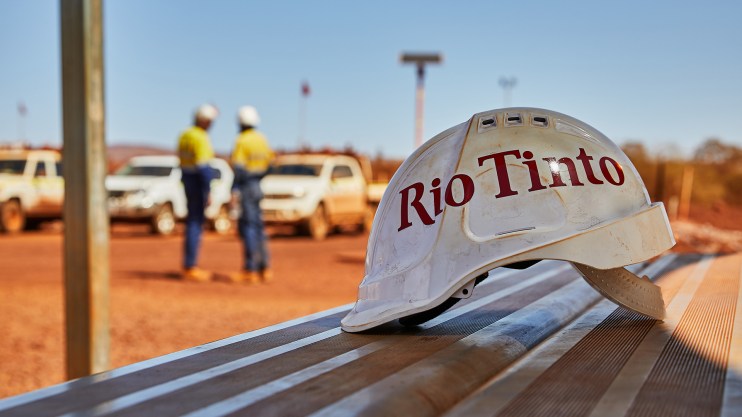
Investor sentiment towards multinational miner Rio Tinto (Rio) has not improved in this week’s early trading, despite the FTSE 100 company closing in on plans to extract resources from the world’s largest untapped supply of iron ore.
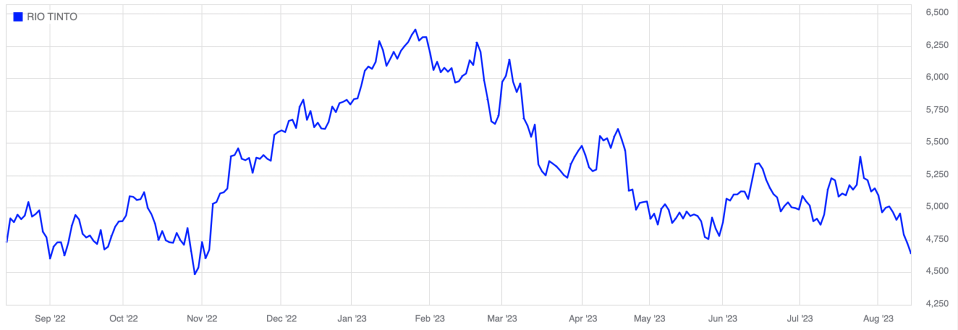
Rio’s share price was down 1.7 per cent at close of play on Monday, with the Anglo-Australian commodities giant suffering a 27 per cent drop in its share price since late January – which even positive business developments have failed to reverse.
Its share price has fallen from a peak this year of 6,377p per share on January 25 over six months to 4,647p per share this afternoon.
This is despite the company announcing an “important milestone” last weekend to develop 375m of railways in Guinea, Africa, connecting infrastructure across the vast iron ore deposit in Simandou, a remote mountainous area in south east Guinea.
Rio effectively owns a 45 per cent stake in two of the mining deposit’s four blocks through its Simfer joint venture, together with the government of Guinea and a consortium of Chinese groups.
After extensive delays, ownership disputes and legal wrangling, Rio believes the project may finally be imminent, paving the way for a final investment decision once government approval has been reached.
It is expected to spend about $5.5bn developing the project from this year to 2025.
However, China’s sluggish economic revival and the end of last year’s bumper commodity rallies are still weighing down Rio Tinto’s share price, putting a ceiling on returns for investors.
Analysts warn over Rio Tinto’s ‘ceiling’ price
The Anglo-Australian mining giant reported its lowest first-half year profits since the pandemic last month, plagued by tumbling iron ore prices and dashed hopes of a speedy resurgence in Chinese demand following the lifting of pandemic restrictions at the start of the year.
It posted earnings of £4.4bn for the first six months of trading this year, falling more than a third from the £6.7bn bumper figure posted 12 months prior.
This coalesces with declining realised prices for iron ore from its flagship western Australian mining complex in Pilbata, which slipped to $76.38 ($98.60) per metric ton in the first half of the year – an 11.1 per cent slide compared to last year.
Rio Tinto extracts ore from its mining complexes in the Pilbara region of Western Australia and while the company is pivoting towards copper and minerals amid the green energy transition, iron ore accounts for roughly 70 per cent of Rio Tinto’s profits.
Iron ore is used across the world as a key steel-making ingredient, while China is its main market – making the FTSE 100 firm doubly exposed to fears of a global economic downturn
Growth in the world’s second largest economy trickled to 0.8 per cent in the second quarter of this year, compared to a 2.2 per cent bump-up last year.
Most recently, China’s largest private real estate developer Country Garden announced it is seeking to delay payment on a private onshore bond for the first time – which is the latest sign of a stifling cash crunch in the property sector, an essential market for iron ore.
Rubbing salt in the wounds of investors, Rio Tinto has now slashed its dividend to $1.77 per share, a sharp reduction on last year’s offering of $2.67 per share for investors.
Matt Britzman, equity analyst at Hargreaves Lansdown, argued that Rio Tinto’s exposure to China would continue to plague both its wider profits outlook and daily share price.
“As each headline comes along painting a worse picture for China, it’s causing hurt for miners like Rio Tinto who have large exposure to iron ore, given China’s the world’s largest consumer,” he said.
While he noted that Rio Tinto was continuing to expand operations, opening the Gudai-Darri mine in Western Australia – which has a 40 year shelf life and an expected annual capacity of 43m tonnes of iron ore – it was a victim to the wider macroeconomic situation which was fuelling investor sentiment.
“Growing exposure in areas like copper, nickel and lithium should provide some welcome diversification away from iron ore in the coming years. But for now, as long as questions remain around the Chinese demand picture, sentiment and more importantly valuations are likely to have a ceiling,” he said.
Russ Mould, investment director at AJ Bell, told Morning Wire that Rio Tinto has suffered from its exposure to China, where the economic revival has been sluggish at best.
He argued that long-term investor behaviour would depend on their forecasts for the global economy this year, alongside their bullishness towards the transition to green energy and net zero.
“If you believe you are going to get higher nominal economic growth and that inflation is set to stay due to loose monetary policy, then commodities might be a sensible place to be. It also might be if you accept that as we move to a low carbon world we will still need lots of minerals and metals,” he said.
By contrast, if someone takes a “hard line on ESG” – where the company has been plagued with controversy since the destruction of the Juukan Gorge and a damning review of its workplace culture – then he argued it made sense to be “to be opposed to digging holes in the in Earth’s crust.”
The Serious Fraud Office confirmed to Morning Wire it is still investigating Rio Tinto over suspected corruption in relation to the conduct of business in the Republic of Guinea by the group, its employees and others associated with it.
Earlier this year, Rio Tinto announced agreed to pay a $15m civil penalty to settle an investigation by the US Securities and Exchange Commission, relating to an alleged bribery scheme involving a consultant in Guinea.
At the time, chairman Dominic Barton said: “When Rio became aware of the issue, an internal investigation was immediately launched, and we proactively notified the appropriate authorities.”
Australia’s securities watchdog closed its investigation into former Rio Tinto executive Alan Davies over an alleged $10.5m payment to a consultant in Guinea in 2021, citing insufficient evidence.