Skip to content
Friday 14 August 2026London --:--Frankfurt --:--Zurich --:--
NewslettersSearchEN · DE
MorningWire

European business, markets and politics

FTSE 100
10,750.11
-0.21%
DAX
26,440.31
+0.53%
CAC 40
8,636.80
-0.16%
STOXX 50
6,539.59
-0.09%
  • Europe
  • Markets
  • Business
  • Economy
  • Technology
  • Politics
  • Opinion
More
GermanyFranceBankingAIEnergyFintechPropertyCapital Markets
  • Germany
  • France
  • Europe
  • Markets
  • Business
  • Economy
  • Technology
  • Politics
  • Opinion
  • DE
Thursday 07 May 2015 7:05 am

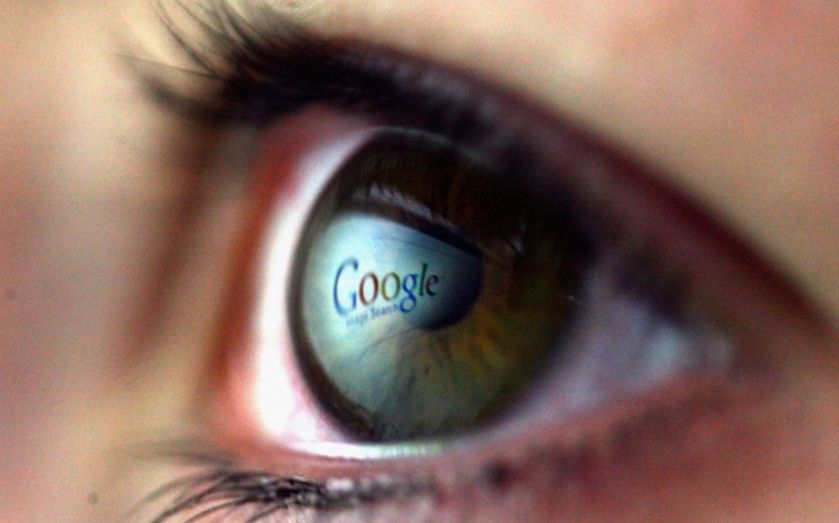
The rise of Cyberchondria: Search engines are wrongly making us believe we have terrible diseases

By: Sarah Spickernell

Add as a preferred source on Google

You're feeling a bit funny – what could the cause be? A life-threatening disease? If MrDoctor123 on unknown medical blog considers it to be a vague possibility, then surely there's a genuine risk of imminent death. 

This over-reliance on the internet to self-diagnose our medical problems is spreading across the world faster than a highly infectious disease, and resulting in a serious case of global “cyberchondria”.
 
In the US, research recently showed that 35 per cent of adults go online to self-diagnose medical conditions, and Google revelaed that one in 20 of its 100bn searches a month are for health-related information. But the reality is half of what the internet tells us about our physical ailments is inaccurate, over-the-top or just out there to scare. 
 
Dr Guido Zuccon and his colleagues at the Queensland University of Technology decided to look into the accuracy of results that appear when various medical searches were entered into Google and Bing. They found that masses of terrifying statistics and unfounded speculations were offered in the place of reliable information and advice.
 
"People commonly turn to 'Dr Google' to self-diagnose illnesses or ailments," Dr Zuccon said. "But our results revealed only about three of the first 10 results were highly useful for self-diagnosis and only half of the top 10 were somewhat relevant to the self-diagnosis of the medical condition."
 
So if you had searched for the symptoms of something like a bad head cold, you could end up thinking you had something far more serious, like an issue with the brain.
 
"Because on average only three of the first 10 results were highly useful, people either keep searching or they get the wrong advice which can be potentially harmful for someone's health," Zuccon continued. 
 
When we believe there is something wrong with us, there's a tendency to buy the wrong (and occasionally dangerous) medicines online, adopt pointless and expensive home therapies, and sometimes even completely change our lifestyles for nothing. 
 
So if you believe you have something wrong with you, the advice is to bear in mind the inaccuracy of many search results and never use them as a definitive answer – and go to the doctor. 

Share this article

  • Facebook
  • X
  • LinkedIn
  • WhatsApp
  • Email

Similarly tagged content:

Sections

  • News

Categories

  • Tech

Related Topics

  • Cybercrime

Trending Articles

  • Revolut takes flight with launch of new airport lounges

  • Grandparents fund university degrees to avoid inheritance tax net

  • Brompton Bicycle sues former adviser for ‘professional negligence’

  • Revolut chatbot goes rogue by charging users to cancel subscription

  • It’s not just Jason Arday, most of sociology is a scam

More from Morning Wire

  • Almirall Announces EMA Acceptance for Filing of Paediatric Registration of Ebglyss (Lebrikizumab) in Atopic Dermatitis in Children 6 Months and Older

    Business Wire
  • ILiAD Biotechnologies Expands Board of Directors and Appoints Chief Business Officer

    Business Wire
  • Verdiva Bio Appoints Cardiometabolic Leader Steve Marso as Chief Medical Officer

    Business Wire
  • Curaleaf Launches Free CPD-Accredited Platform to Close Medical Cannabis Training Gap for UK Healthcare Professionals

    Business Wire
  • Alkermes’ Alixorexton Demonstrated Sustained Improvement in Wakefulness in Adults With Narcolepsy Type 1 and Type 2 in Long-Term Extension Study Interim Analysis

    Business Wire
  • VoxNeuro Receives FDA 510(k) Clearance for Cognitive Function Neuroimaging (cfNI) Software – An Objective EEG/ERP Brain Health Assessment

    Business Wire
  • Silence Therapeutics Announces Positive Topline Results from Phase 2 SANRECO Trial of Divesiran in Polycythemia Vera, Supporting its Potential Best-in-Class Profile

    Business Wire
  • Almirall H1 2026 Results

    Business Wire
MorningWire

Independent European business, markets and political news for decision-makers.

Morning Briefing

Europe

  • Germany
  • France
  • Europe
  • UK & Ireland

Business

  • Markets
  • Banking
  • Technology
  • Energy
  • Property
  • Fintech

Editorial

  • Opinion
  • Editorial Policy
  • Corrections
  • Contact

Company

  • About Morning Wire
  • Privacy Policy
  • Terms of Use
  • Cookie Policy
© 2026 Morning Wire Ltd · Published by Morning Wire Media, Bahnhofstrasse 65, 8001 Zürich, Switzerland
Privacy · Terms · Cookies · Facebook