Russia has caught our attention, now Putin’s threat in Ukraine will be tested

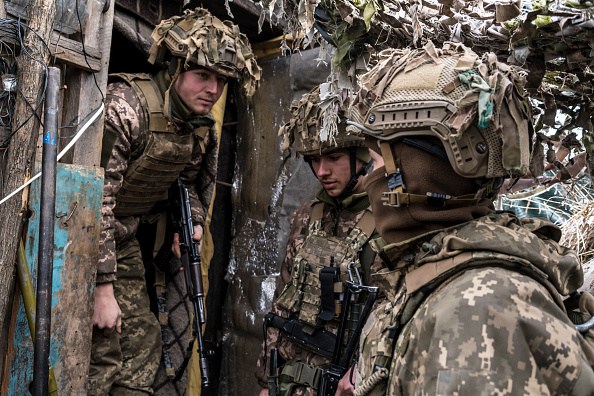
Since the spring of last year, Russia has amassed military forces near Ukraine’s border. Estimates vary on the size of these forces, but most analysts believe that somewhere in the realm of 100,000 military personnel have been deployed, with perhaps more held in reserve.
Given the composition of these units, their capabilities are not in question. There is a daze of questions and debate swirling around the sort of military operations that Russia would mount, whether it is an invasion to seize territory or a series of punitive strikes intended to degrade the Ukrainian Armed Forces. But what is not in doubt is that these forces have sufficient firepower to deal a major blow against Ukraine.
Why would Russia deploy such forces and possibly use them?
The simple answer is that the leadership in the Kremlin has grown frustrated with the pace of developments in the war in eastern Ukraine. Although a negotiated peace has been attempted by way of the 2014-2015 Minsk Accords, Russian leaders feel that Kyiv has—egged on by its supporters in the west—not complied with the terms that it pledged to fulfill.
Moscow has not abided by the Minsk Accords either: it has not withdrawn heavy military support from contested areas. Nor has it permitted Ukraine to reconsolidate control over its eastern border. It has not even confessed to its own direct participation in the conflict. But in Moscow’s view, by neither organizing local elections in the Donbas nor providing for a new federal constitutional framework, Kyiv has paid too little respect to those groups that have agitated for more political autonomy in the eastern region of the Donbas.
Of course, the conflict between Russia and Ukraine has been dragging on since 2014, albeit at a low intensity. What has changed in Moscow is the sense that Ukraine is slipping even further from its grasp. Not only has Kyiv failed to comply with the Minsk Accords, but it has also stepped up its efforts to integrate more firmly into Western institutions like the European Union and North Atlantic Treaty Organization (NATO) while cultivating bilateral partnerships with partners like the United Kingdom. All the more troubling is that current Ukraine President Volodymyr Zelensky was supposed to have been much more amenable to resolving the Donbas conflict on Russian terms than what has turned out to be the case.
The efforts at trying to salvage a diplomatic outcome last week seemed to have come to naught, but that may have been the point. Moscow used the military build-up to grab the West’s attention. Precisely because it is so hard to ignore a nuclear-armed great power building up forces in Europe, Moscow got that attention and three meetings—using different formats—were held last week.
It made extraordinary demands that went beyond simply asking that NATO reject explicitly the membership aspirations of Ukraine (and Georgia). Moscow also called for the suspension of any military support to Ukraine as well as the cessation of measures put in place by NATO to assure countries that had joined the alliance since 1997.
All these demands were non-starters. NATO would never agree to neuter itself so effectively, especially when a partner like Ukraine is under severe duress and Russia would, at least not publicly, offer no concessions of its own.
Amid the circumstances, it was not unreasonable to think that the talks would end in failure so that Russian leaders could justify—whether to their public or to themselves—the necessity of further military action against Ukraine. That threat is real indeed.