Russia is overplaying its hand to try and force the West to give concessions

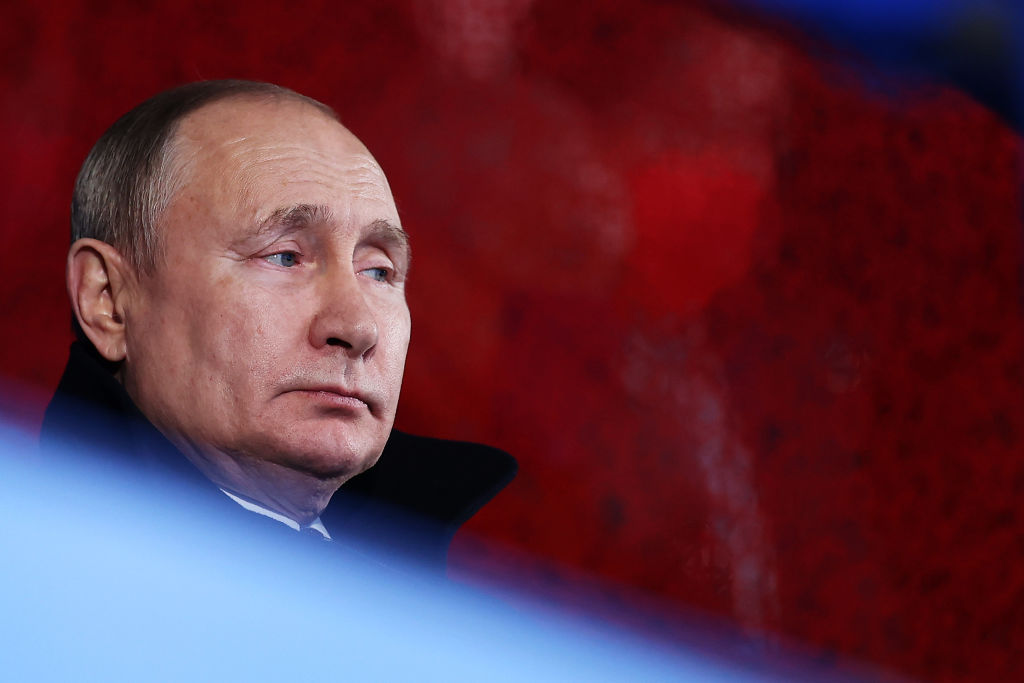
AS world leaders plunge into an eleventh hour bid to talk Vladimir Putin down from the edge of a war with Ukraine, the fundamental misconceptions at the heart of Russia’s objectives in Ukraine must be dispelled in order to calibrate the right response. Russia wants a pro-Moscow administration in Ukraine without having to undertake a war it cannot afford. The West should be careful we don’t gift Putin the outcome he wants out of sheer fear of what we think his aim is.
Russia is often a bold and provocative foreign policy actor. It isn’t constrained by domestic and international norms in the way much of the rest of the international community is. It would be a simple conclusion to draw from such a posture that Russia is acting from a position of strength. It isn’t.
The worst possible outcome for Russia would be in the invasion and occupation of Ukraine. Why? Stories about the size of Russia’s sovereign wealth fund conceal a much more complex picture on the state of the Russian economy.
Inflation for most Russians is higher in reality than the official forecast of 8 per cent. The country’s GDP growth has been sluggish. Real incomes have fallen almost 10 per cent since Russia’s invasion of Crimea in 2014; 40 per cent of Russians view the economic situation in the country as either “bad” or “very bad”.
The cost, not just of the military invasion of Ukraine or the price of administering the country post-invasion, but also the resulting sanctions would be crippling to Russia’s economy. Being cut off from the dollar, being excluded from the international banking system SWIFT and/or loss of future gas sales if the Nord Stream II gas pipeline project is disrupted, temporarily or permanently, would all be extremely heavy burdens for the Russian economy to shoulder. Putin may be hoping that Beijing could step in as a shock absorber for possible Western sanctions but this is too simplistic a picture. Xi may be publicly touting Sino-Russian “friendship”, but behind closed doors Beijing knows it needs to protect its economic interests in Europe and avoid pushing EU countries into closer partnership with the US.
If not occupation, what does Russia want? Putin’s gamble is that by presenting the West with a threat of invasion we offer significant diplomatic concessions that create a more pro-Russian administration in Kiev without the need for an invasion. Such an outcome would justify his costly gamble of ramping up tensions on the border without the need to risk Russian money and lives.
The whole exercise is a high-risk escalation by Putin to solidify the vision for Russia that justifies his wider policy-making. Recent years have seen the Kremlin move from presenting Russia as an embattled and unfairly treated power on the world stage to taking a much more front-footed approach- particularly in Syria and in asymmetric warfare. This vision he is touting of a great Russia, rightly playing a significant role on the world stage, justifies tighter security at home and economic sacrifices by the public.
This whole calculus changes if the Russian armed forces become bogged down in a costly and lengthy war in Ukraine, inflicting further damage to the Russian economy. Ukraine is a conflict Putin cannot afford and his exit strategy depends on a favourable diplomatic solution.
What all of these pieces of information paint is a picture of Russia in a tight spot. Rhetoric and military tensions ramped up for an invasion they don’t want. The danger in all of this for the West is that we underestimate the cards we have in our hand: invasion of Ukraine would be deeply damaging to the Kremlin. Out of fear of a future conflict, we could easily gift Putin a diplomatic victory he wants most of all.
What is needed is a clear but pragmatic approach to the crisis. We must demonstrate to the Russian people that the West is not their enemy, despite domestic propaganda to the contrary. In the short term this means we need to put the question of Ukraine’s NATO membership within the broader context of relations with Russia and seek a solution that navigates the security concerns of Moscow, Kiev and the international community. In doing this we cannot forget that ultimately, in threatening an invasion, Putin is holding a losing hand.