Russia threatens to send supplies to other countries if EU brings in oil ban

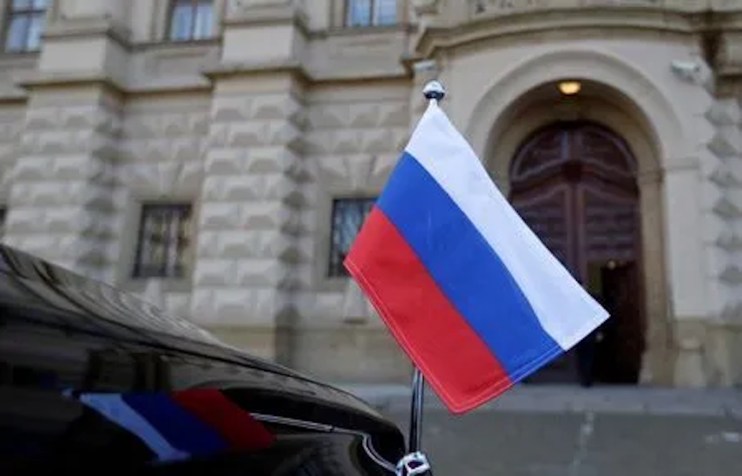
Russia is prepared to send any supplies rejected by European countries to other regions such as Asia, if the European Union (EU) brings in an oil embargo, warned the country’s Deputy Prime Minister Alexander Novak.
He argued that Europe, which relies on Russia for around a quarter of its crude imports, would have to find substitute supplies which would be more expensive.
This follows Russia’s Foreign Minister Sergei Lavrov earlier this month daring the West to bring in an oil ban.
He said: “Let the West pay more than it used to pay to the Russian Federation, and let it explain to its population why they should become poorer.”
The European Commission yesterday unveiled a €210bn for Europe to end its reliance on Russian fossil fuels by 2027 and quicken its transition to renewable energy.
The EU is also edging towards a phase-out of Russian oil supplies, and wants to include the measure in a sixth package of sanctions, after it announced restrictions on coal imports from the country two months ago.
However, Hungary has continued to withhold its support, with sanction requiring unanimous backing from the trading bloc.
EU negotiators and the Hungarian government have been negotiating in recent days over a potential financial settlement to compensate economic difficulties from cutting off Russian oil.
Figures proposed are reportedly close to a billion euros.
Europe is Russia’s chief buyer, meaning that as painful as phasing out 4m barrels per day from Russia would be for the EU, it would also be a huge blow for the Kremlin.
Since Russia’s invasion of Ukraine in February, the EU has spent €28bn on Kremlin-backed oil supplies – considerably more than its pledged aid for Ukraine.
Last week, Callum Macpherson, head of commodities at Investec, told Morning Wire that Russia would find it very difficult to find new buyers prepared to take oil at the same volumes as European buyers.
This means oil supplies could exit the market and drive up prices again – which are already elevated above the $100 milestone.
He said: “If the ban is comprehensive and introduced quickly, it would be a real challenge for Russia to redirect it and, that being so, would take crude out of the global market leaving the EU to compete with existing consumers of other crude sources – that will inevitably mean higher prices as some consumption will need to be priced out of the market.”
Craig Erlam, senior analyst at OANDA, added.: “I think we are going to see a ban, the question is how it’s phased in and whether it will be particularly effective as a result. The longer they take to implement the ban, the more opportunity Russia will have to find alternative markets.”
Gazprom clients buckle to pressure and offer rouble payments
The EU has so far avoided sanctions on Russian gas, with the bloc reliant on Russia for 40 per cent of its imports.
Only Lithuania has acted unilaterally to bring in an embargo, with the continent concerned over potential supply shortages this winter without alternative supplies.
Alongside his bullish tone towards Russian oil, Novak revealed half of Gazprom’s 54 clients have opened accounts at Gazprombank, revealed Russia’s Deputy Prime Minister,
The Kremlin is forcing buyers of Russian gas to pay in roubles, despite the fact nearly all European supply contracts have been agreed in euros or dollars.
Last month, Russian President Vladimir Putin signed into law requirements for ‘unfriendly’ overseas clients to pay in roubles, in an attempt to bolster the country’s currency, and as retaliation to heavy Western sanctions following the country’s invasion of Ukraine.
Through a murky payment system, European companies have to open accounts at Gazprombank and transfer euros or dollars which are then convertedto roubles prior to the transaction.
The European Union (EU) has condemned Russia’s demands, but it has reached a compromise with Western companies – allowing them to trade for Russian gas provided they declare the transaction completed once they shifted euros or dollars into a Gazprombank account.
Last month, Russia halted gas supplies to Bulgaria and Poland in April after both countriesrefused to meet its demand that European buyers start paying for Russian gas in roubles.
There is growing speculation Finland could be next, as the country’s state-owned energy provider Gasum has also refused to switch to the new scheme.
It revealed this week it would take its dispute over rouble payments with Russia’s Gazprom Export to arbitration proceedings.
The country recently announced its intentions to join NATO – further antagonising the Kremlin.