Russians learn the only thing worse than social media is no social media

This week, Instagram feeds in Russia went dark. With Facebook already blocked, Twitter access restricted and a threat of the same to Youtube, the Russian state is silencing fora of dissent.
In this column, I have often criticised the social media giants. Their business models are built on their ability to surveil you. They have proven themselves unable to police disinformation on their sites. Their anti-competitive practices have won them enemies in legislatures across the world.
Yet the war in Ukraine is a reminder of what is good about them too. This war has been played out, as none before it, on our social media feeds. While we have not quite felt this war (only those in Ukraine have), we have had a greater sense of it than any other.
Through social media, we have seen the horror of war. Doomscrolling has never seemed more apt an expression. Meanwhile, open source intelligence – the analysis of publicly available information, like satellite imagery – means that we are more informed about this war than any before it.
Social media has also allowed us to see moments of great humanity and fortitude. In ‘On Flanders Fields’, the Great War poet John McCrae wrote that “the larks, still bravely singing, fly / Scarce heard amid the guns below.” With social media, it is a little easier to see and hear flashes of almost normal life, be that children singing in bomb shelters or Tiktokers finding cause to laugh in the face of danger.
Of course, all this has to be consumed with care. Much of the most widely shared social media content has proved to be old or faked. In this, Tiktok’s defences are particularly poor, with less transparency and moderation at the Chinese social media giant than its American peers.
This distinction is important. When Mark Zuckerberg appeared before members of the US Congress in 2020, he argued that Facebook (now Meta) is a champion of American values.
The claim was much derided at the time, but there is some truth in it. Until this week, half of all Russians were Instagram users. Some of them ran businesses that depended on the platform, dependent for their livelihoods on an American firm.
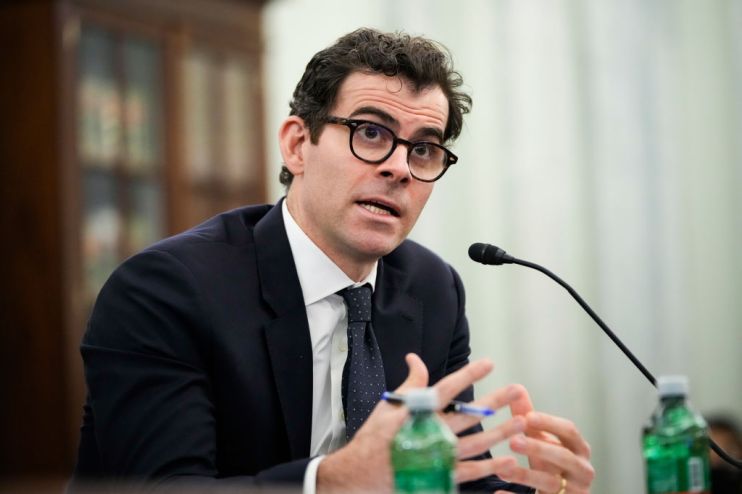
According to Adam Mosseri, chief executive officer of Instagram, 80 per cent of Russian Instagram users follow accounts from outside Russia. In this sense, Western social media firms wield a degree of soft power.
Our relations with ordinary Russians are better for having the ability to communicate with them online. Of course, this soft power only functions if social media platforms do not censor content on behalf of foreign governments. Here, one American company’s record looks particularly poor: Google, and in particular its subsidiary Youtube.
As Thomas Brewster of Forbes has recently shown, in the first half of 2021 Google received nearly 19,000 Kremlin requests to take down content. In 75 per cent of cases, they did so (Twitter, by contrast, took down 47 per cent of the content it was asked to). In 2019, Google even censored video footage of Ukrainian protests against Russian aggression.
Google has also proved far more willing to hand over its users’ data to Russian authorities. In the latter half of 2020, Google was asked for user data on nearly 500 occasions. Eighteen percent of the time it obliged. Meta, meanwhile, hasn’t handed over any data in a decade.
There is, of course, a balance to be struck. Offend the authorities too much, and you are expelled. Fail to stand up to them at all, meanwhile, and you are nothing but their mouthpiece. In times of peace, some social media firms did a better job of finding a line between the two extremes than others.
Today, in a time of war, the Kremlin is cracking down on dissent wherever it may be found. In this environment, no Western social media firm is likely to maintain a foothold in Russia. As a result, another bridge between the Russian people and the wider world collapses.
For the rest of us, the posts we see from Ukraine should offer a reminder. There are moments when it feels like there is nothing worse than social media. In truth, there is one thing that is: no social media at all.