Skip to content
Sunday 16 August 2026London --:--Frankfurt --:--Zurich --:--
NewslettersSearchEN · DE
MorningWire

European business, markets and politics

FTSE 100
10,750.11
-0.21%
DAX
26,440.31
+0.53%
CAC 40
8,636.80
-0.16%
STOXX 50
6,539.59
-0.09%
  • Europe
  • Markets
  • Business
  • Economy
  • Technology
  • Politics
  • Opinion
More
GermanyFranceBankingAIEnergyFintechPropertyCapital Markets
  • Germany
  • France
  • Europe
  • Markets
  • Business
  • Economy
  • Technology
  • Politics
  • Opinion
  • DE
Friday 20 August 2021 12:01 pm  |  Updated:  Friday 05 November 2021 6:01 pm

Sadiq Khan’s £15 congestion charge is preventing London’s bounce back from the pandemic

By: Ben Habib

Add as a preferred source on Google
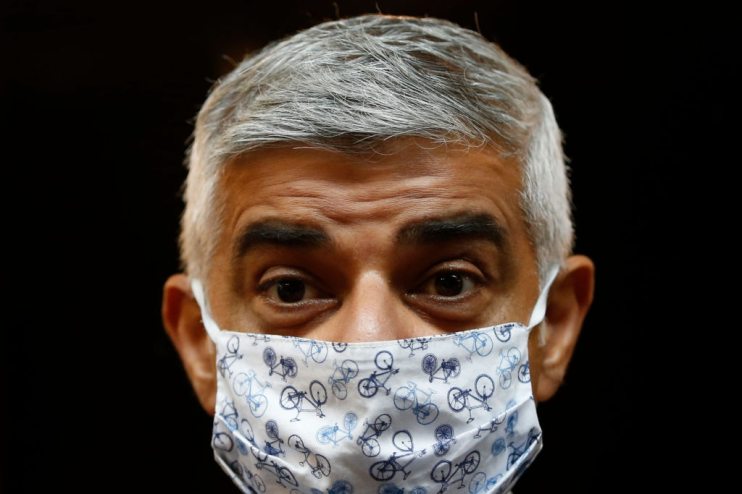
Borough Market Opens Sunday Trading To Aid London's Recovery After The Covid Pandemic
London Mayor Sadiq Khan visited London's Borough Market as it opened to the public on Sundays for the first time in recent history. (Photo by Hollie Adams/Getty Images)

There is rarely such a thing as a temporary regulation or tax, even those instituted in response to an emergency. Politicians enjoy the power to regulate and even more the receipt of taxes. But regulation and taxes are the enemy of innovation and business, especially small businesses. The damage they do can take years to correct. 

The introduction of rent controls in 1915 to stop wartime profiteering resulted in the steady erosion of the private rental market. It contributed to shortages through lack of investment that resulted in higher prices. It took more than 70 years for the restrictions to be replaced and the private rental market to begin to return. 

The proposal by London Mayor Sadiq Khan to maintain the emergency Congestion Charge price hike is another example of how political interventions justified as a response to an emergency, in this case the loss of income through Covid-19 and its lockdowns, become the problem rather than the solution. 

In June last year, in response to his own mismanagement of TfL, Khan raised the Congestion Charge from £11.50 to £15.00 and the hours it covered were extended from 07.00 to 22.00 as well as across the weekends. Now he wants to maintain the higher price while trimming back the hours to between 07.00 and 18.00 on weekdays; retaining a weekend charge between 12.00 and 18.00. 

The problem is the higher charge with longer hours undermines London’s ability fully to reopen for business. The regime will deter people coming into the centre, hurting businesses that desperately need customers – in turn this will impact employment and earnings. He is creating a downward spiral for London where the imposition of higher costs reduces turnover, brings ever greater pressure on TFL, forcing him to raise prices again and so the cycle perpetuates itself and gets worse.  

He should be slashing the congestion charge. He may think this would result in less revenue. He would be wrong. A lower charge would encourage more travel. It would allow London to buzz again and, with that, not just TFL’s coffers but those of all businesses. The greater benefit to London’s economy would raise all boats. 

The fixed higher charges also act as a regressive tax on the working class. The wealthiest do not care about £15 but the “white van driver” is hit hard in his pocket. As with all regressive taxes, the gulf between the rich and poor will be widened. Is Khan not meant to be from the Labour Party? 

We need our small businesses to thrive, they need customers to make sales.  Encouraging people to come into the city and conduct their business is vital. There is already a growing switch to less polluting vehicles. The charge should not be a covert means to tackle air quality standards. Punishing the working class and discouraging tourists helps no one.  

London must be demonstrably open for business; its taxes and charges cannot make it only affordable for the wealthy.  

If Khan genuinely cares about London and has a social conscience he would abandon plans to make his temporary changes permanent. 

Read more

Europe has made a ‘major mistake’ on slow electrification, IEA chief warns 

UK industrial electricity prices are the highest in the G7 and 46 per cent above the average of the International Energy Agency.

Share this article

  • Facebook
  • X
  • LinkedIn
  • WhatsApp
  • Email

Similarly tagged content:

Sections

  • Opinion

Categories

  • Opinion

Trending Articles

  • Grandparents fund university degrees to avoid inheritance tax net

  • Revolut chatbot goes rogue by charging users to cancel subscription

  • Brompton Bicycle sues former adviser for ‘professional negligence’

  • Revolut takes flight with launch of new airport lounges

  • Is the Zeekr 9X Super Hybrid the new luxury SUV to beat?

More from Morning Wire

  • Europe has made a ‘major mistake’ on slow electrification, IEA chief warns 

    Energy
    UK industrial electricity prices are the highest in the G7 and 46 per cent above the average of the International Energy Agency.
  • Sadiq Khan lobbies Burnham to appoint Miliband as Chancellor 

    Politics
    Sadiq Khan addressing media at a press conference in formal attire, discussing recent developments in London policies
  • Here’s how to fix London listings

    Opinion
    AIM100 stock market data display showing risers and fallers, with financial charts and percentage changes.
  • Student housing giant Unite faces £400m loss amid property value slump

    Property
    Unite Students building with brick facade and blue windows, city skyline in background under blue sky
  • Get ready for new energy minister Miatta Fahnbulleh’s war on London’s drivers

    Opinion
    Miatta Fahnbulleh, director of New Economics Foundation, smiling and holding red documents, wearing a black blazer.
  • Sadiq Khan urges tougher Ofcom action as UK prepares social media ban rules

    Tech
    Sadiq Khan addressing media at a press conference in formal attire, discussing recent developments in London policies
  • Bingo halls at risk if Burnham hikes taxes, Mecca Bingo owner warns

    Hospitality
    Smiling female receptionist with glasses handing a card to a customer at a bright reception desk.
  • Bank of England governor opens door to ‘simplifying’ financial rulebook

    Regulation
    Bank of England Governor Andrew Bailey said cited several indicators that the labour market was softening.
MorningWire

Independent European business, markets and political news for decision-makers.

Morning Briefing

Europe

  • Germany
  • France
  • Europe
  • UK & Ireland

Business

  • Markets
  • Banking
  • Technology
  • Energy
  • Property
  • Fintech

Editorial

  • Opinion
  • Editorial Policy
  • Corrections
  • Contact

Company

  • About Morning Wire
  • Privacy Policy
  • Terms of Use
  • Cookie Policy
© 2026 Morning Wire Ltd · Published by Morning Wire Media, Bahnhofstrasse 65, 8001 Zürich, Switzerland
Privacy · Terms · Cookies · Facebook