Saudi Arabia’s takeover of Newcastle United is about far more than football

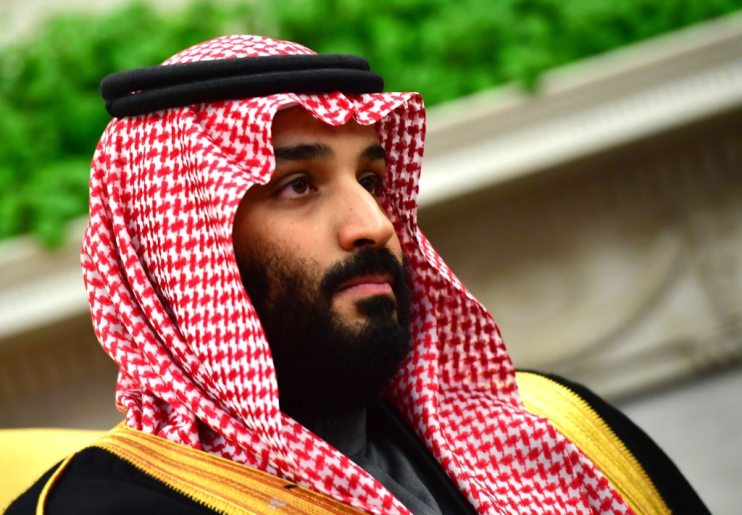
After years of speculation, prevarication and consternation, Saudi Arabia has at last sealed the purchase of a Premier League football club, something it has long coveted.
With a deal for Newcastle United finally set to be announced, one of the most tumultuous episodes in English football history is apparently drawing to a close.
Rumours have been circulating for some years that members of the Saudi Arabian royal family were in the market for a club. Reports in 2018 suggested it wanted to buy Manchester United. However, in January 2020 suggestions that a deal for Newcastle was in the offing emerged.
This marked the start of a pandemic-era soap opera, populated by a cast that included a club owner desperate to sell, speculative intermediaries determined to cut a deal, a country with money and aspirations, and two governments (Saudi Arabia and Britain) intent on addressing some of their geopolitical challenges.
For a while, it seemed as though the deal might founder and eventually die. Mid-2020, the World Trade Organisation ruled that the Saudi Arabian government had failed to address content piracy. This involved Qatar’s beIN and was the consequence of a diplomatic feud between the governments in Doha and Riyadh.
This piracy issue was of particular significance because it involved the distribution of English football content by beIN in Saudi Arabia. Premier League officials felt compelled to block the United takeover deal via its owners’ and directors’ test.
What ensued was claim and counter-claim about how and why this decision was made, culminating in a legal case brought by Newcastle’s owner Mike Ashley that was still ongoing when details of the latest developments emerged.
Saudi Arabia’s massive programme of spending
While some had been keeping their eyes on the ball, behind the scenes members of the British government were ambiguous and inconsistent in their position on the deal for United.
Prime Minister Boris Johnson and then-sport secretary Oliver Dowden appeared to support then pull back from an increasingly sensitive political matter. Meanwhile, organisations such as Amnesty International called out the proposed acquisition as “sportswashing”.
The detailed chronology of the last 18 months largely remains an untold story, though what we do know is that the Public Investment Fund (Saudi Arabia’s sovereign wealth fund) has steadfastly stuck to its pursuit of Newcastle.
Some suggested that PIF’s pursuit of the club was speculative, however its perseverance in the face of numerous obstacles suggests there is much more to this deal than most football fans might imagine.
Saudi Arabia is a rentier state, dependent on carbon deposits and the revenues derived from them. Hence, it typically invests in overseas assets as the basis for generating revenues that help sustain and diversify the country’s economy beyond oil and gas.
However, with the world shifting away from its consumption of carbon fuels, the need for Saudi Arabia to wean itself off petrol, oil and gas to diversify its economy is pressing.
Investing in sport is one way of doing this, so the country has embarked on a massive programme of spending that incorporates everything from building a multi-billion dollar sport mega-city to promoting its next generation of football stars and now owning an English Premier League club.
There are likely to be connections between these various elements of strategy and we shouldn’t be surprised to see, for example, Saudi Arabian players training at St James’ Park at some stage in the near future.
Could Newcastle be joined by Inter and Marseille in franchise network?
Yet Saudi Arabia’s aspirations are likely to go way beyond this. Indeed, it is important to note that this is not simply a vanity purchase.
If one examines what has happened at Qatar-owned Paris Saint Germain, 10 years ago its annual revenues were less than €100m; now they exceed €600m and will surely surpass €1bn by 2030. Similarly, Manchester City owner City Football Group is now a globally franchised entertainment business, valued in excess of $3bn.
We should expect Saudi Arabia to follow the same plan. After all, this form of mimetic isomorphism is commonplace across the Gulf region.
This could mean that we will see, say, Inter Milan or Marseille – both rumoured PIF acquisition targets – joining United in a global franchise network. Or, for instance, the construction of a new stadium in Newcastle that provides opportunities to dramatically develop lucrative new revenue streams.
At the same time, the government in Riyadh has broader, ambitious plans. For example, to compete with the likes of Emirates Airline and Qatar Airways, and the air travel transit hubs of Dubai and Doha, Saudi Arabia is reportedly creating a new airline.
One can imagine this carrier eventually becoming the Newcastle United shirt sponsor, its name being beamed and streamed into the living rooms of football fans in more than 200 countries across the world.
Property, shipping, wind all potential factors in Saudi interest
Yet purchase of the club may be motivated by factors that can be found no more than a stone’s throw away from the Leazes End of St James’ Park.
Some of those involved in the United acquisition already have significant interests in real estate development. As we have seen in Manchester, Abu Dhabi has utilised its ownership of City as the means through which to invest in residential accommodation. We could be on the cusp of a local property boom in Newcastle.
We also know the city sits close to the mouth of the River Tyne, which has the capacity to handle deep-water container vessels.
Saudi Arabia’s government is in the midst of positioning itself as an Afro-Eurasian trade hub, resulting in its container port facilities being significantly expanded. It is possible that we could see Newcastle becoming a node in the Gulf nation’s global trade network, which ownership of United will help to enable.
There has even been a recent suggestion that the River Tyne and the North East coast could become the ‘Saudi Arabia of wind power’. Indeed, local port officials are embroiled in a battle with the likes of the River Tees to become the home of Britain’s burgeoning wind power industry.
In such situations, it is remarkable how football helps to enable effective business and political relationships to be built.
As Newcastle United fans dream of Kylian Mbappe and Erling Haaland, it is important to remember that signing big-name players is simply the means to an end rather than an end in itself.
While an improvement in United’s on-field performances can rightly be anticipated, the latest developments are not principally about the club. The acquisition is about Saudi Arabia, its aspirations, relations with Britain and more. And in this respect, anything is possible.
Simon Chadwick is Professor of Eurasian Sport at Emlyon Business School in Paris.