
Saudi sell-off puts a lot at stake

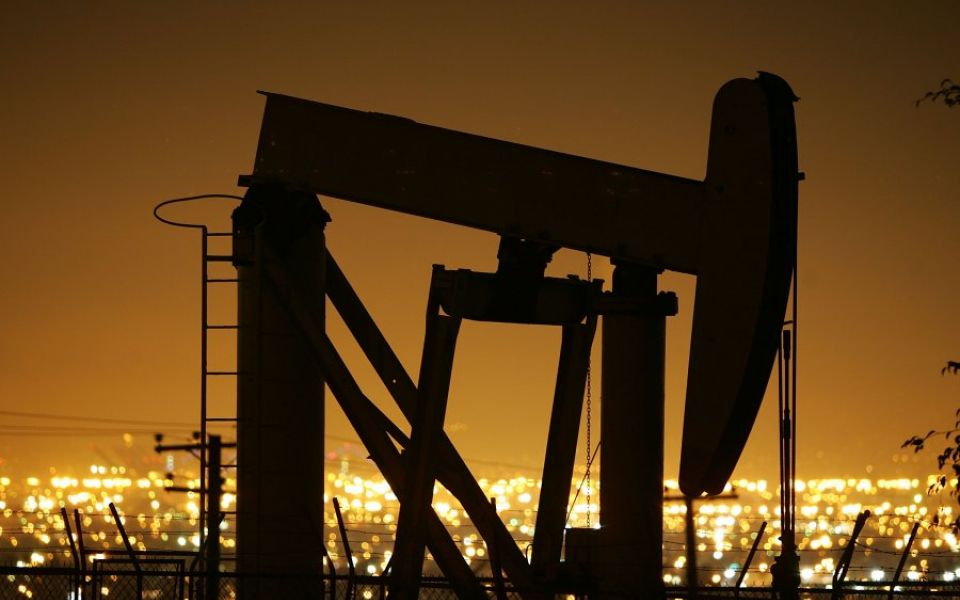
Oil is getting more expensive. The price of crude recently jumped after OPEC agreed to extend the production initially agreed in November 2016.
Having fallen to $29.64 dpb (dollars per barrel) in January 2016, it now looks settled at round about $50-60.
It’s vital for the global economy that the price of oil settle. Since crashing in 2014 some producing nations, such as Venezuela, have suffered terrible economic, political and even humanitarian consequences as their primary export became little more than worthless.
There were many causes for the drop in price. Several economies, namely China, had consumed huge levels of oil for years before suddenly slowing down, leaving a massive surplus on the market. The same can also be said of others, such as Brazil, India and Russia.
Saudi Arabia also played its part. Once prices crashed, OPEC’s biggest power broker was faced with a choice of cutting production, and sacrificing market share, or a fall in revenues. It decided that, because it can produce oil relatively cheaply and can withstand low prices, the former was better for its geo-political interests.
The 2016 OPEC production cut, and subsequent extension, does not mean Saudi Arabia is suddenly tired of low prices – it’s much more than that. In January of that year, it was announced that the country will be diversifying its economy away from oil by way of privatisation.
Vision 2030, as it’s called, will see 16 industrial sectors, including oil, go, to some extent, to the private sector. If all goes to plan it will be one of the biggest economic reforms ever, dwarfing similar reforms in the UK in the 80s and even Russia in the 90s.
The only accurate comparison is Deng Xiaoping’s liberalisation of China. Turning the most populous nation on Earth from a Communist economy into a market one changed the world. Vision 2030 might not do quite that, but its effects will be felt around the Middle East and beyond.
At the heart of the reforms is a 5% sell-off and stock market listing of Aramco, the state-owned, oil giant and pride of the Saudi economy. A conservative estimate suggests Aramco’s oil reserves are 10 times as much as Exxon Mobil, with the company being at least 3 times as valuable. With an estimated market value of $2 trillion, Aramco’s IPO (initial public offering) will be the biggest in history.
Almost every financial centre in the world is competing to host Aramco’s listing. Tokyo, Wall Street and Hong Kong are believed to be the front runners. There were rumours just last month that London was about to land it after the UK Treasury loaned £2 billion to Aramco, but they were swiftly denied.
All this means Saudi Arabia needs the price of oil to not only stabilise but increase rapidly. Its reforms are not just a money making exercise but part pf a wider attempt to revitalise the country’s stagnating economy. Proceeds from the IPO will go to the Public Investment Fund, an initiative started by the Saudi government in 1971 to support non-oil parts of the economy.
Saudi Arabia has denied it will wait until 2019 to hold the IPO and get Aramco listed. To justify its own $2 trillion valuation of Aramco, the Kingdom must hope for the price of oil to reach $100 dpb. Anything less and Saudi Arabia will simply not have enough reform to its desperate, state dependent economy.
Despite decades of strictly conservative religious government, Saudi Arabia is a young country. 75% of its population is under the age of 35. If it gets the reforms right then it could continue to be massive regional and global power, even after the oil starts to run out.