Skip to content
Tuesday 25 August 2026London --:--Frankfurt --:--Zurich --:--
NewslettersSearchEN · DE · FR
MorningWire

European business, markets and politics

FTSE 100
10,886.16
+0.29%
DAX
26,266.14
+0.61%
CAC 40
8,439.20
-0.16%
STOXX 50
6,455.63
+0.12%
  • Europe
  • Markets
  • Business
  • Economy
  • Regulation
  • Politics
  • Opinion
More
GermanyFranceEU InstitutionsCompetitionPublic AffairsBankingTechnologyEnergy
  • Germany
  • France
  • Europe
  • Markets
  • Business
  • Economy
  • Regulation
  • Politics
  • Opinion
  • DE
Monday 14 December 2015 3:49 am

The science of branding: Neuro-Insight CEO Heather Andrew on brands and brains

By: Express KCS

Add as a preferred source on Google


Emotion is not enough, says Heather Andrew


When Cadbury’s drumming gorilla was unleashed in 2007, its soundtrack and surrealism allowed the confectioner to draw a line under its  salmonella scare, and boosted sales by 9 per cent. But an entertaining advert is not enough. The role which branding plays within the advert is crucial, and creating a successful spot is highly complex. 

“Ten or 15 years ago, brands would have had a good idea of their audience’s demographic, a reasonable idea of their behaviour. But they didn’t know how their audience thinks and feels,” says Heather Andrew,  UK chief executive of Neuro-Insight, a market research firm which uses a team of neuroscientists to understand consumers and boost engagement. 

“Programmatic is providing marketers with better ways to target, but you need to know what is triggering responses and the context in which people are most receptive to messages. That’s where neuroscience can really help.” She tells Morning Wire why the brain likes narratives and puzzles, but not brands, and why many advertisers miss the mark. 
 

What can neuroscience teach marketers?
It can quantify the emotional responses to branding and adverts which people find difficult to communicate. This is because a lot of decision making is done by the right side of the brain which can see the bigger picture. But it is the left side which handles our speech, and which is more rational and responsive to detail. So when we explain what we think, the left side of the brain has often put a more rational spin on it. And neuroscience can work out the most appropriate context in which to deliver a message, which audiences may have difficulty understanding for themselves.
 
So we use a measure of electrical response to monitor the brain’s activity to find out how consumers are really responding, not just how they say they are.


Case in point: Aviva

So how can you best build your brand into an advert?

There’s no exact template, but one successful strategy is to make your brand the revelatory moment of your advert. 
 
Emotion is very important, but you need to make an impact on the audience’s memory if you want to change their attitude towards your brand. So if you’re creating a TV advert, for example, it is vital to ensure that there is a strong link between the emotional response and the brand. 
 
As a brand owner, you assume that everyone is interested in your brand, and people will say they are. But the brain is stimulated by puzzles, stories, narratives, and by making sense of the world. This can be done in an evident way, like in BT’s adverts with the story of Adam and Jane’s relationship, which ran between 2005 and 2011. BT’s products or services were the solution. When he couldn’t get through to her, it was because he needed faster broadband. But it can be more complex. 
 
When you first watch Cadbury’s gorilla, you ask yourself: “Why is this gorilla drumming?” And the answer is Cadbury’s. The brand ensures that the advert makes sense, and it is supplemented throughout by the use of purple, which is a soft brand cue heavily associated with Cadbury’s.
 

Why might a brand really fail to resonate? 

A common reason for poor brand attribution is “conceptual closure”. This occurs because our brains record events like snapshots. Typically, a few times every minute, the brain bundles these snapshots up so we can have closure on what we have witnessed. We experience this closure after various signals, like the punchline of a joke, when a door closes, or when a character moves off screen. After this resolution, our brain is unreceptive for about a second, as it bundles. So if you have your moment of resolution, and then display your branding, the audience is likely to have missed it. Most concerning of all, if you then ask consumers what the brand was, they will say a brand which it closely associates with the film, or worse still the brand leader in the category. That might be your own brand, but it might be a competitor.
 
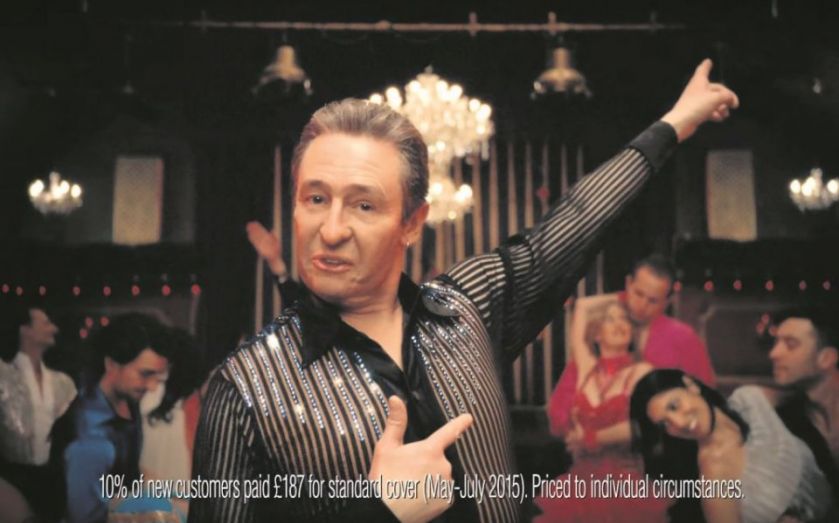
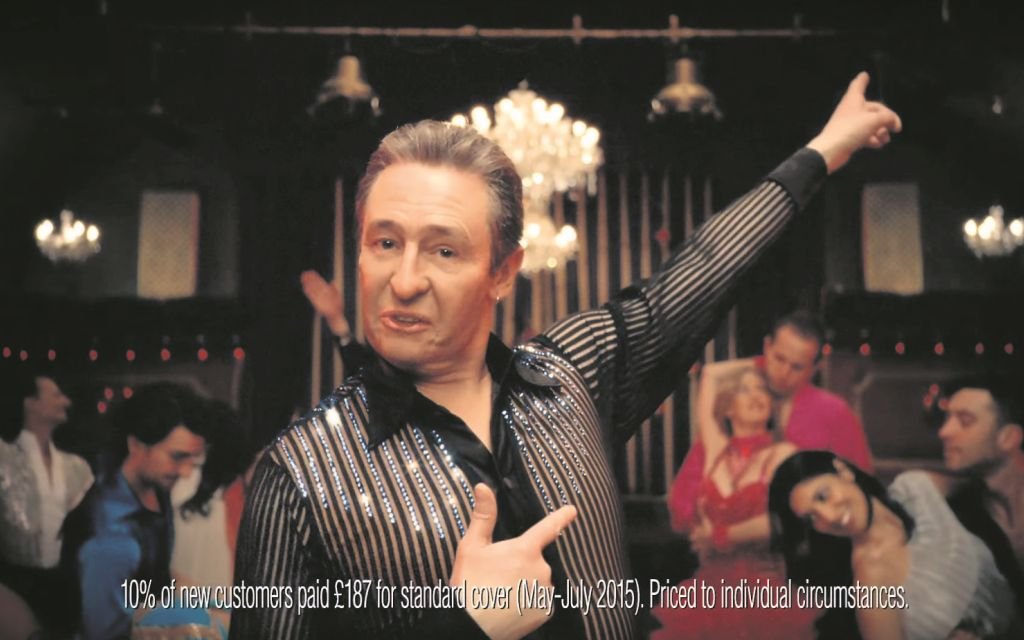
Brands must also be wary of any negative gestures or imagery, particularly when they are delivering their key message. There was a moment in the video advert for Aviva, in which Paul Whitehouse is doing ballroom dancing and he points directly at the camera just before the advert cuts to the key brand message. Pointing at someone can make them feel threatened, and it was likely to alienate the audience right at the crucial moment. We recommended that Aviva take out the finger pointing and change the order in which the brand message was delivered. They’re small changes, but they can make a big difference.
 

Share this article

  • Facebook
  • X
  • LinkedIn
  • WhatsApp
  • Email

Similarly tagged content:

Sections

  • News

Categories

  • Business
  • Media

Trending Articles

  • Andy Burnham hints at tax rises in Autumn Budget

  • Budget 2026: Which taxes will Burnham and Healey hike?

  • Can debt-ridden Morrisons become a Big Four supermarket again?

  • Burnham shelves Thames Water administration plans over costs

  • As it happened: Stocks rally; US to unveil ‘economic D-Day’ Iran sanctions

More from Morning Wire

  • ‘Absurd’: Government seeks quantum tech chief – no experience necessary

    Tech
    Advanced quantum computer with intricate circuits and glowing interface, illustrating cutting-edge technology innovations
  • Wimbledon won’t slap sponsor on new show court but eye US growth

    Sport Business
    Wimbledon tennis court with players in action, surrounded by a cheering crowd under clear blue skies
  • Four South Korean whiskies to try today

    Whisky
    Rainy night street in Seoul, South Korea, with neon signs, storefronts, and people with umbrellas
  • The Highland tourist tax: Is Scotland pricing out whisky tourists?

    Whisky
    Red deer stag on a heather-covered hillside overlooking a loch and mountains in the Scottish Highlands
  • FGE NexantECA Acquires Square Commodities, Accelerating Its Green Molecules Strategy

    Business Wire
  • Williams turns to AI to squeeze more from F1 cost cap

    Tech
    Blue Formula 1 race car on track with AWS branding on the barrier, another car in the background.
  • London City 7s sign up Springbok-producing powerhouse varsity team

    Sport Business
    Siya Kolisi, Springboks captain, in a green and gold rugby jersey during a match
  • Government to inject millions into electric vehicle firms despite mandate backlash

    Politics
    Car bodies on an assembly line in a UK car plant, showcasing EV manufacturing process
MorningWire

Independent European business, markets and political news for decision-makers.

Morning Briefing

Europe

  • Germany
  • France
  • EU Institutions
  • Europe

Business

  • Markets
  • Business
  • Economy
  • Regulation
  • Competition
  • Public Affairs

Editorial

  • Opinion
  • Editorial Policy
  • Corrections
  • Contact

Company

  • About Morning Wire
  • Privacy Policy
  • Terms of Use
  • Cookie Policy
© 2026 Morning Wire Ltd · Published by Morning Wire Media, Bahnhofstrasse 65, 8001 Zürich, Switzerland
Privacy · Terms · Cookies · Facebook