Scunthorpe needs private investment more than state support

We’ve heard a lot about nationalising British Steel but a lot less about how to unlock the growth and private investment that can help towns like Scunthorpe stand on their own two feet, says Emma Revell
The first broadcast interview I ever did was about steel. It was 2019, Jeremy Corbyn and John McDonnell were setting out their plans for the renationalisation of a raft of sectors, including steel, and ITV Yorkshire wanted someone to make the argument against. I imagine when my boss told the producer “Well, we’ve got a woman from Scunthorpe…” his eyes lit up like a Christmas tree.
After it aired, people I knew from back home made disappointed comments about how I seemed to want the steelworks to close. I didn’t say that, of course, but I understand why it might have sounded like I did.
Those of us who believe in the free market can often be perceived as quite hard-headed. If the numbers don’t add up, if the service isn’t good enough, if the demand isn’t there, a company should go bust. Creative destruction is a good thing. But if you’re in an industry that is being creatively destroyed, it definitely doesn’t feel that way. So advocates for the power of markets perhaps need to spend more time talking about what they can do for those for whom the benefits are a little less clear.
Yet the argument I made then is still one I’d make now. Nationalisation is rarely, if ever, the answer to an industry under pressure. And nationalisation for ideological reasons is even more absurd: we have reams of evidence that competition in the market delivers more choice and lower prices.
Moreover, for many industries, especially steel, the troubles they’re facing are the direct result of government action or inaction. The fact that an energy-intensive industry which burns coal is struggling amid a rush to decarbonise by an arbitrary date in a country with the highest energy prices in Europe should surprise no one.
The fact that an energy-intensive industry which burns coal is struggling amid a rush to decarbonise by an arbitrary date in a country with the highest energy prices in Europe should surprise no one
I tried to reflect in that first interview, and in the dozens I’ve done in the years since, that the future of steel making in Scunthorpe isn’t just about jobs – a fact that gets truer every year. The sector has been struggling for decades and as a result, many fewer jobs depend on steel than they did when my parents were kids. But the psychological hit to the town – where the football team is The Iron, the community centre near my old school is The Forge, and the newest health centre is The Ironstone – would be even bigger if steel production did cease for good.
Steel is about more than jobs
When parliament was recalled a fortnight or so ago to vote on the emergency measures designed to keep the plant at Scunthorpe operational, there were a number of speeches from the opposition benches outlining all the ways in which governments had failed – failed to see this coming, failed to act within the usual parliamentary sitting, and failed to understand that their energy policies put industries like steel at risk. All very valid. But what we heard a lot less about was how towns like Scunthorpe can unlock the growth and private investment which would help them stand on their own two feet, even if a major employer does look like it won’t last forever.
There are other private businesses which would love to invest in a town with a highly-skilled industrial work force, low cost of living and good transport links to roads, rail and ports – but the town needs to believe that it is possible.
And that is the missing part of the free-market message – that the town’s future won’t come from the state.
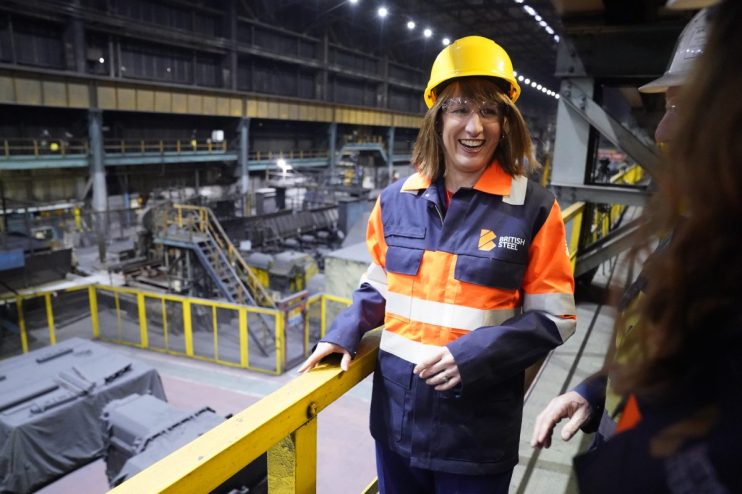
I went home for Easter and was delighted to see the furnaces still working. People sounded more positive because of the recent legislative manoeuvres, but also because they’re feeling the love from politicians. The day I arrived back, Rachel Reeves was in town. She had been preceded by Keir Starmer, Angela Rayner and Nigel Farage. The town is taking heart from finally feeling like someone is listening.
Unfortunately, the town is also taking heart from those making impossible promises. Without major changes to our decarbonisation targets and even bigger shifts in the way we generate energy in the UK, the long-term survival of the steel industry cannot be guaranteed. While the government may believe that to support the steel industry in the short term requires something close to nationalisation, the longer-term vision must centre on private investment, both in the plant and the wider town. Delivering that message with enough compassion to ensure it is heard is critical, otherwise residents will continue to be sold a pipe dream.
Emma Revell is external affairs director at the Centre for Policy Studies