Self-confidence has left Nato and Britain unprepared for a threat against the alliance

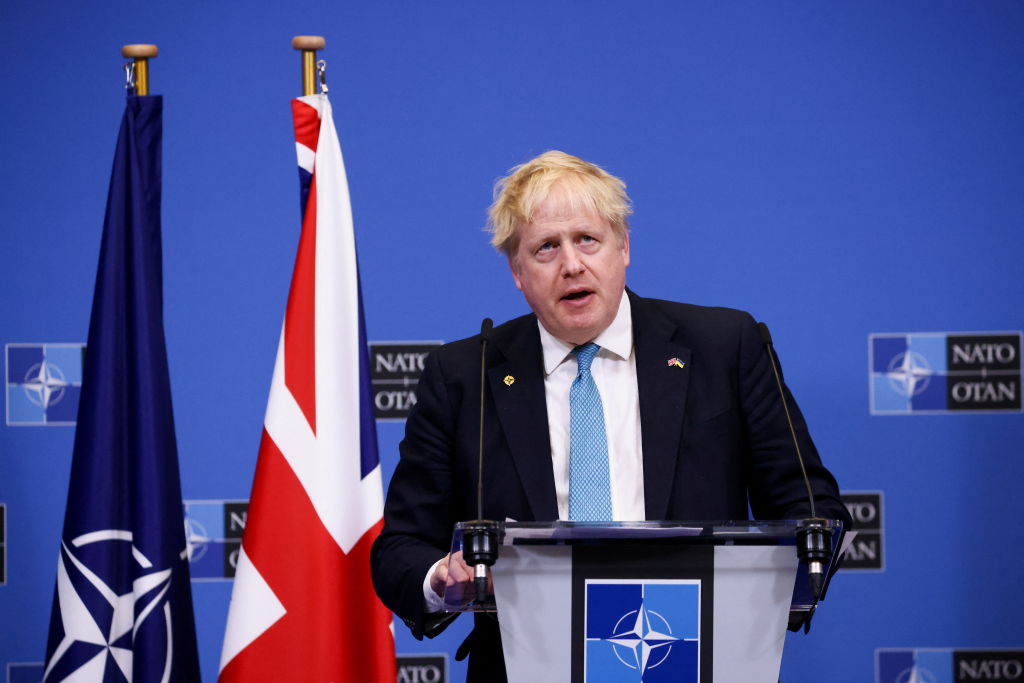
Earlier this week, General Sir Richard Barrons warned the Defence Select Committee that the United Kingdom (UK) would not be ready if Russia attacked British territory or that of Nato allies. Since 1949, the government has pledged to defend the North Atlantic Treaty Organisation alliance.
Although one nuclear-armed peer is unlikely to attack another, the UK has often failed to appreciate the extent to which foreign governments are prepared to use military force. In December last year, many British policymakers remained unconvinced that Russia would renew its offensive against Ukraine, just as they still fail to appreciate the aggressive nature of China’s activities in the South China Sea.
It’s not that Britain necessarily misunderstands its rivals’ strategic intent. The 2021 Integrated Review rightly labelled Russia as an “acute threat” to our interests, just as it described China as a “systemic competitor”. The UK also quickly deployed troops to Nato’s most exposed allies after Russia annexed Crimea in 2014 and deployed warships to enforce freedom of navigation in the Black and South China seas.
The problem is that the UK often does too little, too late. The British Isles, temperate, resource rich, and surrounded by sea, have allowed a nation to emerge that is economically productive, technologically advanced and politically open. From this powerbase, the UK can, when forced, generate extraordinary military power to subdue enemies.
This knowledge has often lulled British policymakers into a state of false security. During the late nineteenth century they thought the UK could bask in “splendid isolation”, while in 1919 they declared a “ten year rule”, which was accompanied by significant military spending decreases. Although Nazi Germany woke British strategists up, Britain’s acquisition of nuclear weapons shortly after the war only served – albeit in a slightly different way – to reconfirm their earlier assumptions.
This self-confidence merged with the British people’s dislike of large armies. The UK has used military force overseas on countless occasions, but it has never been keen on full national mobilisation, for fear of the political fallout. Britain favours low defence spending and expeditionary warfare. As Orwell noted: “a navy is an external weapon…there is no such thing as a naval dictatorship.” That is not quite true – there have been dictatorships run by admirals – but it does support the idea that seapower goes hand-in-hand with liberalism and democracy.
With the Soviet Union’s collapse, the last great autocratic rival ceased to exist. The seemingly distant conflicts in the former Yugoslavia, Africa and the Middle East were seen as “military interventions”, often humanitarian. And Russia’s attacks on Georgia in 2008 and Ukraine in 2014 were repacked as “hybrid” or “grey zone” conflicts, despite all the evidence to the contrary.
The bubble burst in February 2022 as Russian missiles and bombs rained down on Kyiv and across Ukraine. War and geopolitical struggle have not subsided, even in Europe – the continent in which many Britons thought the rules-based order was most developed.
If the UK wants to avoid further wars between states, it needs to turbo-charge the 2021 Integrated Review. It needs to reinforce Ukraine’s military and focus on the Black Sea region. It needs a larger and more powerful navy to deter aggressors from closing the world’s seas. It needs to deploy more ground and air forces to key allies and partners to deny their territories to expansionist tyranny. And it needs to become less timid in actively pushing back against systemic rivals.
This will not be cheap. Deterring aggressors is expensive, but intervening against them once they have initiated war is always greater in terms of money, disruption and human life.
This brings us back to where we started. So long as Britain maintains nuclear forces of sufficient sophistication to deter other great powers from attacking its direct interests, outright invasion or strikes on British territory are unlikely. But interstate wars rarely start that way. They start with powerful rivals compromising the sovereignty of countries in geopolitically important regions; therefore, it is in those regions that Britain must stand guard.