Is real-life Severance here? Inside the offices microchipping employees

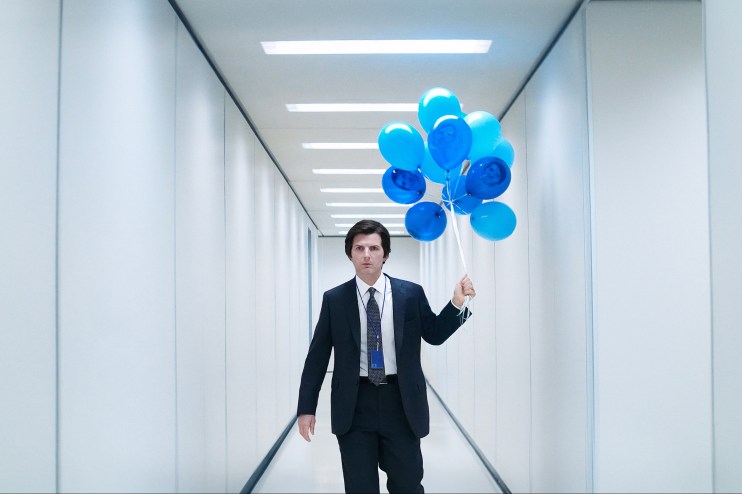
Is real life Severance already here? Anna Moloney talks to the companies using human microchips in the pursuit of productivity
As the TV-watching world reels from the conclusion of season two of Severance, it is perhaps comforting to view it from the convenient distance of dystopian science fiction. Set within the mysterious healthcare company Lumon, Severance imagines a world in which office workers can choose to be ‘severed’: a procedure in which a microchip is implanted into the brain to divide memory between work and home. When you are at the office, all memories of your home life are erased, and vice versa. It’s the ultimate work-life balance.
Or so it’s sold. Of course, things turn out to be far more sinister. The workers’ ‘innies’ – their work selves – never see the sun, perform tasks they’re not told the meaning of (“the work is mysterious and important”) and are near-constantly monitored on their whereabouts, wellbeing and quarterly targets. Add to this the psychological torment of feeling as if you’re living in a perpetual loop – with no recollection of downtime, family life or hobbies – and you’ve got the Sisyphus of the desk jockey age, condemned for eternity to a neverending 9-5.
Perhaps the most disturbing thing about Severance, then, is that its themes are closer to reality than many of us would like to admit.
Is Severance already here?
Consenting to being microchipped by your employer sounds farfetched, but allow me to introduce you to the United States of America. In 2017, a US company got headline writers around the world jostling for clicks after implanting radio-frequency identification (RFID) microchips into the hands of 50 willing employees.
‘US company holds ‘party’ to microchip workers’
‘US tech company offers to turn employees into cyborgs’
‘This firm already microchips employees. Could your ailing relative be next?’
The supervillain chipping firm in question? A vending machine upgrades seller in Wisconsin. The microchips, given out by Three Square Market to its workers – strictly on a voluntary basis – empowered employees to open the building door, sign onto their computers and use the printer, all with a wave of the hand. Quirky, but not exactly groundbreaking.
Indeed, CEO Todd Westby described the whole thing as a rather jolly affair: “It is really convenient having the chip in your hand with all the things it can do,” he told CNBC. “We initially decided to do it just because we thought it was… I guess you could say ‘cool, something different’?” The $300 chips themselves were administered at a merry HQ-hosted “chip party”, with microchips served alongside tortilla chips. Those who opted to be chipped saw themselves as early adopters – this will be normal in five years, they proclaimed.
Of course, those five years have come to pass, and the microchipping revolution has not. But that doesn’t mean it won’t.
The man with 11 devices inside his body
Len Noe was an active criminal for most of his life. Diagnosed with a genius IQ in fourth grade, but also having an affinity for ripped jeans and heavy metal, Noe found it hard to fit in while growing up. Motorcycle gangs, where all he had to do was “drink, act like an asshole and ride a motorcycle” offered “instant community”, he says. Here his IQ was also valued – “It opened up a whole world of, how shall we say, opportunity?” – and he found himself spending the majority of his time committing cyber crimes for the gang. “I was very loud, I was very aggressive and I was very scary.”
But around 11 years ago, when holding his newborn granddaughter, he vowed to change. Going from blackhat to whitehat hacker, Noe joined a cybersecurity firm and entered the speaker circuit. Part of his bit was showing people how easy it is to have your phone hacked into. One problem: being found in possession of a hacking tool like a Flipper Zero could be enough to send him to jail. “I’m on a couple of the FBI watch-lists to this day,” he tells me, not without a hint of pride. Not one to compromise on the theatrics of his demos, Noe found a loophole: putting the devices inside of him.
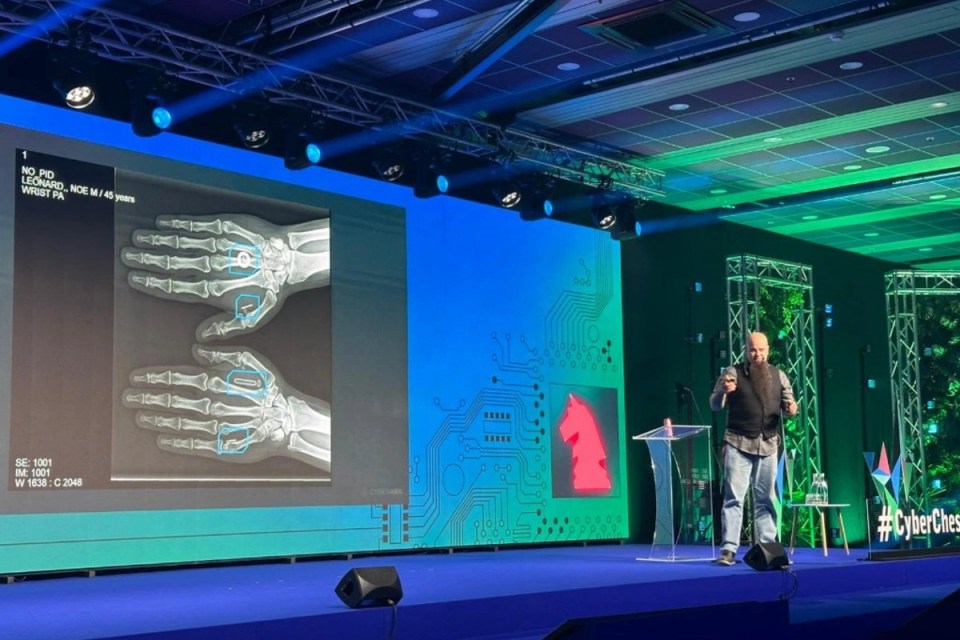
“Once you put technology inside the body, it is covered under the same scope and privacy laws that are contained within GDPR in the EU and HIPAA here in the United States. So I have protections at a governmental level that are, essentially, hackers tools.” Noe tells me this not as someone smug to be pulling the wool over the FBI’s eyes, but with genuine concern at the potential for this to be used by bad actors. Noe, who now has 11 devices inside him, from magnets in his fingers to the key to his crypto wallet, admits he will wear Faraday gloves if he’s likely to be around other hackers, so as to prevent them from compromising his own chips, many of which he’s advertised the exact location of.
But Noe does not regret his openness. A self-referring cyborg, he thinks secrecy is part of the problem. “There are a large number of individuals in the United States that have these types of implants, but nobody’s talking about it,” he says, citing the bad press around Three Square Market as a key factor in driving the movement underground. “There are companies that are doing it, but nobody’s talking about it publicly because they don’t want the stigma.” Indeed, when I contact Three Square Market former president Patrick McMullan over Linkedin, he is reluctant to talk about microchipping, telling me there is a segment of the population who will dismiss anything he says on the subject.
Noe, by contrast, is clearly comfortable in his own device-ridden skin. “I’m the biggest freak in the room, and that’s okay. I’m good with that.” He comes across as intelligent as he is eccentric. “One of my favourite hobbies is to have somebody put giant hooks in my back and hang from the ceiling,” he tells me early on in our conversation. “An adrenaline rush like no tomorrow!” he enthuses.
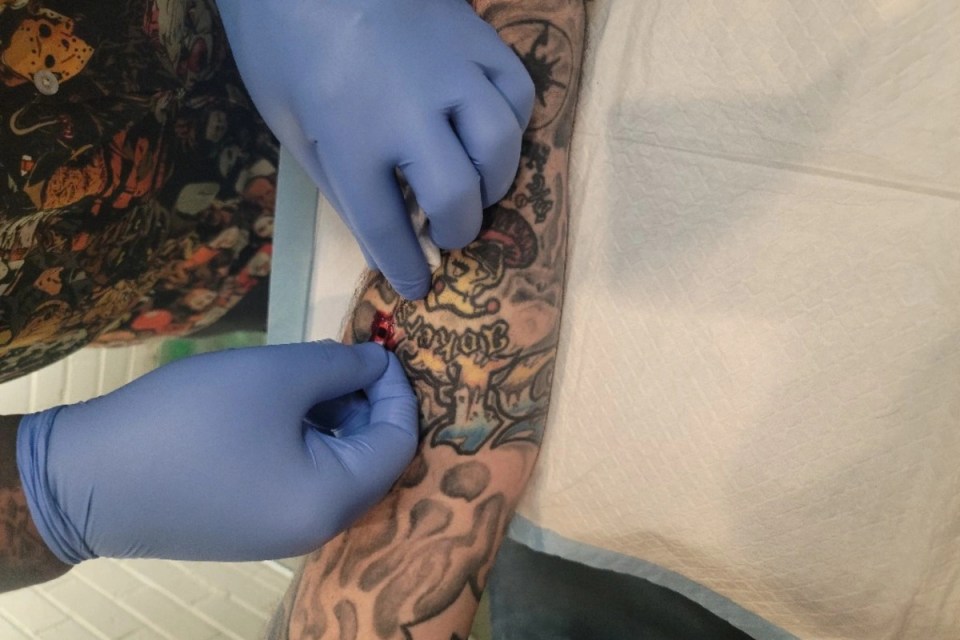
I ask if there are any downsides to being a cyborg. “The biggest risk is heavy metal poisoning,” he says, cool as a cucumber. The microchips contain all sorts of corrosive metals, he explains, though they’re encased inside of a biopolymer. “If that becomes compromised, then I can face severe medical complications.” Another “side effect” is his inability to have MRIs. “Depending on what the implant is, how much actual metal is in it, you do run the risk of it actually ripping out of your body.” Noe is unfazed, but I suspect that could well be a hiccup for more widespread cyborgism.
He doesn’t cite it as an explicit con, but being called the antichrist is also a given for a cyborg, with microchips being branded as a “mark of the beast” by some zealots.
Noe, as self-acknowledged though, is an extreme case. Kai Castledine, the founder of London-based KSEC, which is one of the largest distributors of biohacking implants in the world, tells me among the most popular chips are those that simply light up. “People love LEDs.”
Meet Biohax, the Swedish company making human microchips in Wales
Three Square Markets wasn’t the first to introduce employee microchipping, it was just the loudest. The executive who proposed the idea had only come across the tech because of a trip to Sweden.
It’s not just a coincidence it was ABBA who agreed to turn themselves into holograms. Swedes, it turns out, thanks to a culture of innovation, high trust in the state and a strong scientific tradition, are really into tech.
Indeed, by the time Three Square Market was making global alarmist headlines, Swedish company Biohax, who provided the chips for the Midwestern vendors, were already responsible for the implanting of around 3,000 chips. And not just for techy outcasts. Back in its heyday, Biohax was providing chips for the likes of the Swedish national railway and Tui.
When I speak to founder and CEO Jowan Österlund, he is as giddy as you can describe a fully tattooed, bearded man. Biohax had been gaining momentum until a global pandemic set things back. “Covid put me out of business, or perhaps in hibernation – until five weeks ago,” he tells me. In a matter of pure serendipity, he tells me I’d contacted him just as he was getting the band back together. At the time of speaking, Österlund had just raised money at a €10m valuation and had just come back from a visit to Wales’ biomedicine hub the Centre of Excellence, where he is planning to do most of the research, development and manufacturing for his new range of human implants, with the potential to have something out by October.
81 per cent of British businesses have reported enthusiasm for employee tracking
He is supremely confident, and I can see why. His new chips will not only focus on the convenience of the former range, but the multi trillion-dollar health industry. By tracking biomarkers, Österlund says his chips could provide “predictive and preventative care”.
When I ask Österlund how he will assuage those with data privacy concerns, he evangelises about the product’s ethical credentials. “The most ironic thing is people shouting about dystopia and tracking from their smartphones on social media,” he tells me, arguing that these handheld devices are far more compromising to our privacy than implanted ones. “We will never work with anyone that would impose this in any way or form. If you’re not promoting self, sovereign identity and empowering the individual, you’re never going to work with us.”
It is easy to assume that people would draw a hard line when it comes to microchipping, but the status quo should never be taken for granted.
The rise of office surveillance
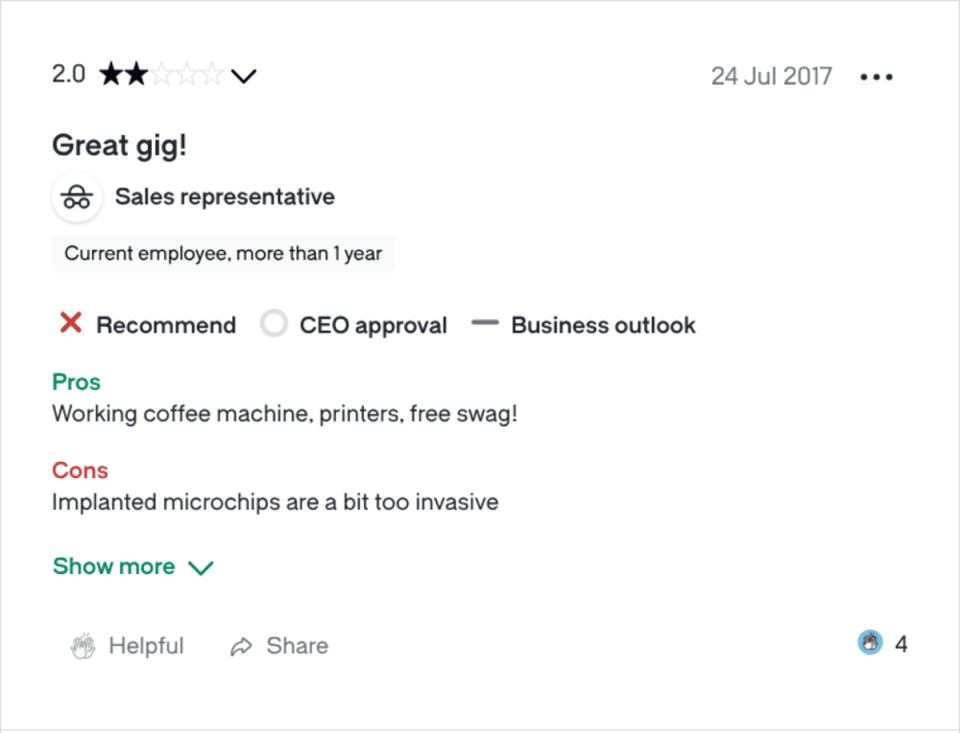
Indeed, in the case of Three Square Market, there is something unsettling in the mundanity of it all. Of the seven Glassdoor reviews for the company, only one mentions the chips, and even then with laughable flippancy. The review, headed “Good gig!” reads “Pros: working coffee machine, printers, free swag! Cons: Implanted microchips are a bit too invasive.” The rest of the testimonials are unfazed by the microchipping, musing instead on the competing pros and cons of the workload, salaries and opportunities for career progression. It just goes to show, convenience really is king.
This, perhaps, is what we should really be most alert to: slow creep. We may not be lining up to be microchipped yet, but workplace surveillance has climbed right in front of our eyes. A 2022 Trade Union Congress poll suggested that at least three in five workers had been monitored by an employer. Meanwhile, 81 per cent of British businesses have reported enthusiasm for employee tracking due to its efficacy in clamping down on ‘quiet vacationing’, according to new data from Kinly. A friendly popup in the corner of my screen, reminding me my location can be tracked via my IP address, certainly keeps me tiptapping away.
Severance not only asks if we can separate our work from our lives, but whether we should
By and large, this has been to the detriment of employees and employers. Gallup EMEA managing partner Jeremie Brecheisen tells me the imposition of employee monitoring is not always ill-intentioned by companies, but the erosion of trust – which he cites as integral to workplace wellbeing – leaves everyone in tears. Employers often “overestimate the amount of trust and goodwill that they have”, he tells me.
Card swipe tracking, keystroke monitors, under-desk sensors, fatigue monitoring, biometric sign-ins, emotion-recognition technology: the world of bossware has already blossomed, often under the guise of care. Cybersecurity, convenience and employee safeguarding can all be cited in the name of surveillance. Sometimes, the reasons may be even more prosaic. In 2016, The Telegraph cited “environmental sustainability” as its primary motive for installing under-desk occupancy sensors in its newsroom. The organisation was forced to remove the ‘OccupEye’ devices just days later “in the light of feedback” (the likes of which included its slamming as “Big Brother-style surveillance” by the NUJ), though other organisations have picked up on the tech since, thanks to its reputation appearing marginally more palatable in the post-pandemic world, where return to work mandates, as well a cultural retreat from a need to appear ‘woke’, have emboldened companies. Slow creep is happening all around us.
As it happens, Three Square Market is an example of a more palatable front too. Its sister company, Turnkey Corrections, specialises in prison security. Its current website, I kid you not, boasts that it is “Putting the AI in jail” with its new prison tech.
Severance and the pursuit of work-life balance
Severance not only asks if we can separate our work from our lives, but whether we should. One of the most heinous aspects of the Severed technology is that the workers choose to be severed. So would half of Gen Z, according to a survey conducted by workplace mental health platform Unmind. Perhaps none of these participants actually watched the show, but this is the same generation that supposedly crave dictatorship too, so we should give it some consideration.
Work-life balance has become a battleground. When Brewdog’s controversial founder James Watt and his now wife Georgia Toffolo proclaimed their disdain for the work-life balance, instead opting for ‘work-life integration’, many of us scoffed, but this is mainstream rhetoric. ‘Love what you do and you’ll never work a day in your life,’ so they say. And we all know instinctively that being happy at work is integral to our overall wellbeing. Research from Gallup shows the difference between having a good and bad manager can be the difference between having a heart attack on a Monday or not.
The reality of the evolution of the workplace is that, far from trying to sever our lives, it is far more interested in sewing them closer together: beer taps, gym passes, healthcare, tech to track your energy levels, office passes that you commit to your body. In the show, in a passage dismissed as self-help prattle by the innies but held up as a prayer by the outies, Dr Ricken Hale says: “Our job is to taste free air. Your so-called boss may own the clock that taunts you from the wall. But, my friends, the hour is yours.” As we dutifully card-swipe, fingerprint or maybe even self-scan into the office, we may do well not to scoff too quickly.