
Shareholders and Activism: How NGOs use AGM Season to Apply Pressure

From food companies to energy giants and investment banks, publicly traded companies across sectors are in the middle of AGM season.
While AGMs have always seen scrutiny from NGOs, the last few years have seen a sharp rise in attention – 2023 levels were 120% higher than 2019.
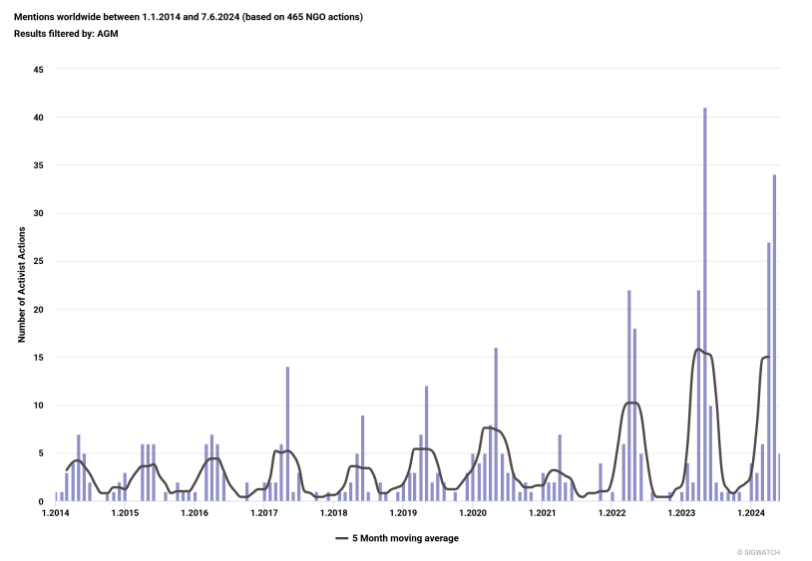
This is not investor or shareholder activism.
This is targeting of AGMs by traditional campaigning NGOs as well as the rise of innovative groups like ShareAction and Follow This who look to change the system from within.
So, how do these groups intend to change company behaviour through targeting AGMs, and how do they take advantage of their external environment to apply pressure?
AGM protest – how does it work?
We’ve all seen noisy protests by activists disrupting AGMs and you might think that their stakes in the company have been bought just to attend the AGM.
NGO behaviour at AGMs are all about drumming up public support for their demands on a closely-watched stage.
AGMs shine a certain spotlight on protests. Scenes of disorder and disruption at one of the key events in the corporate calendar make their way into mainstream media, and certainly have a special appeal for the audiences activists are trying to reach with their message.
This message is one of corporate complicity in rapidly escalating social and environmental harms, and of significant negligence regarding future risks. When these messages make their way into the mainstream media, there’s a potential for them to drive negative reputational impact. No surprise there.
In drawing attention to these issues at AGMs, they also bring other players into the spotlight – the ones trying to change the system from the inside.
Who are these groups?
Unique NGOs such as Follow this and Shareaction attempt to leverage ‘’ and ‘empowering shareholders to vote for change’. These groups set ambitious standards for responsible investment and hope to ‘change the system by entering it’. This means they’re not just looking for success on their resolutions. They’re actively looking to change hearts and minds within shareholders and beyond.
And they are also finding allies within institutional investors. This compounds the pressure on companies significantly. Dutch asset manager Robeco has backed multiple climate proposals at Exxon and recently called the oil major filing lawsuits against NGOs and other asset managers as ‘forceful pushback against climate action’ and one that ‘exhibits poor governance practices’.
On several occasions, the investors and groups have acted hand-in-hand to force companies to ‘clean up their act’. BlackRock, the world’s biggest asset manager, has expressed how resilience as a part of corporate strategy is high on their agenda ahead of shareholder meetings, along with larger issues of board quality, climate and capital as issues they hold companies accountable for.
What does this all mean for the future?
The onset of various operating standards like the CSRD, the CSDDD, the EU’s anti-deforestation directive among others is not just putting the social operating license of the companies at risk, but also the firms and people investing in the company. Suddenly, issues which have always been a matter for ‘guiding principles’ and soft law, are becoming a tangible financial risk for investors and other key stakeholders.
In May 2024, NGOs filed a criminal complaint against TotalEnergies, its CEO and top shareholders for ‘involuntary manslaughter and damage to biodiversity’ among other plaints. With risks like these, key stakeholders might just start paying attention to activist narratives.
Whether successful or not, AGMs are another avenue for engagement and interaction, creating space for activist discourse to be heard and acknowledged publicly. And whether or not companies wish to engage with NGOs, they have no choice when it comes to engaging with shareholder demands – and this is the pressure activists are trying to leverage.