| Updated:
Sheer satisfaction: Zendesk founder Mikkel Svane on providing better customer service

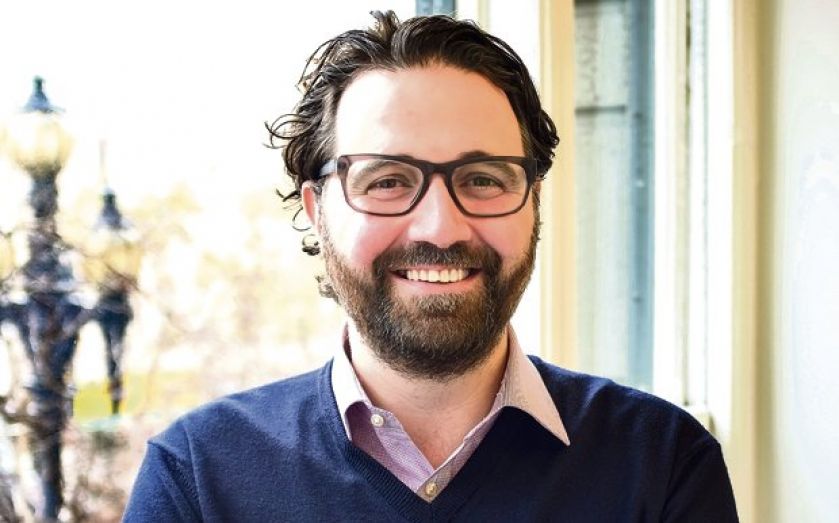
Harriet Green talks IPOs, big data and radical taxis with Zendesk’s founder Mikkel Svane.
An O2 survey last year found that 70 per cent of people wouldn’t forgive a company for bad customer service. Two thirds also said they’d share their experience with an average of eight friends and family members.
Mikkel Svane, the Danish founder and chief executive of Zendesk, pulls no punches in explaining what customers have had to put up with in the past: “The customer service industry was absolutely terrible”.
Svane set up Zendesk with Alexander Aghassipour and Morten Primdahl in 2007. You wouldn’t necessarily know it, but it’s probably changed your experience as a customer: its clients include Airbnb, Just Eat, Expedia, Uber, .gov.uk, Dropbox and Groupon.
The product is a cloud-hosted platform, designed to make it as easy as possible for Zendesk clients to deal with customer service issues. When an employee receives a call, email, tweet or any other form of communication from a customer, they open a “ticket” in the Zendesk support system. They then get more information from the customer – when and how a problem occurred, for example. Once action is taken, the ticket is added to an automated workflow. After the issue has been resolved, it is marked as such in the system.
The internet has brought us power and the ability to make or break a company, Svane enthuses. “They used to put their lowest-paid employees in front of their customer service systems. The notion of retaining customers didn’t exist – firms just thought they owned them”. But the equation has changed. “Now, it’s a very public experience. If you’re not happy as a customer, you’ll tell the whole damn world about it.” Last year, for example, instead of calling British Airways to complain, a disgruntled customer bought a promoted tweet on Twitter to tell as many people as possible about his father’s lost luggage.
Zendesk’s timely arrival was recognised by investors. Despite setting up just before the credit crunch, and being bootstrapped for the first two years, the firm managed to raise $80m (£47m) in 2009 over four investment rounds. And in May of this year, having spread across 140 countries and with 40,000 customers, Zendesk went public on the New York Stock Exchange. The process was “exhausting” says Svane, but it did force the company to “mature” and streamline its own processes.
BRAVE NEW WORLD
Zendesk has an enlightened view of opening up its product to personalisation by its customers. Companies who use its services can skin the software to look like their own. Svane’s firm also maximises its own offering by allowing firms to tack on other software if they wish. Svane isn’t one to be precious: “Our philosophy is just to see the internet as our platform.” And as far as he’s concerned, the industry would come on in leaps and bounds if competitors did the same.
Closed internal customer service platforms mean companies have, until recently, gone for the option of building their own giant platforms, with “consultants milling round” for support. But now, the mindset it changing, says Svane – and Zendesk has been pivotal. Customer .gov.uk is a recent example. Rather than it using a big systems integrator like HP to design and deliver a customer service platform, it “locked agile companies in a room and got us to work out a solution.” Within a week, they had four independent specialists working together to deliver the site.
OUT WITH THE OLD
With numerous partner platforms, Zendesk thrives on cooperation. And by virtue of being relatively easy and inexpensive, it’s managed to expand its own market. “We didn’t really think a lot about competition to start with… We didn’t really have a business plan, either,” he admits. “We just said, ‘let’s build a product with the basic concept of providing better customer service.’” Competition is, of course, fierce, but Svane’s approach is that there’s still everything to play for: “We’re just running as fast as we can”.
With each new customer, Zendesk swells its enormous data library. It can offer operational data for companies, then a second layer, cross-referencing with legacy figures. A third layer tells the client how their performance looks against rivals and the rest of their industry. It remains to be seen what this information bank could offer in the future.
Of course, there will always be companies that go it alone. With Apple, says Svane, “even their stores are extensions of their customer service.” They experiment with different kinds of interactions and are always thinking about what the next generation of customer service is, he says.
TOTALLY DEVOTED
Svane’s vision remains unwaveringly clear: “It’s pro-active customer engagement, rather than a reactive service”. If a company has good existing relationships with its customer, when something goes wrong, it isn’t such as issue. Cab revolution company Uber is a favourite. Firms like it will get on top of the smallest hint of an issue and deal with it before it’s a problem, he says. They’ll even use it to improve the customer’s experience.
As he apparently is with most things, Svane is upbeat when it comes to Zendesk’s capacity to grow organically – currently, almost 70 per cent of its leads are through word of mouth. With its regular events, weekly webinars and free service for startups, Zendesk does what it helps other do: “You’ve got to make your customers fall in love with you”, says Svane. “The more we can make them successful, the more they will go out and tell the world about us.”
WELL-ROUNDED
And the feel-good factor doesn’t end there with Zendesk. Its new offices in San Francisco haven’t just been designed to house 460 employees. With an auditorium, theatre and bar, the space will also be opened up to members of the community. Svane is insistent that Zendesk, like anyone or thing new to an area, should invite its neighbours in.
Here in the UK, Zendesk’s London office recently organised a hackathon to help build a feedback system for the young patients of St Mary’s Intensive Care Unit. It’s a project the company is still committed to. It’s now working on further developing the three games the hackathon created, to help understand how children’s hospital stays went.
CV: MIKKEL SVANE
Company name: Zendesk
Founded: 2007
Turnover: $72m (£42m) (2013)
Number of staff: 600
Age: 43
Born & lives now: Copenhagen, San Francisco
Studied: Marketing management at Aarhus Koebmandsskole
Drinking: Double espresso by day, Manhattans by night
Eating: Vietnamese at Tu Lan, San Francisco & Emmy’s Spaghetti Shack with my kids
Reading: The Hard Thing About Hard Things, by Ben Horowitz
Favourite business book: A Hitchhiker’s Guide to the Galaxy, by Douglas Adams
Talents: Not getting in the way (too much) of talented people
First ambition: Programming on my Lambda 8300
Motto: “How hard can it be?”
Heroes: Spaceman Elon Musk
Awards: TechCrunch Sexiest Enterprise Startup 2014