
Short of civil war markets have the measure of the Catalonian crisis

Spain’s political crisis could have sent European markets into freefall last week. Instead they brushed it off with a continental shrug of the shoulder.
While most European markets trended lower when Madrid said it planned to reassert its authority over Catalonia and impose direct rule over the autonomous region on Thursday, the falls were by no means excessive.
Nor did the Euro react negatively, instead strengthening against both the Pound while holding its own against the Dollar.
'Coup d'etat'
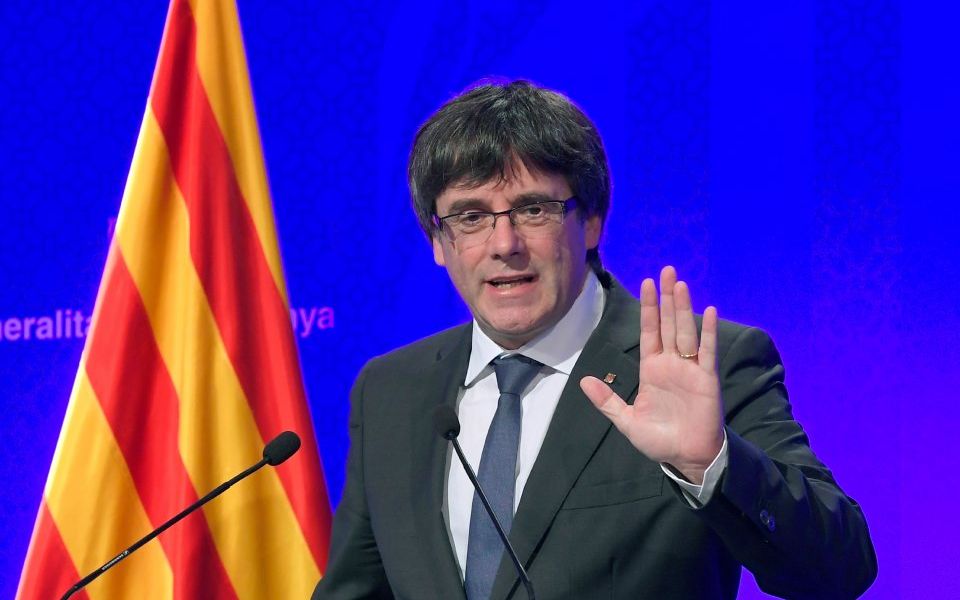
Even on Monday, after the Spanish government was accused of launching a coup d’etat by Catalonia’s President Carles Puigdemont, markets — as impossible to predict as ever — seemed untroubled.
Spain’s Ibex fell 0.5 per cent at the open, hardly the stuff of nightmares, but other European markets rose.
Are markets underestimating the gravity of the situation? Perhaps. But there are two other possible explanations. The most obvious one is that markets have now priced in the political uncertainty in Spain.
Meanwhile, Madrid’s decision to take direct control over Catalonia is a show of strength from the central government that markets want to see in order to have the confidence to invest there.
So, far from provoking a flight of capital from Spain, Prime Minister Mariano Rajoy’s actions over the weekend will have reassured markets that the government is willing to assert itself and, for want of a better phrase, take back control.
Of course, Catalans could still rise up against the imposition of direct rule from Madrid, but it appears Mr Rajoy’s political calculation is that the independence referendum lacks enough support.
Aside from the possibility the markets have protected themselves from the ongoing political crisis in Spain, the weakness of other currencies helped to absorb some of the pain last Thursday.
The Euro seemed largely unaffected by the decision by Madrid to impose direct rule on Catalonia. Normally, a big political decision affecting the wealthiest part of a country that is a member of the Eurozone would have had some impact on the currency. It didn’t.
In other words, it might not have been a question of Euro currency strength but the relative weakness of other currencies.
Brexit
In Britain, in particular, weak retail sales for September and continuing concerns over Brexit helped push the Pound lower by 0.46 per cent against the Euro on the day, while the Euro also held its own against the Dollar.
Part of this can be explained perhaps by the European Central Bank’s (ECB) involvement in the bond market as a result of quantitative easing. Some see this as putting a floor under the currency.
But it could also be true that markets, like the rest of us, have simply become accustomed to a certain level of political uncertainty. And, of course, we’ve been here before with the political uncertainty caused by the Greek debt crisis.
Were Germany or France, the Eurozone’s two largest economies, to experience the kind of political upheaval currently taking place in Spain then the Euro and European markets might react very differently.
But some see the Spanish crisis as a political negotiation that has become over-dramatized. Ultimately, all Catalan President Carles Puigdemont wanted was more autonomy and the promise of an independence referendum for the region in the future.
For now, instead, he’s lost most of his power. How the crisis is resolved is anyone’s guess. But short of all out civil war it seems markets have good reason to remain calm.