The simple strategy to profit from US dog stocks

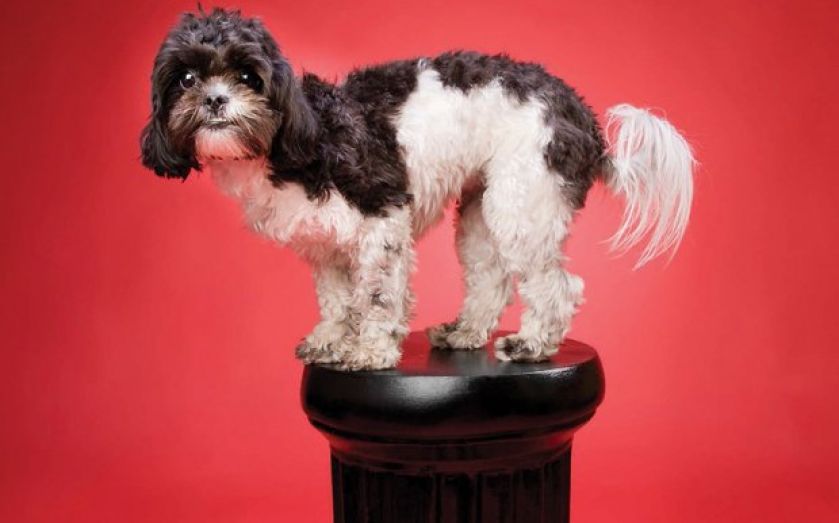
But those buying the 10 worst-performing stocks in the S&P 500 in September should remember that it’s wise to bank gains early
THIS is possibly one of the simplest investment strategies ever devised. It is also one of the most profitable. All you need to do is the following: at the end of September each year, buy the 10 worst-performing stocks in the S&P 500 index using their price performance over the previous three years. Hold these shares until January and sell them.
That’s it. You don’t have to pore over the finer details of fundamental analysis used by stockbrokers and equity analysts when deciding on the 10 shares to hold. So forget about dividend yields, price-to-earnings multiples and price-to-book values (the ratio of a company’s market value to its net asset value). This strategy does not rely on any of these valuation measures to work.
And work it certainly does. If you had followed this trading strategy, you would have turned in an average three-month gain of 17.6 per cent between 1997 and 2012 (excluding 2007 when we didn’t run the portfolio). That is over 12 percentage points more than an S&P 500 index tracker made in the same period each year. The three-monthly returns generated in the past four years have been: 10.3 per cent, 18.8 per cent, 22 per cent and 17.8 per cent. So why does this strategy work so well?
SHARES OVERREACT TO NEWS
In a now-famous paper published in the 1980s, academics Richard Thaler and Werner de Bondt found that portfolios consisting of the 35 worst-performing stocks in the S&P 500 (using price data over the previous three years) outperformed the 35 best-performing stocks by an average of 25 per cent over the subsequent three years for each three-year period between 1933 and 1979. They noted at the time: “Most people overreact to unexpected and dramatic news events. And you can make big money by exploiting this.”
For example, some companies get a bad reputation for perennially disappointing and, as a result, both shareholders and potential new investors are more inclined to ignore the few merits the company and its management have. In the most extreme cases, this savage derating can take valuations way below fair value. So why has a policy of buying these shares in early October been so successful?
WINDOW DRESSING
The reasons the dogs of the S&P 500 start to bounce back in October is easy to explain: the US fiscal year ends on 30 September. At this time, US fund managers must send reports to their investors detailing their performance during the year. However, the last thing they want to put in these reports is the fact that they are holding some of the worst-performing shares in the S&P 500. It would hardly inspire confidence in their stock-picking ability if shareholders in their funds found out that they had taken big hits on some of the rottweilers in the leading US stock index.
As a result, the asset managers sell these dog stocks before the fiscal year-end. Other fund managers, for the same motives, are reluctant to buy them. The upshot is that some loser stocks are likely to be especially undervalued at the end of September and are ripe for bouncing back. That’s when the “buy the dog” investment strategy kicks in.
ASSESSING RISK
There’s also an alternative explanation why this phenomenon happens, and it’s all to do with risk. Stocks that have fallen by at least 50 per cent in the past three years, as most of our dog stocks have, and in most cases by far more, carry loads of risk. There are five types of risk to consider:
■ Volatility. Dog shares are likely to be more volatile than the average constituent of the S&P 500. But stocks can be just as volatile on the upside when bouncing back as they are when falling.
■ Liquidity risk. This works both ways. On the downside, it depresses share prices and can force them below fair value. But on the upside, liquidity risk falls as prices rise, thus offering scope for above-average price rises when these stocks start to bounce back.
■ Distress risk. Dog stocks that plunge in value by 50 per cent or more run a far greater risk of going bust. Investors clearly sense this, as distress risk will be an increasing factor in the downward share price momentum seen in poorly-performing stocks. However, if sentiment improves and the perception of a company going bust or breaching its bank covenants diminishes, then distress risk falls, which helps the recovery in the stock price.
■ Market risk. The fact that the 10 worst-performing dog stocks have fallen so much at the same time means that they have a high sensitivity to market moves, and helps our dog stocks rise faster than the market when they bounce back.
■ Economic risk. Dog stocks are generally in cyclical sectors that have in the past done well during winter months.
The bottom line is that common sense tells us risky stocks should outperform other stocks eventually, simply to compensate for their greater risk. And the combination of the US fiscal year-end, window dressing by fund managers, and the start of a seasonally good time to be holding equities all help these risky stocks to outperform in the final quarter.
TRADING STRATEGY
Over the years, our dog stocks have performed remarkably well in the final quarter of the year, but don’t expect the recovery to be long-lasting. Interestingly, an analysis of all the dog portfolios since 1997 has one thing in common: there is a clear bias for the best of the gains to come in the period between October and January. Therefore, it pays to bank profits from this short-term trading strategy in the new year, and there is no harm in banking gains early.
A full list of the 10 US Dog shares to buy on Friday 27 September will appear in Friday’s edition of Investors Chronicle.
Simon Thompson is companies editor of Investors Chronicle and the author of a new book, Stock Picking for Profit. The book can be purchased online from YPDBooks.com (telephone orders 01904 431 213) and is priced at £17.74, including postage and packing. The full version of this article appears in Friday’s issue of Investors Chronicle.