Skip to content
Tuesday 8 September 2026London --:--Frankfurt --:--Zurich --:--
NewslettersSearchEN · DE · FR
MorningWire

European business, markets and politics

FTSE 100
10,822.13
-0.08%
DAX
26,006.53
-0.15%
CAC 40
8,306.15
0.00%
STOXX 50
6,403.99
+0.17%
  • Europe
  • Markets
  • Business
  • Economy
  • Regulation
  • Politics
  • Opinion
More
GermanyFranceEU InstitutionsCompetitionPublic AffairsBankingTechnologyEnergy
  • Germany
  • France
  • Europe
  • Markets
  • Business
  • Economy
  • Regulation
  • Politics
  • Opinion
  • DE
Friday 07 July 2023 5:30 am  |  Updated:  Thursday 06 July 2023 3:15 pm

Sky-high bills are not inevitable and our energy bosses shouldn’t buy into this myth

By: Sam Richards

Add as a preferred source on Google
UK Households Could Face Power Cuts This Winter, If Gas Supplies Run Low
Chris O’Shea, the boss of Centrica, has warned energy prices are likely to stay high. (Photo by Christopher Furlong/Getty Images)

Chris O’Shea, the boss of Centrica, is wrong to accept energy prices of over £2,000, writes Sam Richards.

Chris O’Shea may not be a household name. Normal people don’t keep a running list of CEOs, chairs, and fund managers in their heads.

But as the boss of one of the Big Six energy companies in the UK, what the chief executive of Centrica says matters for families struggling to make ends meet.

His comments that he expects household energy bills to remain high for the foreseeable future were a blow for millions of people already struggling with the cost-of-living crisis.

With wholesale market prices still two and a half times the long run average, the pain families are feeling is set to continue with eye-wateringly high energy bills.

The real tragedy is it doesn’t have to be this way. Sky-high energy bills are not inevitable.

We don’t have to accept household energy bills of over £2,000.

The solution is to get spades in the ground as quickly as possible and get building the clean secure domestic energy infrastructure Britain needs.

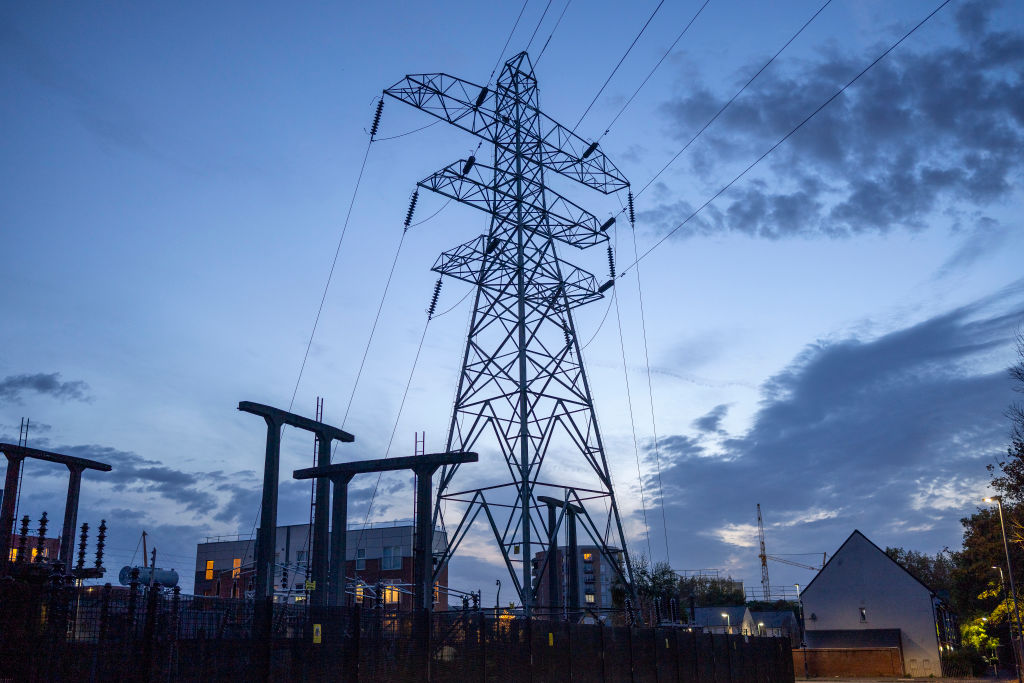
As things stand, it’s far too difficult to build anything in the UK, let alone critical energy infrastructure such as new offshore wind farms, small modular nuclear reactors or the new pylons needed to move clean energy electrons around the country.

To address this we need fundamental reform of our outdated planning system, which is holding Britain back from being a clean energy superpower.

We should start by freeing developers from burdensome environmental impact assessments in areas of low environmental importance.

Read more

Octopus boss Greg Jackson calls for ‘urgent reform’ on energy as bills rise

Octopus Energy, which was founded by Greg Jackson, is to spin-off Kraken. Chris Ratcliffe/Bloomberg via Getty Images

Why does it take up to 13 years for a new offshore wind farm to go from idea to generating power, despite construction taking just two to three years?

The East Anglia Two offshore wind farm gives us an insight. Just 20 miles off the Suffolk coast, East Anglia Two will be made up of 75 turbines that will generate enough clean energy to power 800,000 homes. The environmental impact assessment alone ran just under 11,000 pages.

And it’s even worse when it comes to nuclear. The 2020 planning application for Sizewell C contains over 4,000 documents, with the environmental statement stretching to 44,260 pages – almost 13,000 pages longer than Hinkley Point C’s.

Small modular reactors could be a game changer, we could have fleets of these mini nuclear power stations, that are about the size of two football pitches, dotted across the country. But if they get caught up in the kind of regulations needed for their bigger cousins, we can kiss goodbye to them ever taking off in the UK.

Fast-tracking clean energy developments in areas of low environmental importance is not a revolutionary idea, Spain already does it and it will be rolled out across the rest of the EU shortly.

In short, to get Britain building, we need to cut the red tape that is holding us back.

While some people may argue that it will take too long to change planning and environmental regulations to have a real impact on energy bills in the short term, there are some low hanging fruit that could make a real difference now.

Top of the list is dropping the senseless ban on new onshore wind farms in England.

Onshore wind is one of the cheapest forms of energy available to us and it is overwhelmingly backed by the majority of people. Ending the ban and unleashing a tsunami of clean electricity across the country is a no-brainer.

If reports at the weekend are true and the prime minister is contemplating delaying ending the ban on onshore wind until after the next election, he will be condemning millions of people to higher energy bills for purely political reasons while they are already struggling with day-to-day costs.

High energy bills are not inevitable, Britain can have cheap and reliable energy for decades to come, without been reliant on volatile international gas markets, but we need to get building clean energy right now.

Read more

Supermarkets ‘actively shielding’ shoppers as food inflation falls again

Shopper in a supermarket produce aisle browsing various packaged vegetables and fruits.

Share this article

  • Facebook
  • X
  • LinkedIn
  • WhatsApp
  • Email

Similarly tagged content:

Sections

  • Opinion

Categories

  • Opinion

Trending Articles

  • Iceland boss Richard Walker vows to set up shop on Falkland Islands

  • Britain ‘taxing itself to death,’ Burnham warned

  • Hedge fund billionaire Chris Rokos joins UK wealth exodus 

  • £74m for branded condoms? UK must stop spaffing cash on foreign aid

  • Don’t underestimate the free trade agreement Britain just joined

More from Morning Wire

  • Octopus boss Greg Jackson calls for ‘urgent reform’ on energy as bills rise

    Politics
    Octopus Energy, which was founded by Greg Jackson, is to spin-off Kraken. Chris Ratcliffe/Bloomberg via Getty Images
  • Supermarkets ‘actively shielding’ shoppers as food inflation falls again

    Retail
    Shopper in a supermarket produce aisle browsing various packaged vegetables and fruits.
  • ‘Misleading’ Frasers ad banned amid feud with watchdog 

    Retail
    Sports Direct store sign with anti-pigeon spikes, showcasing the blue and red branding of the retail giant.
  • Conga Announces Netflix Documentary Star and Survival Expert Chris Lemons as Its Featured Speaker at Conga Connection 2026

    Business Wire
  • North Sea is not competitive, says BP boss days after exit

    Markets
    British Petroleum BP forecourt with fuel pumps and company signage visible in a business setting, highlighting energy serv...
  • UK economy’s rebound fails to stem two years of mass job losses 

    Economics
    LONDON, UNITED KINGDOM - JANUARY 31: The Shard is seen on the horizon as commuters cross London Bridge during the morning rush hour on January 31, 2023 in London, United Kingdom. The IMF reports that the UK economy will contract by 0.6% in 2023, as opposed to the previous prediction it might grow, and will perform worse than many other advanced economies, including Russia.The cost of living continues to hit households with grocery inflation for the first four weeks of 2023 rising to 16.7% which would add a further £788 per year to family food bills. (Photo by Leon Neal/Getty Images)
  • ‘Broken promises’: Burnham under fire on cost-of-living plans as energy bills set to surge

    Politics
    Man in glasses and maroon jacket speaking, with out-of-focus figures in the background.
  • IMF sounds alarm on borrowing costs surge as bond rout deepens

    Economics
    Chancellor John Healey smiling, wearing a navy suit, white shirt, and red tie.
MorningWire

Independent European business, markets and political news for decision-makers.

Morning Briefing

Europe

  • Germany
  • France
  • EU Institutions
  • Europe

Business

  • Markets
  • Business
  • Economy
  • Regulation
  • Competition
  • Public Affairs

Editorial

  • Opinion
  • Editorial Policy
  • Corrections
  • Contact

Company

  • About Morning Wire
  • Privacy Policy
  • Terms of Use
  • Cookie Policy
© 2026 Morning Wire Ltd · Published by Morning Wire Media, Bahnhofstrasse 65, 8001 Zürich, Switzerland
Privacy · Terms · Cookies · Facebook