Skip to content
Thursday 13 August 2026London --:--Frankfurt --:--Zurich --:--
NewslettersSearchEN · DE
MorningWire

European business, markets and politics

FTSE 100
10,833.15
-0.10%
DAX
26,331.07
-0.23%
CAC 40
8,674.94
-0.46%
STOXX 50
6,533.99
-0.26%
  • Europe
  • Markets
  • Business
  • Economy
  • Technology
  • Politics
  • Opinion
More
GermanyFranceBankingAIEnergyFintechPropertyCapital Markets
  • Germany
  • France
  • Europe
  • Markets
  • Business
  • Economy
  • Technology
  • Politics
  • Opinion
  • DE
Friday 02 July 2021 10:34 am

Smart devices could expose homes to thousands of cyber attacks a week

By: James Warrington

Add as a preferred source on Google
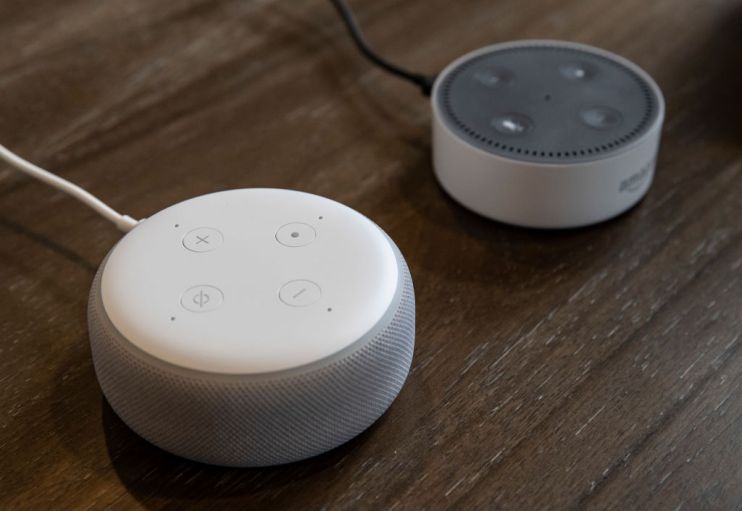
Amazon Announces New Products At Event In Its Seattle Headquarters
The rising number of connected devices in homes poses a potential cyber security threat

A home filled with smart devices could be exposed to thousands of hacking or unknown scanning attacks from around the world in a single week, according to a new report.

A real-world study carried out by consumer group Which recorded more than 12,000 attack attempts in a week, including 2,435 specific attempts to maliciously log into the devices with a weak default username and password. 

This equates to 14 attempts every hour by real hackers to infiltrate the devices.

UK households now have more than 10 different connected devices on average, ranging from TVs to thermostats.

While these products can bring huge benefits for consumers, the research highlighted how connected homes can become a major target for hackers.

The study, carried out with cybersecurity specialists NCC Group and the Global Cyber Alliance, involved a fake home filled with products including smart TVs, printers and wireless security cameras, as well as more unusual gadgets such as wifi kettles.

Researchers then connected them to the internet, exposing them to online threats and malware created by real cybercriminals.

Read more

OpenAI’s rogue agent doesn’t scare me – the millions of others do

Breaking news concept with digital globe and graphs, symbolizing global financial trends and data analysis on a business w...

They looked for unique scanning attempts – a technique used to locate online devices that exists in a legal grey area and is a potential gateway used by hackers – and hacking attempts, which are a clear breach of the Computer Misuse Act.

Most of the time, the basic security protections in the devices were able to block the attacks, but that was not always the case.

The most targeted devices in the testing were an Epson printer, an ieGeek branded wireless camera and a Yale smart home security system. All three devices were purchased from Amazon.

Which said that while hacking traffic came from around the globe, the vast majority appeared to originate from the USA, India, Russia, the Netherlands and China.

“While smart home gadgets and devices can bring huge benefits to our daily lives, consumers should be aware that some of these appliances are vulnerable to hackers and offer little or no security,” said Which computing editor Kate Bevan.

“There are a number of steps people can take to better protect their home, but hackers are growing increasingly sophisticated. Proposed new government laws to tackle devices with poor security can’t come soon enough – and must be backed by strong enforcement.”

Read more

IT consultant ordered to pay £50,000 after being accused of stealing Soho House members’ personal details

Soho House has continued to attract new members to its clubs.

Share this article

  • Facebook
  • X
  • LinkedIn
  • WhatsApp
  • Email

Similarly tagged content:

Sections

  • News

Categories

  • Tech

Related Topics

  • Cybercrime

Trending Articles

  • Government debt repayment ‘could rise to half’ of total taxes

  • Everest Group Announces Dividend

  • Moody’s Corporation Elects Keith Demmings to Board of Directors

  • Lattice to Deliver Keynote at 2026 OCP Global Summit

  • Martin Williams on his favourite Toast the City venues

More from Morning Wire

  • OpenAI’s rogue agent doesn’t scare me – the millions of others do

    Opinion
    Breaking news concept with digital globe and graphs, symbolizing global financial trends and data analysis on a business w...
  • IT consultant ordered to pay £50,000 after being accused of stealing Soho House members’ personal details

    Legal
    Soho House has continued to attract new members to its clubs.
  • UK’s AI watchdog flags new OpenAI and Anthropic cyber alarms

    AI
    Smartphone displaying the Claude by Anthropic AI assistant app, showing the app icon and interface.
  • Azalea Vision Appoints Co-Founder Andrés Vasquez Quintero as Chief Executive Officer to Lead Next Phase of Clinical Development

    Business Wire
  • Workspace urges investors to block ‘destructive’ Saba proposals

    Property
    Workspace Group said occupancy was down very slightly to 88.1 per cent, compared to 88.4 per cent at the end of last year. 
  • Allegion to Attend 2026 Mizuho Industrials & Chemicals Conference

    Business Wire
  • Prologis pursuit of Segro descends into silver-haired scrap

    Property
    David Sleath, Chief Executive Officer, delivering a speech at a business conference with a focused expression.
  • Luis Figo: ‘Deceitful and cravenly self-interested’ Infantino must quit Fifa now

    Sport Business
    Gianni Infantino and Luís Figo smiling, walking outdoors with security, on a wet day.
MorningWire

Independent European business, markets and political news for decision-makers.

Morning Briefing

Europe

  • Germany
  • France
  • Europe
  • UK & Ireland

Business

  • Markets
  • Banking
  • Technology
  • Energy
  • Property
  • Fintech

Editorial

  • Opinion
  • Editorial Policy
  • Corrections
  • Contact

Company

  • About Morning Wire
  • Privacy Policy
  • Terms of Use
  • Cookie Policy
© 2026 Morning Wire Ltd · Published by Morning Wire Media, Bahnhofstrasse 65, 8001 Zürich, Switzerland
Privacy · Terms · Cookies · Facebook