Smart materials: Why the future face of manufacturing matters to investors

The traditional resources services sector had a challenging year in 2014. While growth rates have trended positively in most parts of the world, resources equities and commodity prices, including oil and gold, declined because of uncertainties and increased supply.
Longer term, population growth and demographic shifts will alter consumption patterns and place additional strain on natural resources. According to UN estimates, the global population is expected to grow to more than 9bn by 2050 – a 30 per cent increase from current levels. It is also estimated that the global middle class will more than triple by 2030.
Now, we have reached an inflection point, where the development of substitute materials and productivity gains will play an increasingly important role in the effort to cope with a scarcity of resources. Across sectors, lightweight and composite materials are increasingly being used as a way to up efficiency and reduce greenhouse gas emissions.
And these developments in smart materials are opening up a range of investment opportunities. In the aviation and automative industries, materials such as high strength steel, carbon fibres and aluminium are becoming increasingly prevalent, replacing simple metals such as copper and iron. Over the past decades, aviation has spearheaded using lightweight materials, as improved manufacturing processes and new composites have helped to drive down the cost of carbon fibres, titanium and aluminium alloys.
In the 1970s, the first Boeing 747 only contained about one per cent in carbon fibres. Today, they make up roughly 50 per cent of the Boeing 787 and 53 per cent of the Airbus 350. Moreover, upgrades to a number of single-aisle aeroplane models are expected to contribute to growth in the carbon fibre market, offering attractive opportunities for investors.
This is also the case in car production. Lightweight materials are expected to account for nearly 67 per cent over the coming decades – mainly at the expense of standard steel. Steel is still the single most important material used in cars. But owing to the increased adoption of high strength versions, demand for it has been slowly declining. These shifts will have significant ramifications for the traditional basic resources industry, which stands to lose 40 per cent of volume, according to IHS.
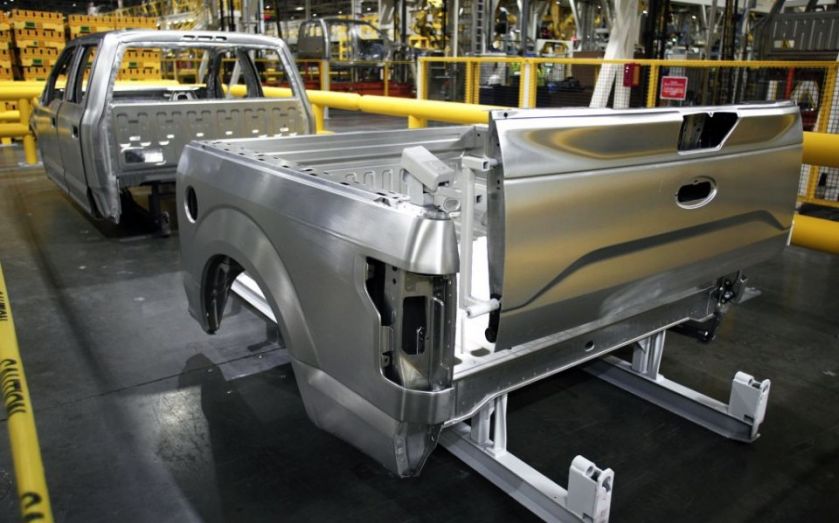
The Ford 2015 F-150, which has been the best-selling car in the US for three decades now, is a case in point. With a full aluminium body, it is 300kg lighter than the previous model, meaning it is 30 per cent more fuel efficient. This major breakthrough is likely to prompt other manufacturers to start using lightweight materials.
And as process technologies have improved, carbon fibres are an increasingly attractive option for manufacturers. The car industry now uses around 1,800 tons each year, accounting for around 5 per cent of the world’s total demand. The launch of the BMW i3 and i8 spell out significant changes to the composition of mass produced cars in the years ahead. The i3 alone could use more than 2,600 tons of carbon fibre each year – more than the current usage across the entire industry.
Another key area of growth in the resources sector is the automation market. This has grown by between 6 and 8 per cent per year since 2003, reaching $180bn (£117bn) in 2013. It is providing new investment opportunities as cost savings, product quality and uniformity, faster production cycles and better resource efficiency continue to drive adoption of automatic control.
Finally, the increasing uptake in the use of software across manufacturing and 3D printing offers exciting investment opportunities. Boeing has already been using 3D printing for the past decade to make parts such as electronics covers and air ducts for its planes. As a result, it has made overall savings of 25-50 per cent – reducing the weight of certain parts by 10-30 per cent, saving fuel costs and eliminating the need for expensive tools.
By 2013, Boeing had produced more than 22,000 3D-printed parts, using them in 10 different types of military and commercial planes – including the 787, which has 30 3D-printed components. GE Aviation, which won the largest-ever commercial jet engine order from Dubai Emirates last year, is considering using 3D printers to build the 300 GE9X engines. And both Airbus and Boeing are now also exploring the possibility of building entire planes with giant 3D printers.