How to solve the housing crisis in five years

The UK housing market is failing millions of people. It produces far too few homes, and then offers them at unaffordable rents and prices.
Yet we could cure this national housing crisis in just five years, using high-technology modular construction, reimagined council housing and patient institutional capital.
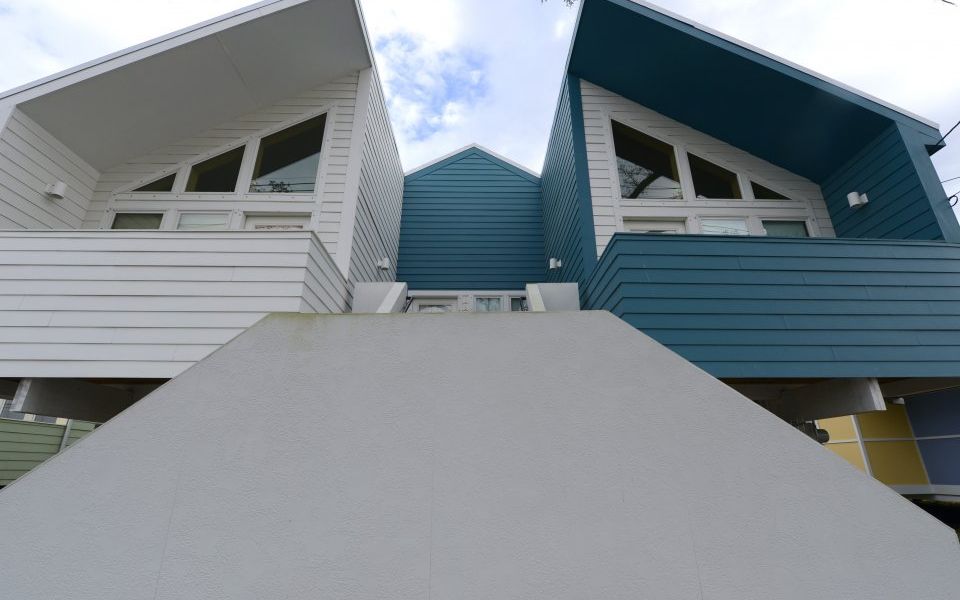
In Japan, the modular future has already arrived. Toyota can build you an elegant modular house within 45 days. They will guarantee it for 60 years, and it will last 100. It only costs about £70,000 to make a semi-detached modular house. Flats are even quicker and cheaper – one Japanese factory can manufacture 6,000 flats a week.
The UK needs to build about 250,000 homes a year, but we only manage 100,000 or so. We should be ashamed. Modular technology means we could easily build over 500,000 homes a year and eradicate our housing deficit.
So, we know how we can achieve the scale and speed of construction to solve our housing problem. But who should do it?
There is an obvious candidate. The government will pay £24bn (the build-cost of 340,000 modular semis) in housing benefit this year, effectively guaranteeing private landlords’ rent. Housing benefit traps the government into a loss-making residential outsourcing deal that is poor value for taxpayers.
It doesn’t have to be like this. During the twentieth century, the UK housing market was a mixed micro-economy. Councils built about 30 per cent of homes and helped tame the housing shortage. It was a mass solution for mixed communities.
In 1981, one third of Londoners lived in council housing, and one third of council house tenants were earning above average income. Council housing created an agreeable environment for millions of working and lower-middle class families and, despite some problems, was a civilised solution to the fact that private markets alone struggle to deal with housing deficits.
Rather than throwing good housing benefit money after bad, the government should ignite a vast and visionary programme of state-sponsored modular home building. By using Japanese technology, the government could address the housing problems of millions of ordinary working people and receive an income in return.
Macmillan’s 1950s One Nation solution (continuing Bevan’s 1940s work) is a model. He adopted a balanced, mixed market approach to housing, combining state housebuilding with private housebuilder enterprise. Building restrictions were loosened and licenses abolished. Multi-tenure solutions were nurtured and local authorities empowered to build and borrow. As Macmillan said, “the houses were built” – 275,000 in 1952, 318,750 in 1953.
Macmillan believed in public housing (in partnership with the private sector) because he wanted a housing market that worked for everyone. Our divided nation needs his One Nation housing vision again.
But the government is too indebted to deal with the housing deficit on its own. This immense problem demands a solution of matching scale. The public and private sector must work as one to overcome it.
I would suggest a gigantic joint-venture platform where the UK pension funds and government invest together to launch a transformative programme to build millions of council, social, build-to-rent, shared equity, and (genuinely affordable) build-to-sell homes. Because we can only end our housing famine by building millions more homes of every tenure.
The government would need to create an investable proposition for the institutions. But this should be achievable: housing provision is ideally suited to their need for long term liability matching returns.
The house builders and housing associations cannot resolve the UK’s housing shortage without help (and it is not their job to). But our government and institutions can work alongside them to deal with it.
Using modular housing, mass council home building, and imaginative strategic partnerships between government and institutions, we can again house our poor and vulnerable and the millions of under 40s the market currently lets down.
If we don’t grasp this opportunity, we will be condemned to house only the rich and the chronically over-mortgaged. We will also have to face our grandchildren, when they ask us why we failed to house them.