
Solving The World’s Most Pressing Problems By Redirecting Capital Is At The Heart Of Emanuela Vartolomei’s Bid To Createsystem. Wall Street without the Walls.”
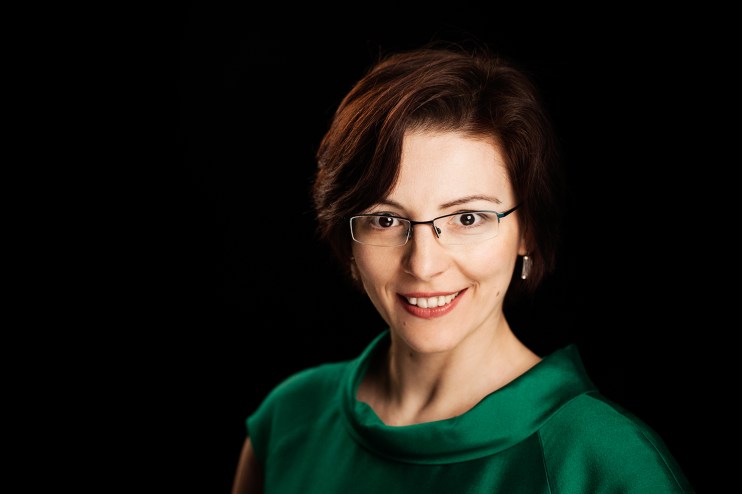
Solving the world’s most pressing problems by redirecting capital is at the heart of Emanuela Vartolomei’s bid to create “real change to the financial system. Wall Street without the walls.”
Her model uses artificial intelligence to measure 13 million companies at a “hyper-scale”, to “reinvent research” and propel firms and governments to ESG transparency.
But what is All Street Sevva and what does it do?
Romanian-born London-based Vartolomei explains “Sevva is a Sanskrit word that means ‘selfless service for the benefit of all of humanity’. It reflects our social mission to help direct capital towards solving our most pressing planetary and societal needs.”
She explains its purpose, identifying the problem that “there are three million financial institutions globally and 13 million companies. All of them will need sustainability assessment if we want capital to flow to the right ones.”
Today human analysts do this assessment manually, and if we carry on like this, it will be impossible to address this challenge.”
If you want to solve the problem at scale, then only artificial intelligence can do this. And this is why we say we are reinventing research.”
All Street Sevva started as an investment research firm which became “unmanageable because I had a network of 70 analysts producing the research. I had to track where they were getting their information from, and had to put a process around it.”
Inspired by advice from a Toronto-based lawyer who recommended building a virtual investment research hub, she went about automating the process.
‘We collaborated with the University of Cambridge and managed to build our first 25 Cognitive Robots.They happened to be in ESG (Environmental and Social Governance). Over the years we have refined our offering and we now have over 500 robots covering multiple areas of sustainability.”
Having grown up under the iron curtain in Romania, Eastern Europe, she said her journey from communism to CEO was motivated by the generational change powering her youth.
“I have always been interested in creating systemic change” she said, having also experienced upheaval, obtaining her MBA in the financial crisis, but facing a “personal challenge because there were no jobs”.
It was also an opportunity’ she said, “because it was clear to me that we needed a different kind of financial system.”
“I was the first person to map out what such a system could be like.”
Vartolomei doesn’t think about having ESG goals though. “I like to think of this in terms of the challenges for our planet and society.”
Writing this as world leaders meet in Sharm-El Sheikh for COP 27, she said “earlier this year I interviewed 30 investment and ESG leaders” and there is a “very clear view that we had no chance of hitting 1.5c and that a 3c was the central scenario. In that case, as a planet we are in adaptation territory”.
“But this view is still not reflected in corporate and investor reporting. She wants “every company report on what they are doing to address climate and adaptation” with the “ones that aren’t doing anything” likely to “disappear.”
“I’m not exaggerating. The markets think this too. Schroders Economics Group’s base case carbon price assumption is $400 per ton, which will wipe out the profits of hundreds of companies.”
How would you explain how your AI arrives at its ESG rating for publicly listed companies?
“We have built hundreds of Cognitive Robots which are trained machine learning algorithms that can read millions of documents in any language and retrieve ESG information. Our system has over 2 trillion AI inferences.”
“This means that we can analyse the ESG profile for 70,000 listed companies globally. And we can automatically benchmark every company against all the other companies of similar size and industry.”
What are challenges with taking Sevva mainstream?
“We face the same challenges as other ESG providers, namely that there is a small but vocal contingent, consisting mainly of rich 20th century dinosaurs, that is trying to take down ESG.”
“They paint ESG as a type of investment label and it creates a populist political movement. But everyone who is a serious investor knows that ESG is not a label, it is an established mainstream field within fundamental investment research.”
Where did your derive your data points from?
“There is data everywhere. The beauty of the internet is that companies publish all types of information about themselves. Likewise other publishers also publish information about companies, including news providers.”
“The challenge is not where, but how.
“You need very sophisticated technology to gather that information, categorise it, and then extract the relevant data from it. That takes years of R&D to get it right, which is why we spent millions building Sevva.
Is SEVVA positioned to help governments as well as firms?
“The biggest challenge is that 90 per cent of emissions caused by companies are within Scope 3, which encompasses emissions from the supply chain and from usage of the product. There is still very little measurement of this.
“In response we are now moving our systems to hyper-scale. We are going to take a shot at analysing those 13 million private companies. That will mean that we can provide that big missing piece of the jigsaw. We are already seeing strong interest from companies, investors and governments.”
Where does Sevva come in here though?
“From our database, we know that 45,000 out of 70,000 companies still do not address climate change in their corporate reports.
“That is a much bigger problem that we want to address, and one which Sevva is uniquely positioned to solve because of the scale of the data we make available.”