South Western Railway, C2C and Greater Anglia to be nationalised in 2025

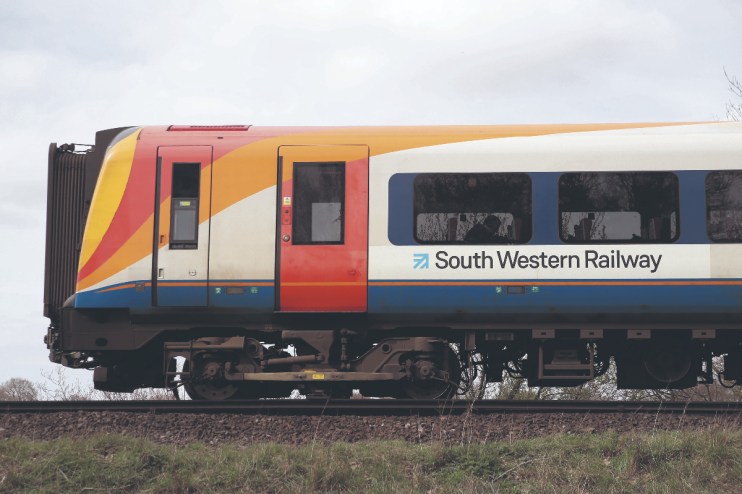
Ministers have announced that South Western Railway will be the first train company brought under public ownership as part of Labour’s plans to renationalise the railways.
SWR will come under state ownership in May, followed by C2C and Greater Anglia in July and autumn 2025, respectively. All three run key London commuter services.
It comes after the government’s Passenger Railway Services (Public Ownership) Act received Royal Assent last week, paving the way for the biggest shake-up of Britain’s railways in decades.
Labour hopes the move will reduce widespread delays and cancellations, which have plagued the network’s franchised operators in recent years. It claimed on Wednesday nationalisation would save £150m per year in fees, with “no additional cost to the taxpayer.”
But the plans were plunged into uncertainty last week after the shock resignation of the former Transport Secretary Louise Haigh, following revelations surrounding a fraud conviction over a decade ago.
Haigh’s replacement, Heidi Alexander, said: “For too long, the British public have had to put up with rail services which simply don’t work. A complex system of private train operators has too often failed its users.
“Starting with journeys on South Western Railway, we’re switching tracks by bringing services back under public control to create a reliable rail network that puts customers first.
“Our broken railways are finally on the fast track to repair and rebuilding a system that the British public can trust and be proud of again.”
South Western Railway set for first nationalisation
Firstgroup and MTR-owned South Western Railway operates commuter services from its Central London terminus at Waterloo. It also runs suburban routes in counties including Surrey, Hampshire and Dorset and regional services across Devon, Somerset and Wiltshire.
When its contract ends in May, its services will now be under the control of the Department for Transport’s operator of last resort, the DOHL.
Rail unions praised the news as a “historic moment for the rail industry, marking the beginning of the end for the Tories’ failed privatisation experiment.”
Mick Whelan, general secretary of the train drivers’ union Aslef, said: “This is the right decision, at the right time, to take the brakes off the UK economy and rebuild Britain.
“John Major’s decision to privatise British Rail in 1994 was foolish, ideologically-driven, and doomed to fail. It was described even by that arch-privateer Margaret Thatcher as ‘a privatisation too far’ and so it proved.”
However, others in the industry are not confident it will solve wide-ranging issues that have hamstrung the UK’s beleaguered railway sector, particularly since Covid-19 wiped out passenger numbers and operators were brought under tight, restrictive contracts.
Andy Bagnall, chief executive of lobby group Rail Partners, described SWR’s nationalisation as a “watershed moment.”
But he added: “Simply changing who runs the trains won’t deliver more reliable and affordable services for passengers, reduce subsidy for taxpayers or grow rail freight.
“The key to both improving performance and holding down fares is restoring the railway to financial sustainability. It is counter intuitive to start removing private sector operators from the system, with their track record of delviering growth to reduce subsidy, when the question of what will replace them long-term won’t be answered until further rail legislation is introduced.”
Dominic Booth, chief executive of Transport UK, which runs Greater Anglia, has voiced concern over staffing levels at the DOHL, and warned too hasty a transition could prove too much for the state-owned body.
“We are surprised to see Greater Anglia, the best train operator for both the passenger and the taxpayer, on the list of those first to be nationalised,” he said.
“That said, we look forward to constructive dialogue with government at the appropriate time.”
The Department for Transport expects all franchised operators to be brought under public ownership over the next three years.