Space race: The ambitions, plans and delays of launching superpowers

Jeff Bezos’ Blue Origin, following its landmark human flight last month, has launched an uncrewed mission of NASAs future moon landing technology today.
The flight, known as NS-17 or New Shepard 17, set off from a Blue Origin site in West Texas.
The NASA payload on board is to test technologies including a Doppler Lidar sensor array, which is hoped will help landing crafts get more detailed images of their landing zone. The NS-17 will also have a descent landing computer on board, which handles processing of the sensor data.
NASA has pledged to land the next man and the first woman on the moon in as soon as 2024, under its Artemis programme.
Meanwhile, the UK and its growing number of space tech companies, have seven launch sites in planning – with hopes to catapult a constellation of satellites into the Earth’s orbit.
The UK currently has its sights set on satellites for their broadband and scientific purposes, including more accurate climate modelling.
However, the race to the moon has seemingly begun its second round after China in December became the first country to return lunar samples since the Soviet Luna-24 mission in 1976.
Russia
Russia revealed on Tuesday that its first mission to the Moon in decades has been postponed due to “problems” in the testing of its Luna-25 spacecraft.
The country’s space agency, Roscosmos, confirmed last week that the mission – which was originally scheduled for October 1 – had been postponed until May 2022.
The Luna-25 mission from the Vostochny Cosmodrome in Russia’s far east, aims to sample ice deposits on the Moon’s south pole. If successful next year, the mission will be Russia’s first to the Moon’s surface in 45 years – and the first in its post-Soviet history.
“More time” was needed to complete successful trials, chief engineer at Russia’s state aircraft design bureau NPO Lavochkin, Alexander Shirshakov told Interfax news agency. “We have encountered certain problems during testing.”
“A safe landing system is of crucial importance and we are working on Luna-25’s soft landing system,” he explained.
It follows the announcement of Russia collaboration plans with China in March for a joint lunar station. While Russia has also nudged to intentions to leave the International Space Station, opting for its own orbital station which it plans to launch around 2025 to 2030.
China
China, the third country to launch a human into space in 2003, yesterday launched twin radar satellites, known as Tianhui-2, designed for 3D mapping – its 29th orbital launch this year so far.
Little information about the satellites has been released regarding the latest launch, but Chinese state media reported that the pair of satellites will help with “scientific experiments and research, land and resources surveying, and geographic surveying and mapping.”
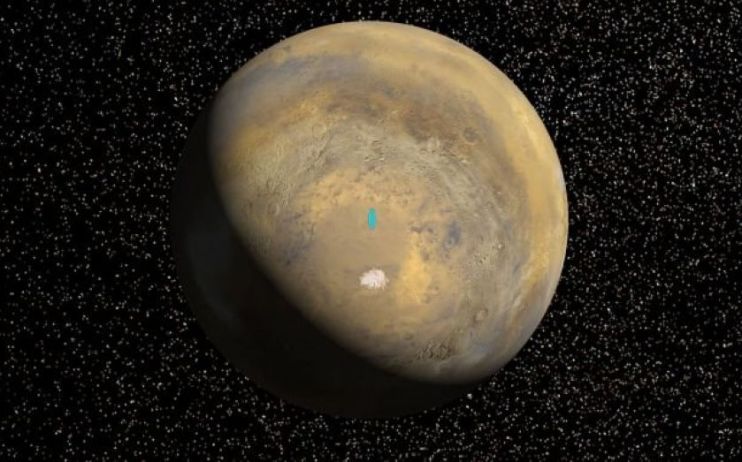
It follows the completion of China’s three-month long expedition on Mars with its Zhurong rover last week, which forms part of its greater plans involving the Red Giant.
The rover, which has sent back 10 gigabytes of raw data from the Mars surface to its Tianwen-1 orbiter, will give China “a deeper understanding of the geology of Mars”, chief designer of the Tianwen-1 ground application system, Liu Jianjun, told CCTV.
Jianjun added that it will also give China the opportunity to “even see if we can find evidence of the existence of an ancient ocean in Utopia Planitia.”
China’s launch plans currently focus on Mars, for which it has a rather ambitious three-step plan, spearheaded by state-owned rocket manufacturer China Academy of Launch Vehicle Technology (CALT), the Global Times first reported.
Following on from the successful Tianwen-1 probe mission, the country’s first interplanetary exploration that was able to orbit, land and drive on Mars in one attempt, androids will be launched for scientific sampling and to explore a potential Mars base site.
The next step will be a manned Mars mission, where China hopes the building of a Mars base will be carried out. The third phase will see attempts of an Earth to Mars shuttle, including a cargo fleet to scale its Mars development.
The timetable for these mission launches will be 2033, 2035, 2037, 2041 and 2043, among others that are yet to be decided, CALT said.
A nuclear propellant system is also being considered as an option for the manned Mars exploration missions, head of the state-owned rocket maker, Wang Xiaojun, revealed.
In a bid to trim down the scale of its Mars probe and transport missions, CALT is also looking into a “Sky Ladder” system, according to Xiaojun, which would act as starting point for launches.
The Mars sample-return mission, the first stage of its Mars plans, will launch sometime around 2030. A separate exploration of the Jovian system – across Jupiter, Saturn, Uranus and Neptune – is also bound for around the same time, according to CALT officials.
Australia
While Australia is looking to launch its first commercial rocket this year from the Eyre Peninsula, after this week receiving the go-ahead from the federal government.
Australian space company Southern Launch is set to send a rocket from Taiwan’s TiSPACE into space after bagging a launch permit, which was announced on Monday.
The suborbital rocket Hapith I, to be tested by the Taiwanese firm, will be launched from Southern Launch’s Whalers Way Orbital Launch Complex in South Australia.
“Two more suborbital launches and several orbital launches have been planned to follow this test launch,” TiSPACE said in a statement at the beginning of the week.
However, a date and timeline for the launches have yet to be confirmed.