Sport is guilty of shutting its eyes to Russia’s geopolitical ambitions

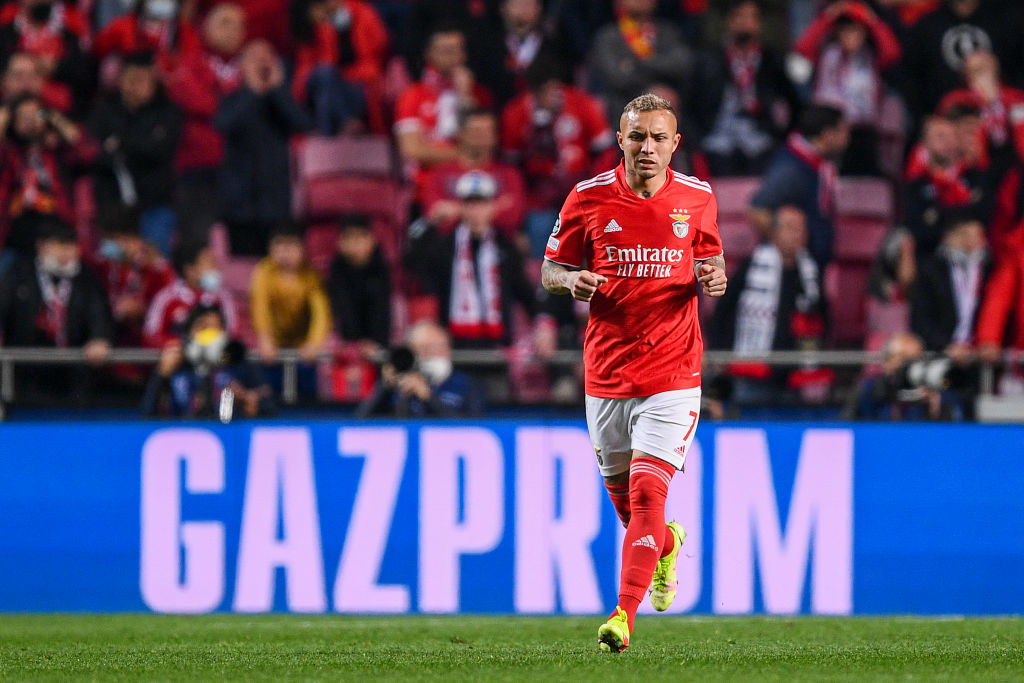
Roman Abramovich’s near 20-year ownership of Premier League club Chelsea has been shrouded in mystery and therefore subject to constant scrutiny and speculation.
Indeed, until the weekend, it remained unclear why he is there and what he is seeking to achieve. The oligarch has denied having direct links with Vladimir Putin but has been seen with the Russian president on multiple occasions and sold his company, Sibneft, to the state.
However, intrigue around his relations with the Kremlin endured, fuelled by Theresa May’s government denying Abramovich a visa to enter Britain. May’s apparent zeal for chasing down Russian billionaires was well known though eventually derailed by the Brexit process. Yet events over the last week have brought the Chelsea owner back into the geopolitical spotlight, with the announcement that he is scaling back his involvement at Chelsea.
Exactly what Abramovich’s statement actually means remains to be seen. But then the Roman way has been to leave people guessing.
One implication, however, is that he is about to become ensnared by the raft of sanctions that is rapidly accumulating around Russia in the wake of President Putin’s decision to invade Ukraine. The UK government has said it has no plans to sanction him at present.
For those who remain dewy-eyed about the power of football to induce selfless behaviours, Abramovich’s Chelsea decision is likely first and foremost to be based on political expediency.
He has a considerable amount of money invested in the club which can’t immediately be liquidated. The Russian will likely be back, either to continue owning the club or to cash in his asset, once the geopolitical temperature has fallen.
In the meantime, rumours about a potential sale of Chelsea are inevitable. At this time of crisis, the business is vulnerable and INEOS billionaire Jim Ratcliffe has already been mentioned as a possible buyer.
Such rumours have been played down by those close to the club and are perhaps premature; with financial sanctions already in place against Russia, the proceeds of a Chelsea sale would be likely to face significant controls and restrictions.
Focusing on Abramovich nevertheless seems frivolous when so many people are dying or suffering in Ukraine. Yet, it is the brutality and irrationality of Russia’s actions that have led the global sport community both to rally in support of Ukraine and to condemn and distance itself from Russia, the Kremlin, Putin and the country’s sport. If ever there has been a notion of tiki-taka diplomacy and sanctions, then this it: fast, direct and incisive.
Russia, Gazprom and Uefa
Already, Uefa has removed its Champions League final from St Petersburg’s Gazprom Arena, Manchester United has terminated its sponsorship deal with Russian state airline Aeroflot, Formula 1 will not stage a Grand Prix in Sochi this year, and the Polish national football team has refused to play its World Cup qualifying matches against Russia next month.
The swift and strident nature of Polish reaction reflects a history of the country suffering at Moscow’s hands, and also its geographic proximity to Russia. However, Poland, like Ukraine, has been centre stage in the fractious development of gas pipelines heading west out of Russia. The Nordstream 1 and 2 pipelines were deliberately routed under the Baltic Sea by the Russians to avoid its two neighbours.
This denied either any control over the pipelines or any transit fees. Instead, Russia agreed a deal with Germany, a marriage consummated through Gazprom, which built and owns the pipelines, sponsoring football club Schalke, the bastard offspring of which was a series of Uefa sponsorship deals.
Gazprom, which sells gas to governments, is an unusual sport sponsor but has helped Russia to establish a power-dependence energy relationship with the likes of Germany. The sponsorship was therefore being deployed as a geopolitical tool. Some might even argue that it marked sponsorship becoming weaponised – this was no burger and fries or beer deal.
Uefa officials may have seen its contract with the St Petersburg-based, state-owned corporation as being a lucrative addition to its coffers. Yet there was more at stake than bottom-line considerations.
This raises profound questions for Uefa about how it selects partners. Nyon may have been thinking in terms of turnover and profit, but the Kremlin’s conception of the deal was always much bigger and more dangerous.
If Uefa seems complicit in what is now unfolding across Europe, then they are not alone. For instance, United signed and then resigned deals with Russian state-owned airline Aeroflot.
These contracts were agreed at a time when an increasingly aggressive Putin was in power, Russia was engaged in bombing Syria, and political dissidents both at home and abroad had been killed by Russian secret agents.
Some industry insiders seek to claim that it is not within their remit to consider such matters. The last seven days have shown this was naive and that sport functions as part of a geopolitical economy, not just as a cash cow.
For anyone to plead ignorance of this beggars belief; Putin has repeatedly shown that Russia plays a different game when it comes to sport.
How Kremlin has used sport for power and control
Go back to the 2010 World Cup hosting announcement. Qatar has been endlessly accused of having bought the 2022 tournament, yet far fewer even considered that Russia might have done the same to win the 2018 hosting rights. Both nations have denied the suggestion.
In 2014, as the Winter Olympic Games took place in Sochi, questions were asked about how Russia had spent possibly upwards of $60bn on the event, which was commonly framed as an issue of event legacy.
Yet it was a massive political power play and a significant distraction, as most of the world was caught napping when Russia annexed Crimea in the weeks immediately after the Games.
Later, in 2016, Russian state-backed thugs caused mayhem at Euro 2016 in France, with numerous episodes of violence perpetrated against fans from other countries.
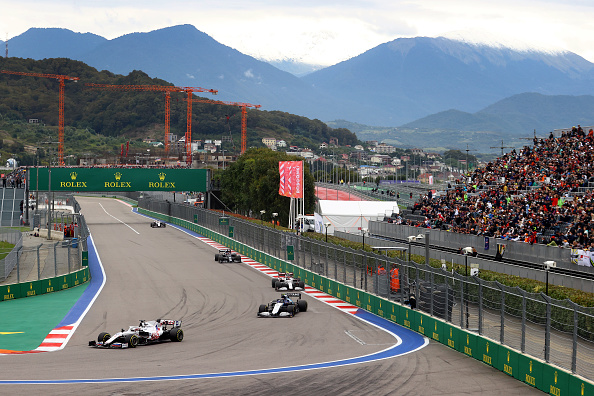
However, this didn’t stop the sporting world falling victim again to the Kremlin’s manipulative tactics, as in 2018 most fans and commentators left Russia after the World Cup praising the country’s warmth and hospitality.
And let’s not forget the Russian doping scandal: utterly deplorable though repeatedly assessed as simply being a case of one country trying to secure an on-track performance advantage.
How naive this view was; Russia’s systematic doping of its athletes was more a deliberate attempt to disorient, divide and provoke dissonance across the international sport community. Many of us fell for it, hence Putin achieved his goals.
Over the last 20 years, it has become commonplace for English football fans to claim that the Premier League is the best in the world. Similarly, officials from the likes of Uefa and Manchester United have been able to herald how commercially successful they are. The Olympics and Formula 1, meanwhile, have been able to congratulate themselves on taking their sports to lucrative new markets such as Russia.
However, sport’s eyes have been wide shut. Putin and the Kremlin don’t deal in rational economics. For them, sport has never been about the bottom line. Geopolitical economy sits at the heart of their decision-making; it’s about power and control.
As such, sport needs to learn a series of profound lessons from the last seven days. This is not the late 20th century anymore. With the influx of investments over the last two decades from countries and their governments, sport needs to up its game and start playing in a different way.
Professor Simon Chadwick is Global Professor of Eurasian Sport at Emlyon Business School.