Skip to content
Tuesday 11 August 2026London --:--Frankfurt --:--Zurich --:--
NewslettersSearchEN · DE
MorningWire

European business, markets and politics

FTSE 100
10,870.54
+0.07%
DAX
26,345.18
+0.08%
CAC 40
8,722.33
-0.04%
STOXX 50
6,552.19
+0.25%
  • Europe
  • Markets
  • Business
  • Economy
  • Technology
  • Politics
  • Opinion
More
GermanyFranceBankingAIEnergyFintechPropertyCapital Markets
  • Germany
  • France
  • Europe
  • Markets
  • Business
  • Economy
  • Technology
  • Politics
  • Opinion
  • DE
Monday 04 March 2024 5:15 am  |  Updated:  Friday 01 March 2024 4:18 pm

Stamping out tax on share purchases is a no-brainer
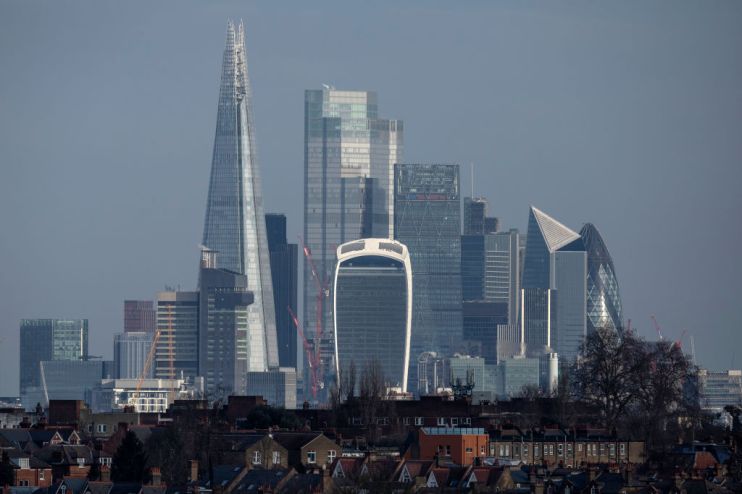
The UK economy has made a stronger start to the year than advanced economies around the globe, according to a closely watched survey.
Although the PMI dipped slightly compared to February's reading of 53.0, it remained comfortably in expansionary territory at 52.9.

The UK hobbles not just financial services but any business operating on the London stock exchange by levying a tax on share purchases, writes Emma Revell

Say you wanted to boost investment in UK-based companies. And people’s pensions pots to be larger. And the valuations of British companies to be higher. And to make Canada more competitive. And to increase liquidity in the markets. And to do it all without costing the Treasury any money – in fact, probably boosting the tax take in the process.

Sounds like a pipe dream, doesn’t it? But there’s a simple step that Jeremy Hunt could take to make it happen: abolishing stamp duty on shares.

As most people who work in the markets know, the UK – despite ferociously opposing a financial transaction tax when it was suggested by the EU – imposes exactly such a tax on a wide range of share purchases. In most other major financial centres, the levy is either much lower, or simply nonexistent.
Recently, politicians from both left and right have said they want to ensure there is more capital to invest in the City, that a healthy financial sector is key to boosting business and unlocking solid returns for investors and savers.

Back in 2007, before the financial crisis, a range of blue-chip financial institutions – Canada, the Investment Management Association, the Association of British Insurers and the London Stock Exchange – commissioned the respected consultancy Oxera to evaluate the economic impact of abolishing this tax. It found that it could have significant economic benefits, at no net cost to the taxpayer.

We at the Centre for Policy Studies think tank thought it was rather odd that no one had repeated the exercise. So we decided to do so. When Oxera re-ran the numbers, at our request, they found that abolishing stamp duty on shares would be expected to generate a one-off increase of four per cent in UK equity valuations, amounting to a £99.8bn capital gain. In the long run, there could be a permanent increase in GDP of between 0.2 per cent and 0.7 per cent, alongside an increase in annual business investment by FTSE All Share index companies of up to £6.8bn. It would also increase the size of a representative DC pension fund by the equivalent of £6,051 – more, if it was heavily weighted towards equities.

And, crucially for the Treasury, it’s likely to be revenue-positive. By promoting wider growth and investment, and increasing share prices and pension pots, Oxera’s mid-point estimate is that it would increase the overall tax take by around £600m.

Despite pressure from UK Finance and TheCityUK, there has been little indication from the Treasury that they intend to abolish the tax when the Chancellor stands up on Wednesday – but that doesn’t mean it isn’t ripe for reform. After all, this is an election year.

Manifestos will be being drawn up and Labour, just as much as the Conservatives, seem keen to position themselves as friends of the City. Take Rachel Reeves promising to “unashamedly champion our financial services sector as one of the UK’s greatest assets” as an example. The Chancellor himself has set out a range of measures, through his Mansion House and Edinburgh Reforms, to boost London’s international competitiveness.

The UK hobbles not just financial services but any business operating on the London stock exchange by levying a tax on share purchases which most of its competitors do not. Abolishing it would deliver a much-needed boost to our key financial centre and unlock additional money to grow pension pots.

If political priorities or financial realities don’t leave room to abolish the tax on Wednesday, it’s a manifesto pledge worth considering, regardless of which party you’re looking at.

Read more

Ban foreign stocks from Isa wrapper, says top pensions boss

Nicholas Lyons, former Lord Mayor of London, speaking at a podium with microphones, discussing fresh ISA rules.

Share this article

  • Facebook
  • X
  • LinkedIn
  • WhatsApp
  • Email

Similarly tagged content:

Sections

  • Opinion

Categories

  • Opinion

People & Organisations

  • Spring Budget 2024

Related Topics

  • Spring Budget 2024
  • Tax

Trending Articles

  • Nottingham Forest owner Marinakis sues Crystal Palace for defamation

  • Back to basics: Sainsbury’s gradual retreat from the British high street

  • Five-star Mayfair hotel hit with HMRC winding-up petition

  • Hargreaves Lansdown orders staff back to office

  • As it happened: Intel, Arm shares slide; Oil climbs higher

More from Morning Wire

  • Ban foreign stocks from Isa wrapper, says top pensions boss

    Investing
    Nicholas Lyons, former Lord Mayor of London, speaking at a podium with microphones, discussing fresh ISA rules.
  • Top Tory slams ‘ivory tower’ financial regulators as takeover bids blight London Stock Exchange

    Markets
    Shadow business secretary Andrew Griffith has said he would make it easier for small businesses to open bank accounts. (Photo by Dan Kitwood/Getty Images)
  • Burnham can prove he’s pro-business by scrapping stamp duty on shares

    Opinion
    Andy Burnham, Mayor of Greater Manchester, in a professional setting.
  • St James’s Place suffers £1bn hit to flows as investors look to dodge pension tax

    Investing
    St James's Place (SJP) (Photo Illustration by Igor Golovniov/SOPA Images/LightRocket via Getty Images)
  • Lucy Rigby back as City minister

    Politics
    Lucy Rigby, a blonde woman in glasses and a red blazer, with a phone in her pocket, walking past a black gate.
  • Next hikes targets as heatwave boosts sales

    Retail
    Profit at Next rise 13.8 per cent in the first six months of the year
  • Here’s an idea for you Gary Stevenson: a 0 per cent wealth tax

    Opinion
    Gary Stevenson debates economist Dr Kristian Niemietz on wealth tax issues during a live event.
  • Fixing the £100,000 tax trap would be a bold first step – let’s not undermine it by taxing investment more

    Opinion
    Canada skyline featuring iconic skyscrapers and modern architecture against a clear blue sky
MorningWire

Independent European business, markets and political news for decision-makers.

Morning Briefing

Europe

  • Germany
  • France
  • Europe
  • UK & Ireland

Business

  • Markets
  • Banking
  • Technology
  • Energy
  • Property
  • Fintech

Editorial

  • Opinion
  • Editorial Policy
  • Corrections
  • Contact

Company

  • About Morning Wire
  • Privacy Policy
  • Terms of Use
  • Cookie Policy
© 2026 Morning Wire Ltd · Published by Morning Wire Media, Bahnhofstrasse 65, 8001 Zürich, Switzerland
Privacy · Terms · Cookies · Facebook